

Cardano has integrated x402, an internet-native payment standard that allows AI agents and automated applications to pay for access to APIs, data, computing resources, and digital services directly whCardano has integrated x402, an internet-native payment standard that allows AI agents and automated applications to pay for access to APIs, data, computing resources, and digital services directly wh
Cardano Integrates x402: AI Agents Can Pay With ADA and Cardano Tokens

Cardano has integrated x402, an internet-native payment standard that allows AI agents and automated applications to pay for access to APIs, data, computing resources, and digital services directly while they operate.
Cardano support is now available within the x402 ecosystem through the @x402/cardano package, while the Cardano Foundation has also developed a facilitator and developer templates. Current testing shows that the payment flow can support both ADA and native assets on Cardano.
What makes this development notable is that Cardano is entering an increasingly competitive market. Solana, EVM networks, XRP Ledger, Bitcoin Lightning, and other payment networks are also being connected to x402, showing how blockchains are positioning themselves as payment infrastructure for a new generation of AI agents capable of executing transactions autonomously.
Key Takeaways
Cardano has integrated x402, a standard that allows applications and AI agents to execute payments directly within HTTP requests.
Developers can use the @x402/cardano package to build applications that support Cardano-based payment flows.
x402 on Cardano supports ADA and can also use Cardano native assets such as stablecoins.
Official templates have tested payments using test ADA and test USDM on the Preprod network.
The Cardano Foundation has developed an x402 facilitator that verifies and submits transactions already signed by users or AI agents.
The facilitator does not hold private keys and does not sign transactions on behalf of users.
The infrastructure has currently been tested on Preprod, while full production deployment on mainnet remains an important factor to monitor.
Cardano is joining Solana, EVM networks, XRP Ledger, and other networks in the competition to build payment rails for AI agents.
What Happened? Cardano Integrates x402 for AI Agent Payments
Cardano has added x402 support to its developer infrastructure, allowing applications to build payment flows in which an AI agent can automatically pay to access digital resources.
x402 uses HTTP 402 “Payment Required” to allow a server to indicate that a resource must be paid for before access is granted.
Instead of requiring users to open a checkout page, enter card information, or log into an account, the payment requirement can be handled directly between software systems.
How Can an AI Agent Pay Using Cardano?
An x402 payment flow can work as follows:
First, the AI agent sends a request to access an API or digital resource.
If the resource requires payment, the server returns the payment requirements.
The agent checks the supported asset type, amount, and network.
The agent’s wallet creates and signs the payment authorization.
The facilitator or server verifies the payment and performs settlement.
Once the payment is accepted, the server provides the resource requested by the agent.
The entire process can be automated through software.
This is particularly suitable for AI agents because they may need to purchase multiple types of resources while completing a task without requiring the user to approve every individual transaction.
Cardano x402 Supports ADA and Native Assets
The Cardano implementation is not limited to ADA.
Developers can build payment flows using native assets on Cardano, including stablecoins.
Official templates currently include examples of payments using 1 tADA and 0.10 tUSDM on Cardano Preprod.
This is important for agentic commerce.
ADA can be used directly as a payment asset, while stablecoins may be more suitable for services that need to maintain stable pricing denominated in U.S. dollars.
Cardano x402 Facilitator
The Cardano Foundation has also developed an x402 facilitator to handle verification and settlement.
The facilitator acts as a technical intermediary between the resource server and the Cardano blockchain.
When it receives a signed transaction, the facilitator checks whether the payment satisfies the required conditions before submitting the transaction to the network.
One notable feature is that the facilitator does not hold private keys and does not sign transactions on behalf of the payer.
The transaction must first be signed by the client’s or AI agent’s wallet.
This design reduces the facilitator’s control over user funds and helps limit certain custody-related risks.
Background / Context
What Is x402?
x402 is an open payment standard designed to make payments a native part of the internet.
In the traditional web model, authentication and payment are usually separate systems.
An API may require users to create an account, generate an API key, select a subscription, and pay before using the service.
x402 aims to introduce a different model.
A resource server can directly indicate that the current request requires payment. The client can then provide the corresponding payment authorization and continue accessing the resource.
The resource could include:
An API call.
Data.
Paid content.
Computational resources.
AI services.
RPC services.
Files or other internet resources.
This approach is especially suitable for machine-to-machine commerce, where both buyers and sellers can be software.
x402 Is Designed for a Multi-Chain Environment
x402 was not built specifically for a single blockchain.
The protocol architecture is designed to support multiple networks, tokens, and payment schemes.
This allows individual blockchains to build their own implementations while operating within the same payment standard.
EVM networks and Solana already have implementations within the x402 ecosystem. XRP Ledger has also developed x402 infrastructure, while Bitcoin Lightning has been added as a payment rail for BTC.
Cardano is therefore not building an entirely separate AI payment system.
Instead, the network is joining a shared standard in which multiple blockchains compete to become settlement layers for machine payments.
How Far Has Cardano Progressed?
Cardano already has several important components required to build x402 applications.
Developers can now use @x402/cardano, starter templates, and the facilitator developed by the Cardano Foundation.
The Express Starter allows developers to build APIs that charge per request and enable clients to automatically execute payments.
The Next.js template provides examples using both ADA and Cardano native assets.
The payment flows have been demonstrated on Cardano Preprod.
However, it is important to distinguish between SDK- and specification-level support and fully verified production infrastructure running on mainnet.
The Cardano x402 Facilitator repository states that the previous version had operated on Preprod, while the current upgraded version has not yet been confirmed as fully live-verified on mainnet.
Cardano has therefore moved beyond the initial concept and prototype stage, but mainnet production readiness remains an important factor to monitor.
Why It Matters
AI Agents Need Different Payment Infrastructure From Humans
AI agents can automatically search for information, call APIs, use software, and perform multiple steps to complete a task.
However, when an agent encounters a paid service, traditional payment systems can become a bottleneck.
An AI agent cannot operate fully autonomously if every API or data purchase requires a human to open a checkout page and manually approve the payment.
x402 attempts to solve this problem by making payments part of the communication process between clients and servers.
An agent can receive payment requirements, evaluate the transaction conditions, and make the payment within limits authorized by its owner.
Micropayments Could Become an Important Part of Agentic Commerce
Transactions between AI agents may look very different from traditional e-commerce transactions.
An agent may need only:
An API call worth a few cents.
A small piece of data.
A few seconds of compute.
An inference from another AI model.
A specialized task performed by another agent.
These transactions may have very small values but occur at high frequency.
As a result, AI-focused payment rails need low costs, sufficient speed, and the ability to integrate directly into software.
Blockchain is becoming one of the approaches being explored for this problem.
Cardano Has Several Characteristics That May Suit Machine Payments
Cardano uses the eUTxO model and offers highly deterministic transaction behavior.
Developers can determine transaction structure and fees before the transaction is signed.
For AI agents, predictable costs can be particularly important.
An agent operating under a limited budget needs to know how much it will spend before executing a transaction to ensure that the payment does not violate its spending policy.
Cardano also supports native assets directly at the ledger level.
This allows ADA, stablecoins, and other tokens to be used within the same payment infrastructure without necessarily relying on a separate smart contract token for each asset.
Impact
Impact on Cardano
x402 introduces a new use case for Cardano beyond DeFi, NFTs, or traditional payments: machine-to-machine payments.
Under this model, software itself can become the entity generating transactions.
If AI agents begin purchasing APIs, data, and services using Cardano assets, the network could gain a new source of transaction demand.
However, having the infrastructure does not automatically mean adoption will follow.
The actual impact on Cardano will depend on how many developers build x402 applications, how many APIs support Cardano, and how much transaction volume AI agents generate.
Impact on ADA
ADA could play several roles in this ecosystem.
First, ADA can be used directly to pay for APIs or digital resources.
Cardano’s test templates have already demonstrated this payment flow using test ADA.
In addition, ADA remains Cardano’s native asset and is used to pay transaction fees when activity is settled on the blockchain.
If x402 generates meaningful real-world activity, it could provide another source of network usage for Cardano.
However, there is not yet enough data to determine whether this would have a significant impact on the price of ADA.
Impact on Stablecoins on Cardano
Stablecoins could play a more important role than ADA in certain payment use cases.
For example, an API charging a fixed fee of $0.10 per request would be easier to price using a stablecoin than an asset with a fluctuating market value.
Cardano’s native asset model allows stablecoins to be integrated into payment flows in the same way as other native assets.
The fact that x402 templates already use test USDM provides an example of this potential implementation.
If agentic payments grow on Cardano, stablecoin demand could become a more important factor than demand for ADA alone as a payment medium.
Impact on Developers
Developers are among the groups that could benefit most directly from the x402 standard.
Instead of building an entire payment, authentication, and blockchain settlement system from scratch, developers can use existing SDKs, middleware, and facilitators.
This could lower the barrier to building:
Paid APIs.
Data marketplaces.
AI services that charge per request.
Computational marketplaces.
Agent-to-agent services.
Premium content.
However, production deployment will still require careful management of security, wallet authorization, and spending policies.
Impact on the AI Agent Economy
If AI agents become increasingly autonomous, payments could become an important infrastructure layer for the AI ecosystem.
An agent may need to interact with multiple services while completing a single task.
It might purchase data from one provider, rent computing resources from another, and pay a specialized AI model or agent to handle part of the task.
x402 attempts to create a shared standard so that these payment interactions do not need to be rebuilt from scratch for every service.
Cardano’s support for x402 expands the number of settlement options available to developers and agents.
Impact on Competition Between Blockchains
Cardano’s appearance within x402 also reflects a broader trend.
Blockchains are increasingly competing not only in DeFi or tokenization but also in machine payments.
Solana has advantages in throughput and its payments ecosystem.
EVM networks have a large developer base and mature tooling.
Bitcoin Lightning focuses on BTC micropayments.
XRP Ledger is expanding its infrastructure for x402 and agentic payments.
Cardano brings its eUTxO model, native asset support, and predictable transaction structure into the competition.
However, supporting x402 is only a prerequisite for participating in this market.
Long-term advantages will depend on factors such as:
Transaction costs.
Settlement speed.
Stablecoin liquidity.
Developer tooling.
Wallet support.
Facilitator availability.
The number of merchants and APIs integrated.
Actual transaction volume.
The blockchain that develops a larger ecosystem with meaningful real-world usage will have a clearer advantage than one that only has technical-level integration.
What Happens Next?
The most important factor to monitor for Cardano x402 is production adoption.
Technical components such as the SDK, templates, and facilitator already exist, but the next step is to see whether they are widely deployed beyond testnet environments.
Several important indicators include:
Whether the Cardano Foundation confirms that the facilitator has completed live mainnet testing.
Whether an official hosted facilitator is deployed in production.
How many developers use @x402/cardano.
How many APIs accept payments through Cardano.
Whether ADA or stablecoins become the more popular payment asset.
Whether transaction volume generated by x402 increases significantly.
Which AI platforms integrate Cardano payments.
How Cardano competes with Solana, EVM networks, XRP Ledger, and Bitcoin Lightning.
If x402 remains limited to demos and experiments, its impact on the Cardano network will remain limited.
If real paid APIs and AI agents begin using Cardano for settlement, x402 could create an additional source of on-chain activity for the ecosystem.
FAQ
What Is Cardano x402?
Cardano x402 is an implementation of the x402 payment standard on Cardano. It allows APIs, applications, and AI agents to process payments using Cardano assets within a standardized HTTP payment flow.
Can AI Agents Pay With ADA Through x402?
Yes. Implementations and templates on Cardano have tested payment flows using test ADA on the Preprod network. An AI agent with an appropriate wallet and signing mechanism can create transactions to pay for resources that support Cardano x402.
Does Cardano x402 Support Tokens Other Than ADA?
Yes. Cardano supports native assets, and the x402 implementation can use these assets as payment methods. Stablecoins such as USDM are one example used in developer templates.
Is Cardano x402 Already Running on Mainnet?
Cardano already has support at the specification, SDK, and developer infrastructure levels. Payment flows have been tested on Preprod, but the production mainnet status of the facilitator still needs to be distinguished from technical mainnet configuration capability.
Do AI Agents Need an Account or Credit Card to Use x402?
Not necessarily. x402 allows payments to be made directly as part of a request without requiring a traditional checkout page or account. However, the agent still needs a wallet, assets, and appropriate transaction-signing permissions.
Could Cardano x402 Affect ADA?
x402 could add another use case for ADA and generate additional network activity if agentic payments achieve broad adoption. However, there is not yet enough data to determine any significant impact on the price of ADA, and the actual outcome will depend on the number of applications, developers, and transactions generated.
Disclaimer: The information provided here is for informational purposes only and should not be considered financial, investment, legal, or professional advice. Always conduct your own research, consider your financial situation, and, if necessary, consult with a licensed professional before making any decisions.
市場機遇
Gensyn實時價格 (AI)
$0.02049
$0.02049$0.02049
USD
Gensyn (AI) 實時價格圖表
本頁面分享的文章均源自公開平台,僅供參考。該內容不代表 MEXC 的立場或觀點。所有版權歸 Nguyen Rin Hoang 所有。如果您認為任何內容侵犯了第三方的權益,請聯絡 service@support.mexc.com 以便及時刪除。 MEXC 不保證任何內容的準確性、完整性或及時性,且不對基於所提供信息而採取的任何行動負責。本內容不構成財務、法律或其他專業建議,亦不應被解釋為 MEXC 的推薦或認可。如需專家見解和深入分析,請造訪 MEXC 學院。
Gensyn 最新動態
查看更多
MEXC 鏈上日報:隨著歐洲合規監管趨嚴,Revolut 將於八月底前下架 USDT
加密市場持續發展,伴隨監管動態、AI基礎設施擴張及機構參與度不斷提升。英國推出全新加密監管框架,穩定幣驅動的跨境支付獲得更廣泛應用,以AI為核心的區塊鏈生態系統加速轉型,同時市場關注點轉向宏觀經濟事件以及數位資產各板塊間不斷變化的資金流向。
2026/07/06
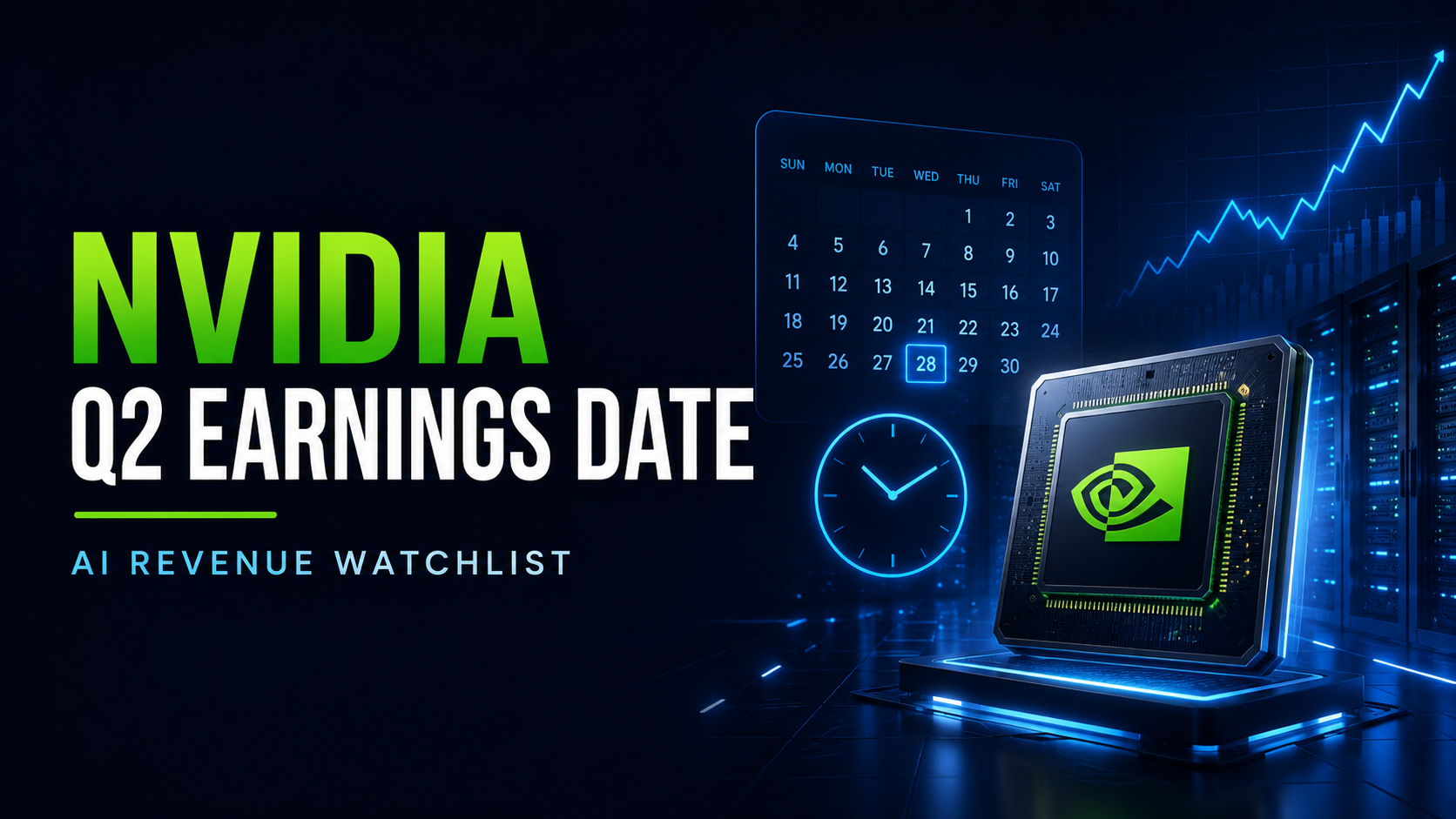
輝達2027財年第二季財報發布日期:預期發布時間、財報電話會議及AI營收觀察名單
Nvidia 2027 財年第 2 季財報預計將成為夏季最重要的 AI 市場事件之一。Wall Street Horizon 顯示,Nvidia 2027 財年第 2 季的下次財報發布日期為 2026 年 8 月 26 日星期三,於市場收盤後公布。
這絕非一次普通的財報發布。Nvidia 自身對 2027 財年第 1 季的展望設下了極高的標準:該公司預估第 2 季營收將達 910 億美元,誤差範圍為正負 2%,且 Non-GAAP 毛利率預計約為 75.0%。Nvidia 亦明確指出,其展望假設不計入來自中國的資料中心運算營收,這使得即將發布的財報能更純粹地檢驗中國以外的 AI 基礎設施需求。
對交易員而言,關鍵問題已不再只是 Nvidia 能否超越市場預期。更重要的問題在於,該公司能否持續將 AI 需求轉化為營收成長與利潤韌性,並提出足夠強勁的前瞻指引,以捍衛市場對 AI 基礎設施的溢價估值。
2026/07/06
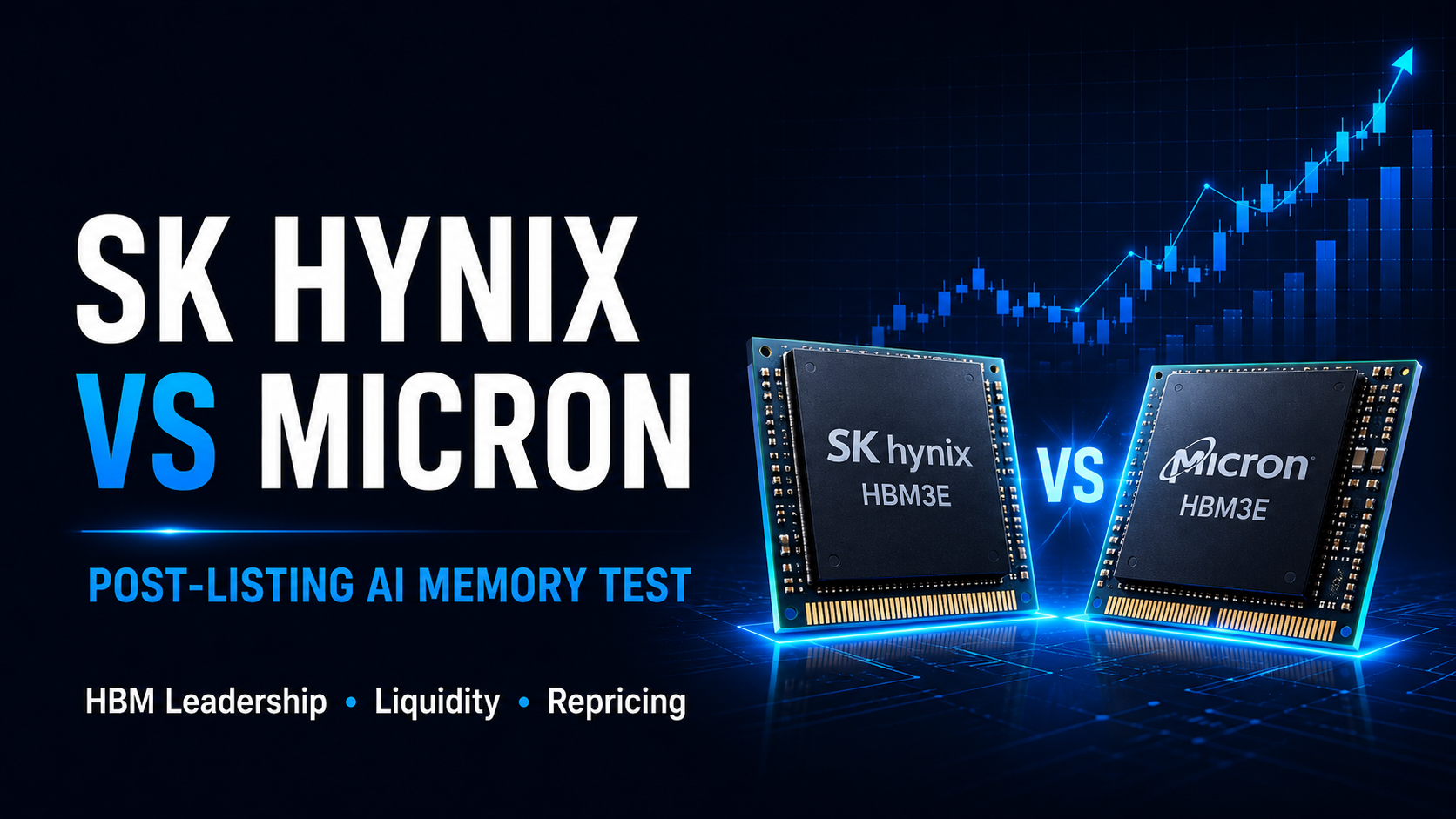
SK海力士對決美光:即將到來的SKHY上市如何重新定價AI記憶體與HBM領導地位
SK海力士備受矚目的納斯達克上市(股票代碼:SKHY)勢必將改變美國投資者評估AI記憶體股的方式。多年來,美光科技(MU)一直是交易DRAM、NAND以及由AI推動的資料中心需求時,首選的美國上市代理標的。與此同時,SK海力士鞏固了其作為高頻寬記憶體(HBM)主導力量的聲譽,儘管其主要在韓國上市,使得海外投資者更難參與投資。
隨著SKHY美國存託憑證(ADR)的推出,這種可及性差距正在迅速縮小。這不僅僅是一個早期成長故事進入市場——SK海力士是在AI大幅漲勢之後登場,並帶著其在HBM領域的主導地位敘事。對交易者而言,真正的問題不在於哪家公司「更好」。相反,關鍵在於識別更優的交易佈局:市場會因為SK海力士在HBM的主導地位和新獲得的流動性而給予獎勵,還是繼續堅持選擇美光科技經證實的美國市場通路和創紀錄的獲利?
2026/07/08


您可能也會喜歡
熱門
目前熱門備受市場關注的加密貨幣
加密貨幣價格
按交易量計算交易量最大的加密貨幣