

Ethereum vs XRP: Which Crypto Has the Better Investment Case Right Now?
TLDR
- Ethereum is the leading smart contract platform with a deep ecosystem covering DeFi, stablecoins, NFTs, and tokenized assets
- XRP focuses narrowly on payments and institutional settlement, making it a more concentrated bet
- Ethereum benefits from Layer 2 networks, strong developer activity, and multiple growth paths
- XRP has higher potential upside but depends heavily on institutional adoption actually materializing at scale
- Franklin Templeton has filed for an XRP ETF, showing some institutional interest, but usage still lags the narrative
Ethereum and XRP are two of the biggest names in crypto, but they are built for very different purposes. Choosing between them is not just about picking a token. It is about picking a business model.
Ethereum is a smart contract platform. It powers decentralized finance, stablecoins, NFTs, tokenized assets, and thousands of applications. XRP is built for payments, settlement, and institutional money transfers.
Ethereum’s Ecosystem Is Its Biggest Strength
Ethereum holds a clear advantage in network effects. Developers build on it because users, liquidity, tools, and infrastructure are already there. That cycle feeds itself: more apps bring more users, more users bring more liquidity, and more liquidity pulls in more developers.
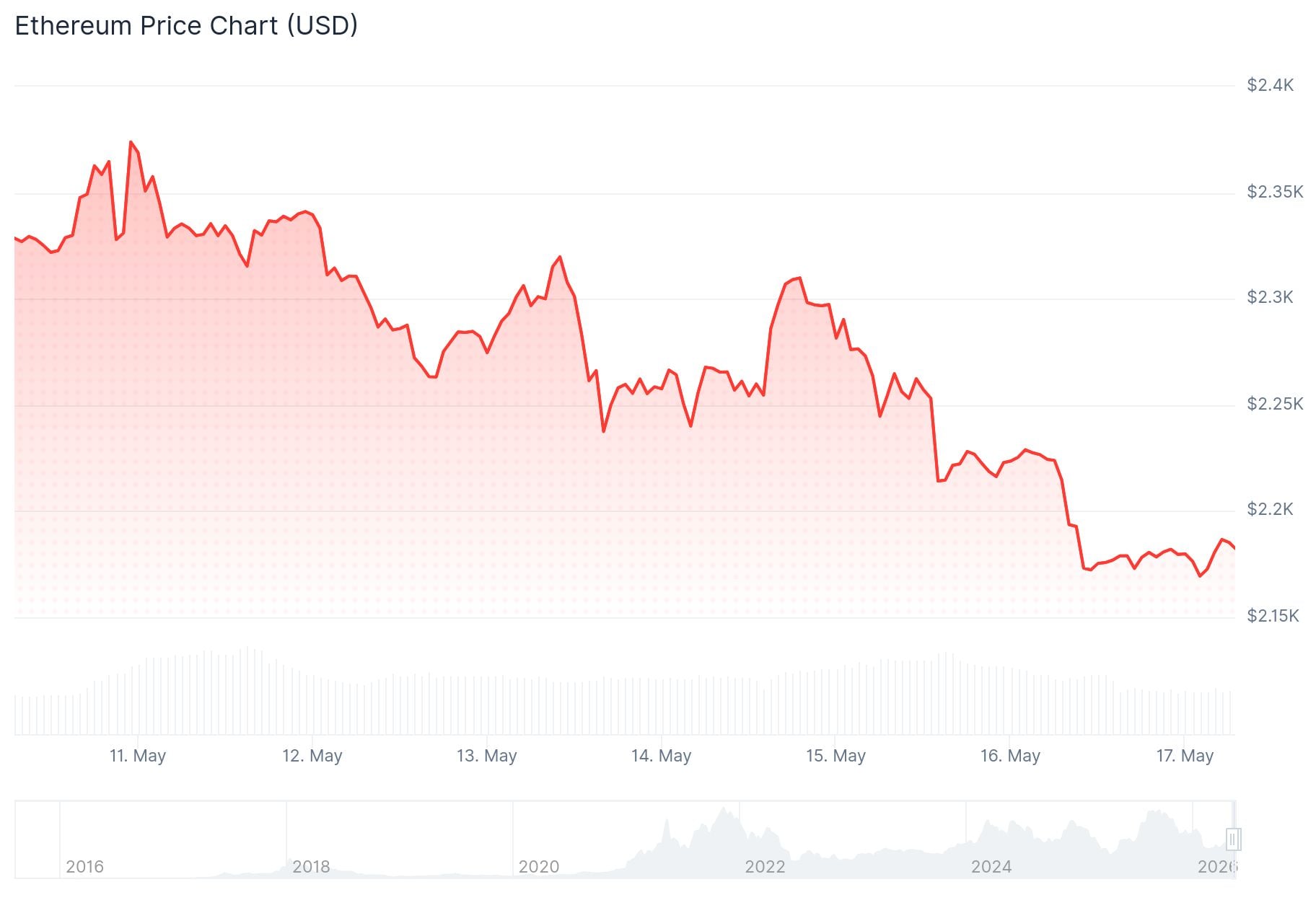 Ethereum (ETH) Price
Ethereum has also expanded through Layer 2 networks. These reduce transaction costs while keeping Ethereum as the core settlement layer. This means Ethereum is no longer just one blockchain. It is growing into a wider financial ecosystem.
That matters for investors. Ethereum has multiple ways to grow: DeFi, stablecoins, institutional ETFs, staking, tokenization, and Layer 2 activity. That breadth gives it more paths to success.
XRP does not have the same depth. The XRP Ledger is fast and efficient, but it has not built a large application economy. Its value is concentrated around payments and institutional settlement.
XRP Offers Higher Upside, With More Risk
XRP sits at roughly $87 billion in market value, making it smaller than Ethereum. If XRP captures major institutional payment flows and ETF demand, its price could rise sharply from current levels.
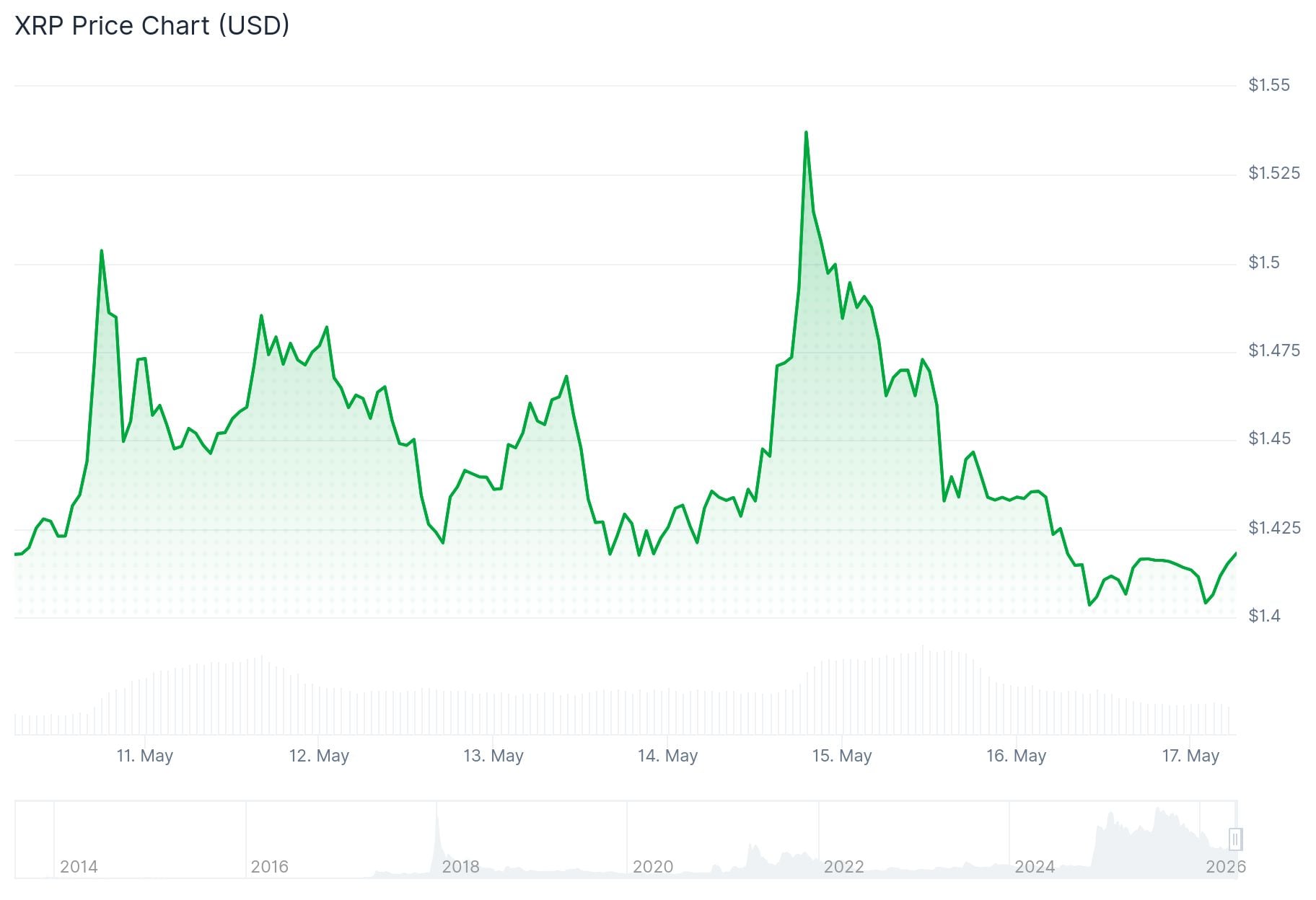 XRP Price
Ripple has said XRP ETFs have drawn meaningful institutional interest. Reuters reported that Franklin Templeton filed for an XRP ETF, showing asset managers are moving beyond Bitcoin.
But XRP’s main risk is that the story is bigger than the actual usage. Banks and institutions could choose stablecoins, private blockchains, Ethereum-based tokenization, or central bank digital currencies instead. If that happens, XRP would struggle to grow its valuation.
Ethereum carries its own risks too. Fees can spike during high activity. Solana remains a competitor. Citi has noted Ethereum is sensitive to user activity levels and regulatory changes. Some activity has also shifted to Layer 2 networks away from the main chain.
Still, Ethereum has more ways to win. XRP essentially needs institutional payments to scale. Ethereum does not rely on any single outcome.
For long-term investors seeking a more balanced crypto position, Ethereum offers stronger fundamentals, a larger developer base, and deeper liquidity. XRP is better suited for those willing to take on more risk for a higher potential return on the institutional payments thesis.
The post Ethereum vs XRP: Which Crypto Has the Better Investment Case Right Now? appeared first on CoinCentral.


Ayrıca Şunları da Beğenebilirsiniz

Iran Plans New Strait of Hormuz Transit System With Vessel Fees

Spot CVD Chart Reveals Critical Bitcoin Support Levels as Institutional Orders Surge on April 2




