

Starlink secures licence to operate in Uganda after previous restrictions
Satellite internet operator Starlink has officially secured regulatory approval that allows it to operate in Uganda. The development follows the SpaceX-owned company’s suspension in the East African country months ago.
According to information revealed by a SpaceX team member, the agreement was signed on Friday between the Director of Starlink Market Access & Development, Ryan Goodnight, and the Executive Director of Uganda Communications Commission, Nyombi Thembo.
For Starlink, the memorandum of understanding and operational license agreement mean that it can now freely operate in Uganda. It also follows a decision that Starlink will comply with the country’s laws and regulatory requirements.
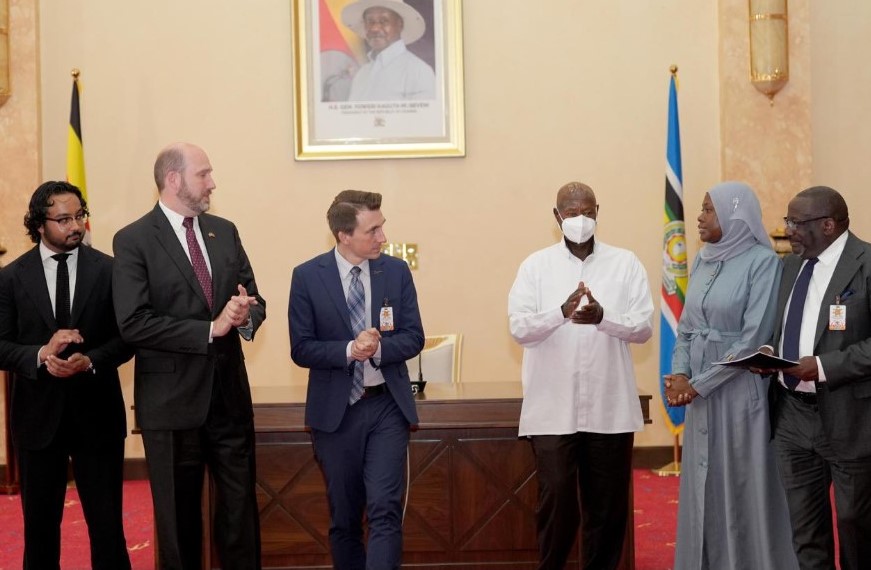 Ugandan stakeholders at the memorandum of agreement with Starlink
What it means for Ugandans
The entry means that Ugandans can now legally access Starlink’s low Earth orbit (LEO) satellite offering.
Despite the presence of MTN and Airtel, the network service has been reportedly critical for Ugandans. About 94% of households lack reliable internet access, and around 77% of the population resides in rural areas. According to the Uganda Bureau of Statistics (UBOS), rural internet penetration remains below 20%, a barrier that hinders education, health services, agriculture, and economic inclusion.
Starlink’s entry into the market would be a strategic tool in closing this digital divide by spreading internet access across communities and providing quality connectivity when existing telecom services fail.
 An Ugandan internet user
According to Starlink’s service coverage map, it plans to provide internet access in several key Ugandan towns and cities, including Kampala, Lira, Mbarara, Masaka, Jinja, Soroti, Kasese, Gulu, Pader, Kitgum, Hoima, Masindi, Kotido, and Kaabong. This reveals the company’s intent to cover both rural and urban areas.
Once it finally launches, Uganda will be its 28th African country and third in 2026, following previous launches in Senegal and the Central African Republic.
Also Read: MTN and Airtel lose $7 million in Uganda as social media access is finally restored.
Uganda: not an easy Stralink’s entry
Securing the licence was not an easy feat for the Elon Musk-owned company.
In January, days before its election, the Uganda Communications Commission (UCC) directed Starlink to suspend its service and importation of hardware into the country, citing citizens’ usage of the service without proper licence approval by Starlink.
In response, Starlink noted that it has neither marketed nor directly sold its services in Uganda. It added that hardware in use before the restriction was activated in neighbouring countries like Kenya, where Starlink is authorised, before being imported into Uganda without approval.
Starlink stressed that such illegal use by Ugandans failed to comply with its terms of service and occurred without its authorisation.
 Starlink
Complications to enter Uganda started in April 2025 over delays to secure operating licenses (Public Service Provider and Public Infrastructure Provider) from the UCC.
The biggest hurdle it faced was the inability to comply with Uganda’s Regulation of Interception of Communications Act, which mandates that telecom operators must give the government access to communications for security purposes.
While Starlink’s independence from local terrestrial infrastructure and the company’s structure are against the requirement, it is left unknown if the regulatory approval means Starlink has finally complied with this local law.


Ayrıca Şunları da Beğenebilirsiniz

Dunamu Posts 78% Profit Drop as Crypto Trading Slump Hits Upbit’s Fee-Driven Revenue

Critical USDT0 Response to Drift Hack Exposes Stark Contrast in Stablecoin Security Protocols




