

8 Ponzi schemes that wiped out trillions from Nigerian investors
Nigeria has a bad habit of learning the same lesson in painful cycles. A new Ponzi scheme shows up, looks shiny for a while, promises fast returns, and suddenly everybody is talking about “opportunity” until the withdrawals stop and panic begins.
The latest name in that long, ugly history is XM Future Music Group, a platform that reportedly promised investors 100 per cent return in 30 days for listening to songs, with entry packages ranging from ₦21,600 to ₦93 million. On paper, it sounded like the kind of deal people tell themselves they would not miss. In reality, it had all the usual signs of a trap.
That is why this list matters. XM Future Music Group did not crash in a vacuum. It joined a long line of schemes that convinced Nigerians that money could multiply almost overnight if only they stayed patient, recruited a few more people, and ignored the warning signs.
Some of those names became national scandals. Some were disguised as crypto platforms, others as forex businesses, and some as investment clubs or wealth circles. But the ending was mostly the same: blocked withdrawals, vanishing operators, disappointed investors, and huge losses that left families and friends arguing over who got in “too early” and who was unlucky enough to enter late.
Here are eight major Ponzi collapses that show why Nigerians keep getting burned.
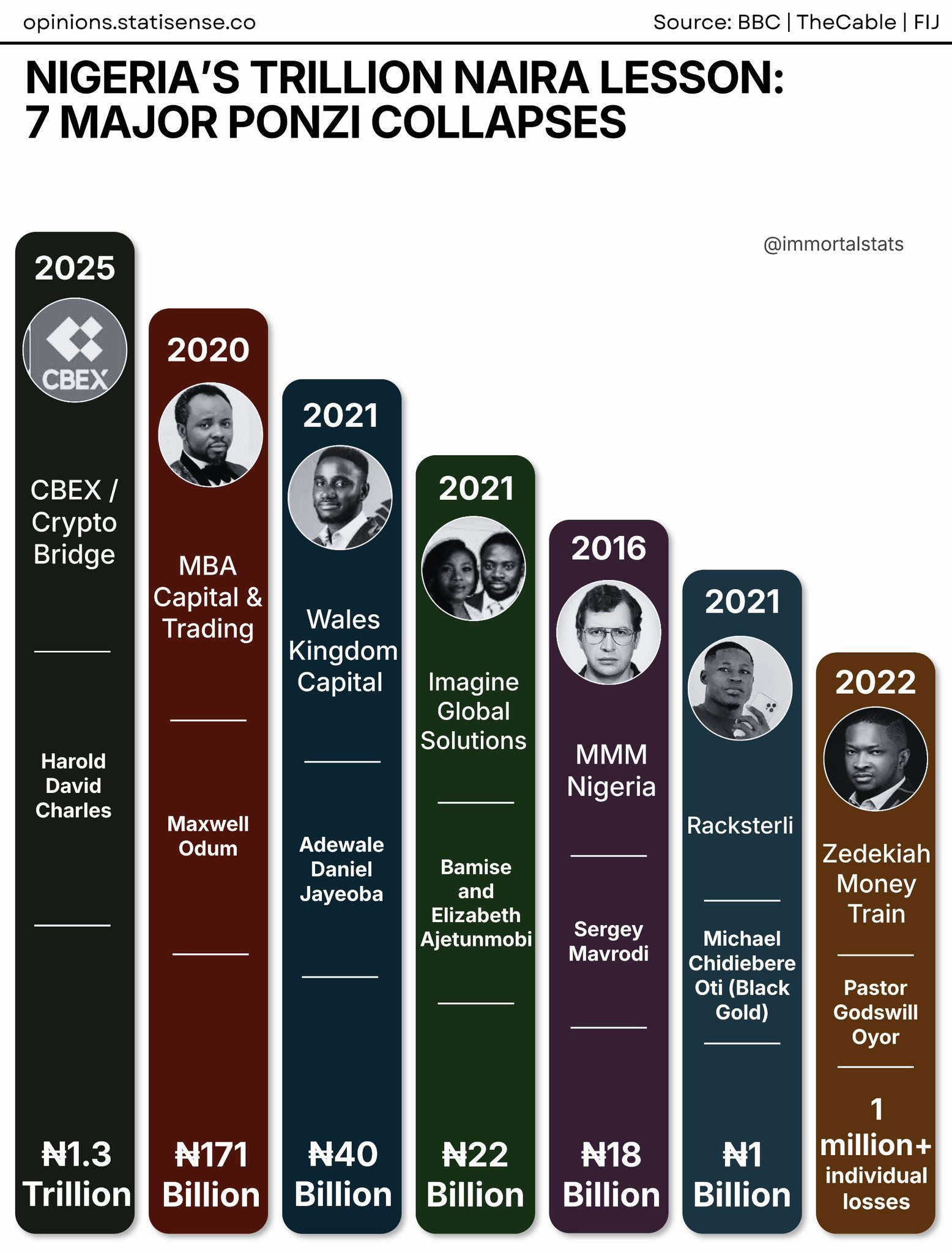
1. CBEX / Crypto Bridge — Harold David Charles (2025)
CBEX, also called Crypto Bridge, sits at the top of the list with an estimated ₦1.3 trillion. This was one of the loudest recent Ponzi stories in Nigeria. It came into public attention as a crypto-style investment platform that reportedly promised huge returns in a short time, with some reports saying investors were lured with claims of up to 100 per cent return in about a month. That kind of promise is exactly what makes Ponzi schemes so dangerous: they sound like an opportunity, but they are really bait.
The person most closely tied to the scheme in public reports is Harold David Charles. CBEX reportedly used the language of digital finance, crypto growth and fast multiplication of money to attract investors who wanted in on the next big thing.
That made it feel modern and credible to many people, especially in a market where crypto already sounds like a smart-money space. But once withdrawal problems started and the public got louder, the whole thing unravelled. The crash left behind massive losses and another round of regret from Nigerians who believed this time would be different.
2. MBA Capital and Trading — Maxwell Odum (2020)
MBA Capital and Trading, better known as MBA Forex, was fronted by Maxwell Odum and reportedly took in about ₦171 billion. This one had the look and feel of a serious financial operation. It sold itself as a forex and capital investment platform, which made it easier for people to believe the returns were coming from legitimate market activity.
That is one of the oldest tricks in the Ponzi world: wrap a fake model in a real-sounding business, and many people will stop asking hard questions.
MBA Forex was widely accused of taking in huge sums from investors after promising attractive returns. It gained trust because it sounded more structured than a random scam page on social media. That is part of why it spread so far.
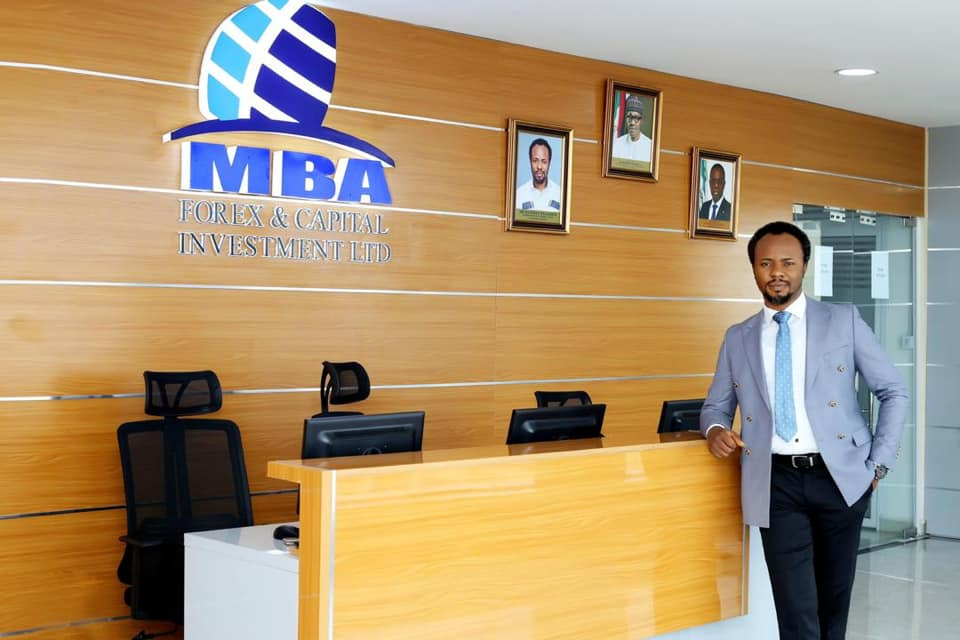
People saw charts, business language, and claims of trading intelligence, and they assumed a level of professionalism that may not have existed underneath. When the system started collapsing, it exposed just how vulnerable even educated investors can be when a scheme speaks their language.
3. Wales Kingdom Capital — Adewale Daniel Jayeoba (2021)
Wales Kingdom Capital was tied to Adewale Daniel Jayeoba and is listed with losses of about ₦40 billion. Like several others on this list, the platform reportedly presented itself as an investment opportunity with attractive returns and little risk. That is usually the first clue that something is wrong. Real investments have risk. Real markets move up and down. But Ponzi schemes often pretend that both risk and delay do not exist.
What made platforms like Wales Kingdom Capital effective was not just the promise of profit, but the emotional pressure around them. Once people hear that others are already earning, they feel a push to join quickly before the “window closes.”

That sense of urgency is a scammer’s best friend. It shuts down patience and makes people mistake hype for evidence. By the time the scheme starts wobbling, most of the money has already changed hands.
4. Imagine Global Solutions — Bamise and Elizabeth Ajetumobi (2021)
Imagine Global Solutions was associated with Bamise and Elizabeth Ajetumobi and, reports linked the scheme to estimated losses of about ₦22 billion. This one also followed the familiar Ponzi model: big promises, online buzz, and the idea that people could grow their money through a platform that sounded more established than it really was.
The name itself was part of the trick. “Imagine” sounds hopeful, clean and visionary, which is exactly the kind of emotional packaging these schemes love.
Like many schemes before it, Imagine Global Solutions reportedly used trust and social proof to pull in investors. That means people were not always joining because they understood the model. Sometimes they joined because a friend joined. Sometimes because somebody they admired spoke well of it.

Sometimes, because everyone in the group chat was acting like they had found a secret path to wealth. That is how these things spread. They do not just sell returns; they sell belonging.
5. MMM Nigeria — Sergey Mavrodi (2016)
If there is one Ponzi name that still carries emotional weight in Nigeria, it is MMM Nigeria. It was founded by Sergey Mavrodi, and for many Nigerians, the name alone immediately triggers memories of a frenzy that cut across homes, workplaces and social media timelines. MMM Nigeria caused ₦18 billion in losses.
MMM was built around the idea of members helping one another financially, which made it sound less like a scam and more like a movement.
That emotional framing was powerful. It turned a risky scheme into something people felt morally comfortable joining. Participants were told they were part of a system of mutual assistance, and many believed the money was growing because of a new financial logic.
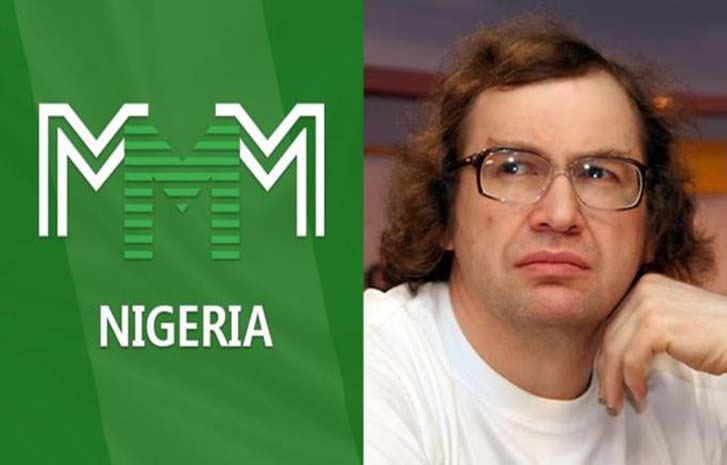
But of course, the logic was fake. Once the system froze and payouts became impossible, the illusion disappeared. MMM became the classic case study in how trust, peer pressure and desperation can combine into something very expensive.
6. Racksterli — Michael Chidiebere Oti (Black Gold) (2021)
Racksterli was tied to Michael Chidiebere Oti, popularly known as Black Gold, and reported losses of about ₦1 billion. This one stands out not just because of its structure, but because of the public faces that helped push it. Racksterli was reportedly promoted by several notable Nigerian celebrities and public figures, including Davido, Dino Melaye, Nancy Isime, and Williams Uchemba.
That kind of attention can make a scheme feel more legitimate than it actually is.
Racksterli sold the idea that people could make money online through investment packages and referral-style returns. It fed off the energy of social proof: if well-known people are talking about it, then it must be real, right? That is the trap. Celebrity promotion does not equal business sustainability. Sometimes it only means the marketing is louder.

When the scheme eventually faltered, it left behind the same painful questions: Did people trust the brand too much, or did the brand deliberately borrow credibility from popular faces to sell a dream?
7. Zedekiah Money Train — Pastor Godswill Oyor (2022)
Zedekiah Money Train was associated with Pastor Godswill Oyor, causing 1 million+ individual losses. It reportedly promised investors huge returns and gained attention because it sounded structured enough to be taken seriously. That is often how these schemes survive long enough to hurt people. They wear respectable clothes and use confident language.
The idea of a “money train” is itself a huge clue. It suggests momentum, movement and guaranteed progress, which is exactly the kind of psychological framing that can disarm people. People hear “train” and think they are boarding a ride that is already in motion.

But with Ponzi schemes, the train is usually heading toward a wall. By the time the crash happens, the people at the back are the ones left with the deepest losses.
8. XM Future Music Group — the newest name in the same old story
XM Future Music Group is the latest scheme causing noise online. According to the reports making the rounds, it promised investors a 100 per cent return in 30 days just for listening to songs. The entry levels were reportedly set from ₦21,600 to ₦93 million, with some claims that a ₦21 million investment could turn into ₦327 million.
That kind of math is not finance. It is a fantasy with a spreadsheet.
Unlike the others listed above, I am not going to attach a founder’s name here unless it is properly confirmed. But the pattern is already familiar enough. The business idea sounds unusual enough to be memorable, the returns sound absurd enough to be tempting, and the whole thing appears designed to make people suspend disbelief. That is usually how the newest Ponzi in town begins.
The real Ponzi lesson Nigeria keeps paying for
The brutal truth is that these schemes keep thriving because they understand human weakness very well. They know people are under pressure. They know many Nigerians are tired of slow progress, bad pay, failed promises and harsh economic realities. So they come in offering what looks like a shortcut. That is why they can feel so convincing at the start.
 Ponzi Scheme
But the end is always the same. The money disappears, the people in charge go silent, and investors are left with receipts, regret and a painful story to tell. The names change from CBEX to MBA Forex to MMM to Racksterli to XM Future Music Group, but the scam script stays stubbornly the same.
And until people begin treating ridiculous returns as a red flag instead of a blessing, there will always be another version waiting to take its turn.
Also read: EFCC arraigns Blessing CEO in court over N36 million property fraud


Ayrıca Şunları da Beğenebilirsiniz

Hyperliquid ramps up Washington lobby as Wall Street applies regulatory pressure

Critical USDT0 Response to Drift Hack Exposes Stark Contrast in Stablecoin Security Protocols




