

Dave Portnoy Bitcoin Holding Hits Millions in Losses — Won’t Sell
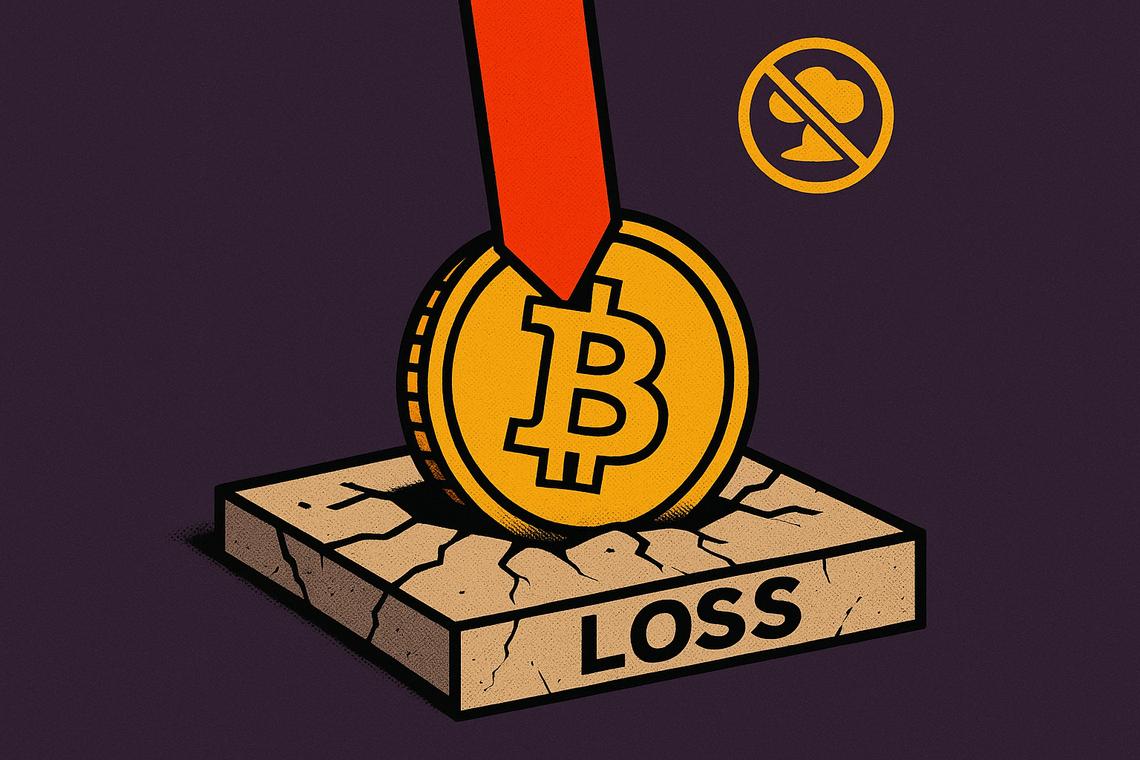
Dave Portnoy’s approach to bitcoin holding has become one of the more candid lessons in what not to do — and, paradoxically, what might actually work — in volatile crypto markets. The Barstool Sports founder told FOX Business host Stuart Varney this week that he plans to ride out his position no matter how far it falls. “I’m holding. I’ll hold this thing down to zero,” Portnoy said on Varney & Co. “I know if I sell it, it’s going to go nuclear again. I’d rather go down with the ship this time.”
Key takeaways
- Portnoy bought bitcoin near $100,000 and is now sitting on millions in losses as BTC trades around $63,000.
- Bitcoin peaked above $126,000 in October last year before roughly halving, according to CoinDesk data.
- Portnoy admits he has repeatedly bought before price drops and sold before rallies, calling it his worst repeated investment mistake.
- He is holding specifically because past sales have triggered price surges — a pattern he does not want to repeat.
- At Consensus 2025, Portnoy called the memecoin scene ultimately unsustainable.
Dave Portnoy’s Bitcoin Holding Decision Amid Losses
The numbers behind Portnoy’s situation are straightforward and painful. He snapped up bitcoin at around $100,000, a price that felt reasonable given BTC had just surged through historic highs. Then the market turned. According to CoinDesk data, bitcoin peaked above $126,000 in October last year before losing roughly half its value, sliding to around $63,000. The result: millions of dollars in unrealized losses for Portnoy, whose exact BTC holdings remain undisclosed.
What makes this more than just a celebrity losing money on crypto is the reasoning behind his decision to hold. Portnoy is not staying in out of conviction that bitcoin will recover to all-time highs. He is staying in because he has watched himself repeatedly trigger rallies by selling.
A Pattern He Cannot Shake
“Yeah, I got regrets. I bought the thing at $100,000. There’s nothing I’ve been wrong about more than Bitcoin,” Portnoy said. “Every time I sell it, it goes nuclear. Every time I buy it, it tanks.”
That kind of self-awareness is rare in public bitcoin discourse, which tends to skew toward either relentless optimism or dramatic panic. Portnoy is doing neither. He is acknowledging a documented behavioral pattern and, in a sense, using it to inform a new strategy — even if that strategy is essentially just refusing to act.
Struggles with Timing Bitcoin Market Moves
Mistiming volatile markets is not unique to Portnoy. It is one of the most consistent and well-documented failures across retail investing. But his version of the problem has an almost comedic predictability: buy, price tanks; sell, price surges. The cycle has repeated itself often enough that he now views any impulse to sell as a contrarian signal.
Why He Won’t Sell
“I know if I sell it, it’s going to go nuclear again,” he said. “I’d rather go down with the ship this time.” That sentence captures something that quantitative analysts call the disposition effect in reverse — instead of holding winners and selling losers, Portnoy has trained himself to fear selling precisely because of what follows.
The irony is that this behavioral quirk may have accidentally led him toward what many long-term bitcoin investors consider the correct strategy anyway: stop trying to time the market and just hold. Portnoy himself acknowledged as much, suggesting the best move is to stop attempting precision entries and exits and simply stay in.
What This Actually Says About Crypto Market Timing
Portnoy’s situation illustrates a broader truth about bitcoin’s price volatility that even sophisticated traders struggle with. The asset moves fast, the swings are severe, and the emotional pressure to act — either buying during euphoria or selling during drawdowns — consistently traps retail participants on the wrong side of the market.
The $126,000-to-$63,000 decline is a roughly 50% drawdown, which sounds alarming but fits within bitcoin’s historical pattern of deep corrections between bull cycles. For someone who bought near the top of a cycle, the choice is binary: accept the loss by selling, or absorb the drawdown and hope the next cycle recovers the position. Portnoy, whether by design or frustration, has chosen the latter.
What is analytically interesting here is that his reluctance to sell is not driven by fundamental conviction — he has made clear this is about avoiding his own track record, not about a bullish thesis on BTC’s next move. That distinction matters for anyone trying to extract a lesson from his experience. Holding through a drawdown works when you have time horizon and conviction; holding because you are afraid of what happens after you sell is a different psychological posture entirely.
Portnoy’s Views on Memecoin Sustainability
Separately, at Consensus 2025, Portnoy offered a broader take on the crypto market. He said the memecoin scene is ultimately unsustainable — a pointed observation from someone who has watched speculative crypto culture up close. It signals at least some skepticism about the short-term trading and hype-driven corners of the market, even as he stays committed to his own bitcoin position.
FAQ
Why does Dave Portnoy plan to hold his bitcoin even if it goes to zero?
Portnoy believes that selling bitcoin consistently triggers price surges — what he describes as the price going “nuclear” — so he prefers to hold through even significant losses rather than repeat that pattern.
What mistakes has Portnoy admitted regarding his bitcoin investments?
He has admitted to repeatedly mistiming both his purchases and sales of bitcoin, buying before prices drop and selling before major rallies. He called it the thing he has been most consistently wrong about.
What does Portnoy suggest as a better strategy than trying to time the bitcoin market?
Portnoy suggests the best move is to stop trying to time the market altogether and simply hold bitcoin over the long term — a conclusion he arrived at through repeated failed timing attempts rather than any original strategy.
What is Portnoy’s view on the sustainability of memecoins?
Speaking from the stage at Consensus 2025, Portnoy stated that the memecoin scene is ultimately unsustainable, reflecting broader skepticism about the speculative, hype-driven segments of the crypto market.
Article produced with the assistance of artificial intelligence and reviewed by the editorial team.


You May Also Like

Eltropy Named to Inc. Regionals Pacific 2026 List of Fastest-Growing Private Companies

The Real Cost of Retiring on the Beaches of Uruguay’s Punta del Este at 62 on $950,000

Nepal’s PM marks 100 days with sweeping changes



