

Have a $1.7 Million 401(k) and Entering Retirement? Make Sure You Do This Now
The post Have a $1.7 Million 401(k) and Entering Retirement? Make Sure You Do This Now appeared first on 24/7 Wall St..
- $1.7M traditional 401(k) generates $64K mandatory first RMD, compounding to $1.5M+ taxable withdrawals over 20-year retirement.
- Execute Roth conversions during gap years before age 73 and maximize $111K QCD limit per person at 70½ to shrink RMD base.
- Are you ahead, or behind on retirement? SmartAsset's free tool can match you with a financial advisor in minutes to help you answer that today. Each advisor has been carefully vetted, and must act in your best interests. Don't waste another minute; learn more here.
A recent post on r/retirement laid out a scenario familiar to anyone who has watched their pre-tax 401(k) compound for three decades: about $3 million in savings, the vast majority sitting in tax-deferred accounts, and a creeping suspicion that the IRS will be a larger beneficiary than the spouse. The math behind that suspicion is uglier than most savers think.
Picture a couple at 65 sitting on a $1.7 million traditional 401(k). Over a career, they sheltered roughly $260,000 in pre-tax salary deferrals. The plan worked. Each year’s contribution dodged a 24% marginal bracket on the way in. Their advisor told them they would withdraw in retirement at “a lower rate.” That lower rate never arrives.
When the Divisor Starts Doing the Work
Required minimum distributions begin at age 73 under SECURE 2.0. Using the IRS Uniform Lifetime Table divisor of 26.5 at that age, a $1.7 million balance forces a first-year withdrawal of roughly $64,000. That number is mandatory, taxable as ordinary income, and it grows every year the divisor shrinks.
If the underlying portfolio earns 5%, the balance compounds faster than the early RMDs draw it down, pushing later withdrawals higher rather than lower. A retiree who lives to 92 will be forced through roughly two decades of escalating distributions. Cumulative RMDs on a balance that starts at $1.7 million routinely total $1.5 million or more across a retirement, dwarfing the original $260,000 in deferrals that triggered them.
The 2026 Cascade
The first layer is federal tax. Under the 2026 brackets, a married couple stays in the 22% bracket up to $100,800 of taxable income and the 24% bracket up to $211,400. Add a $64,000 RMD to $50,000 in Social Security and the couple sits comfortably inside the 22% zone, with 85% of Social Security now taxable. Federal liability on that first-year RMD alone runs near $14,000, before any state hit.
The second layer is IRMAA. Medicare’s income-related surcharge uses a two-year lookback, applies per person, and starts at $109,000 for singles and $218,000 for couples in 2026. The standard Part B premium is $202.90 per month. Cross the first joint threshold and each spouse pays $284.10. By Tier 2, that climbs to $405.80 per spouse, roughly $2,886 a year on top of the standard premium. Hit Tier 3 and the per-person annual cost lands near $4,620. None of it is deductible. None of it is refundable. It is pure friction.
The third layer is the interaction between RMDs and Social Security taxation. Once provisional income climbs past the second threshold, 85% of benefits become taxable, and the marginal cost of one extra dollar of RMD can hit 40% once federal, IRMAA, and Social Security inclusion all stack.
Run those layers across a 20-year retirement and the numbers compound. Federal income tax on the RMD stream typically lands in the $350,000 to $400,000 range. State income tax adds another $75,000 to $120,000 in most jurisdictions. IRMAA surcharges, escalating as RMDs grow, add $80,000 to $120,000. Social Security inclusion drives another $40,000 to $60,000 of incremental tax. The total comfortably clears $700,000.
What to Do Before the Divisor Shows Up
Three moves change the trajectory.
- Run partial Roth conversions in the gap years between retirement and 73. Fill the 12% and 22% brackets each year with deliberate conversions. Every dollar moved out of the traditional 401(k) shrinks the future RMD base. Stop short of any conversion that pushes MAGI across an IRMAA threshold two years ahead, because the surcharge lands the year you cross Medicare eligibility, not the year you converted.
- Use qualified charitable distributions starting at 70½. The 2026 QCD limit is $111,000 per person. A QCD satisfies the RMD without adding to AGI, which keeps IRMAA, Social Security taxation, and bracket creep at bay in a way that itemized deductions cannot replicate.
- Reroute new catch-up contributions if you earn above $150,000. Starting in 2026, the SECURE 2.0 Roth catch-up mandate forces high earners’ $8,000 catch-up (and the $11,250 super catch-up at ages 60 to 63) into Roth dollars. That is the design. It is the only late-career lever still adding tax-free balance to the household.
The $260,000 in deferrals was a real tax benefit at the time. The $700,000 problem is what happens when no one builds the second half of the plan.
If You’ve Been Thinking About Retirement, Pay Attention (sponsor)
Retirement planning doesn’t have to feel overwhelming. The key is finding expert guidance, and SmartAsset’s simple quiz makes it easier than ever for you to connect with a vetted financial advisor. Here’s how:
-
Answer a Few Simple Questions.
-
Get Matched with Vetted Advisors
-
Choose Your Fit
Why wait? Start building the retirement you’ve always dreamed of. Get started today! (sponsor)
The post Have a $1.7 Million 401(k) and Entering Retirement? Make Sure You Do This Now appeared first on 24/7 Wall St..


You May Also Like
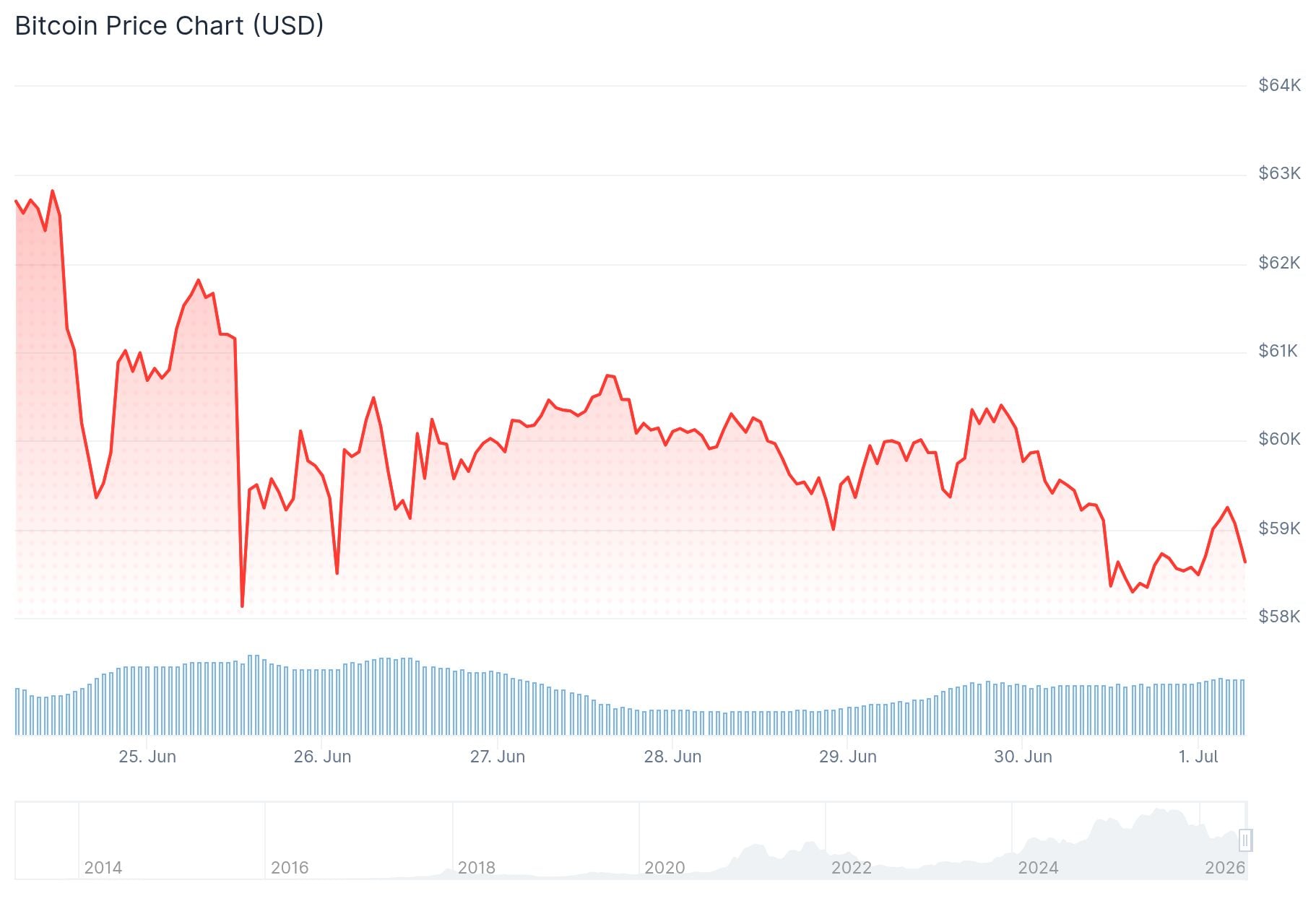
Bitcoin (BTC) Price: What History Says About Bitcoin’s Cycle Bottoms

Gilas 3×3 outlasts Thailand to reach FIBA Asia Cup main draw


