👨🏿🚀TechCabal Daily – Abay Bank lists in Ethiopia
Welcome to a new week. 
Everywhere you turn, rain is falling—which is great news for my Internet providers and me. On the bright side, June is almost over, which means we’re nearly halfway through the year. What value have you provided your shareholders in the first half of the year?
—Zia
Get smarter about Francophone Africa with our newsletter, Francophone Weekly—the startups, tech policies, and institutions building the pipelines for ecosystem growth.
- Vodacom cleared to acquire Safaricom stake
- Ethiopia’s Abay Bank goes public
- Optasia relaunches Nigeria operations
- New draft rules in SA target offshore e-commerce operators
- World Wide Web 3
- Job Openings
Telecoms
Kenya’s court has cleared the way for Vodacom to buy more of Safaricom
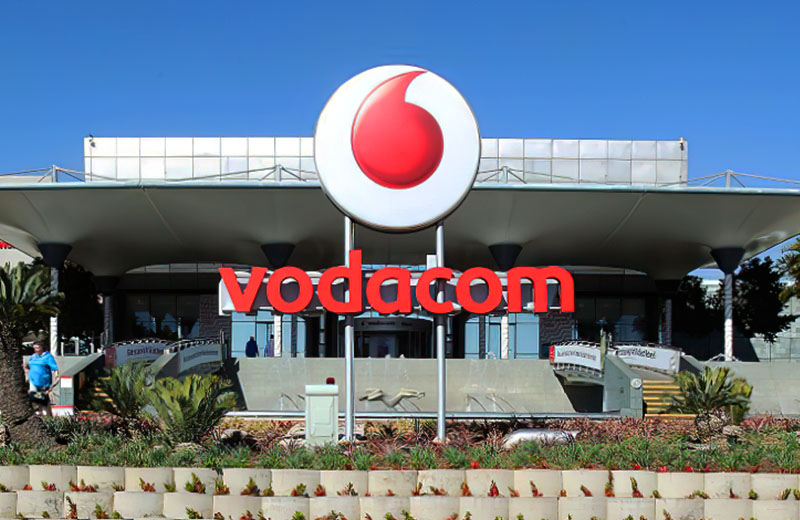 Image Source: Vodacom
In Kenya, that question is worth about $2.1 billion.
An appeals court has lifted an order that temporarily blocked the Kenyan government’s plan to sell a 15% stake in Safaricom, the country’s largest telecoms firm, to South Africa’s Vodacom. If the transaction goes through, Vodacom’s ownership of East Africa’s largest telecoms company will rise from about 40% to roughly 55%, making it the majority shareholder.
Explain like I’m new here: Safaricom is more than Kenya’s biggest telco; it also operates M-PESA, one of the world’s most successful mobile money platforms, which over 40 million Kenyans now use daily to send money, pay bills, save, and run businesses.
The Kenyan government agreed to the sale in December 2025, saying the money would help fund roads, airports, power projects, and other infrastructure through a new National Infrastructure Fund. But in March, a court paused the deal after petitioners argued that Safaricom, as a strategic public asset, should not be sold to a foreign company without greater public participation and transparency.
The appeals court has now allowed the transaction to proceed while the wider legal dispute continues.
Who loses? The Kenyan government would have faced a growing budget problem if the sale remained frozen, especially after earmarking the proceeds for infrastructure spending.
Who wins here? Vodacom moves a step closer to gaining majority control of one of Africa’s most profitable telecoms companies and the mobile money business at the centre of Kenya’s digital economy.
Zoom out: The story is really about how governments are beginning to treat successful technology companies. Safaricom has outgrown its role as a simple telecoms operator. It has become one of Kenya’s most valuable public assets, making the question of who owns it as much about national strategy as it is about business.
Modern Rails for Africa’s Economy: How Fincra is helping businesses collect, pay out, convert, and settle across African markets. Read more here.
Capital Markets
Ethiopia’s stock exchange just welcomed its fifth listed company
 Image Source: Tenor
For more than 50 years, Ethiopia had no stock exchange. If you wanted to invest in one of the country’s biggest companies, you simply couldn’t.
However, since it launched its bourse in January 2025, Ethiopia has never looked back. In its eighteen-month existence so far, the Ethiopian Securities Exchange (ESX) has slowly but steadily courted banks and telecoms companies.
Abay Bank, an Ethiopian mid-tier lender with ETB 91.3 billion ($566 million) in assets, has become the fifth company to list on the stock exchange. It is also the fourth private bank to join the exchange, following Wegagen Bank, Gadaa Bank, and Awash Bank. In May, Ethio Telecom became the first non-financial company to list after attracting over 47,000 investors in its public share offer.
Explain like I’m new here: A stock exchange is a marketplace where investors can buy and sell shares in companies. It gives businesses access to capital to grow while allowing ordinary people and institutions to own a piece of those businesses.
Abay Bank’s listing does not involve selling new shares to the public. Instead, it gives existing shareholders a regulated market where those shares can be traded more easily and transparently.
The listing marks something much bigger. Ethiopia is building the financial infrastructure that many of the world’s fastest-growing economies have relied on for decades. Deep capital markets make it easier for companies to raise money, investors to build wealth, and governments to attract long-term investment.
Who loses? Private companies that stay outside regulated capital markets could find it harder to attract investors as Ethiopia’s exchange grows, given that the country is not a major destination for private capital.
In 2025, Ethiopia recorded no disclosed startup raises, according to Africa: The Big Deal; however, African Business, a pan-African publication, estimated that Ethiopian-headquartered startups attracted less than $80 million in foreign capital across 2024 and 2025 combined. Dodai, the e-mobility startup that raised a $13 million Series A round in March, has been the country’s bright spot.
Who wins here? Ethiopian businesses gain a new way to raise capital, while investors gradually get more opportunities to participate in one of Africa’s largest economies.
Zoom out: Riding on the momentum, Ethiopia hopes to reach nine listed companies by July and 50 by 2030.
Naira Life 2026 is here!

The theme for this year’s Naira Life Conference by Zikoko is “All About Wealth.”
Join 2,000+ in Lagos on August 22 for a day of practical money conversations and workshops designed to move you from simply earning an income to building lasting wealth. Get 15% off early bird tickets.
Fintech
Optasia, the South African AI lending fintech, has relaunched its services in Nigeria
 Image Source: Tenor
Every time you run out of airtime on an MTN or Vodacom line and the network lends you a small top-up to keep you connected, there’s a good chance Optasia is the company making that happen behind the scenes.
The South African-listed AI micro-lender powers the airtime lending businesses of telecom operators Vodacom and MTN across Africa. In April, its Nigerian operations were suspended after the Federal Competition and Consumer Protection Commission (FCCPC) issued new rules requiring digital lenders, including telcos advancing airtime credit, to register and obtain fresh approval. Optasia’s Nigerian subsidiary, Nairtime Nigeria, fell under that restriction and paused airtime lending.
‘We’re back’: On Wednesday, June 24, Optasia announced that its Nigerian operations are fully restored. A court restraining order obtained by the Wireless Application Service Providers Association of Nigeria (WASPAN) suspended the FCCPC’s enforcement of its digital lending regulations pending a hearing scheduled for July 20. Optasia and Nairtime’s business could depend on what happens in court on July 20. If the restraining order is lifted, Optasia’s operations could be disrupted again.
There’s competition in the market: While Optasia and other operators still await further clarity, the FCCPC has already issued licences to nine lenders, including Spain-founded Fonyou and ERL, signalling competition.
Optasia, for its part, has emphasised that Nairtime Nigeria is fully locally incorporated, locally staffed, and locally led, aiming to position itself ahead of any regulatory scrutiny about foreign control.
What else? Optasia has access to over 860 million mobile subscribers across 38 countries. Nigeria is one of its most important markets. A court-dependent resumption is not the same as a resolved situation, and July 20 will determine whether Wednesday’s announcement was a genuine win or a reprieve.
Showcase Your Brand at Moonshot by TechCabal

Founders. Investors. Policymakers. Enterprise leaders. Moonshot 2026 brings together the people shaping Africa’s technology ecosystem across AI, commerce, climate, enterprise, and culture. Spotlight your brand today.
Policy
South Africa tightens rules on offshore shopping platforms
 Image Source: Tenor
South Africans spent an estimated R10 billion ($610 million) on Temu and Shein, online marketplaces, in 2025. The problem, according to regulators, is that almost none of that money came with the consumer protections that apply when you buy from a local retailer.
The South African Reserve Bank’s (SARB) Financial Surveillance Department (FinSurv) has now published a draft framework for how payment aggregators—the companies that process card payments from South Africans to offshore platforms—must operate.
What’s new? Under the new rules, aggregators must register as local South African companies, partner with an authorised dealer bank, and submit each partnership for FinSurv approval before processing payments.
What does this mean? The middleman that routes your Temu payment out of South Africa now needs to be a formal, locally registered, bank-partnered entity that FinSurv can see and supervise.
The payment framework is one piece of a broader regulatory push. Separately, the National Consumer Commission (NCC) and Consumer Goods and Services Ombud (CGSO) have proposed requiring offshore platforms to appoint local representatives in South Africa, which would give consumers an actual local point of contact for complaints about non-delivery or defective goods.
Currently, when a Temu order goes wrong, the platform has no local office to pursue. The Ecommerce Forum of South Africa (EFSA), which represents local online retailers, has argued that offshore platforms exploit import tax loopholes and undercut domestic businesses on price without bearing the same compliance costs, a complaint that has intensified since Amazon launched its dedicated South African marketplace in 2024.
The bigger picture: Temu and Shein have both denied wrongdoing and say they comply with local laws. The SARB’s draft framework is still open for comment, allowing the public, including consumers, associations, and operators to shape provisions that could soon become law in how offshore payments work.
CRYPTO TRACKER
The World Wide Web3
Source:

|
Coin Name |
Current Value |
Day |
Month |
|---|---|---|---|
| Bitcoin | $59,535 |
– 0.67% |
– 18.90% |
| Ether | $1,567 |
– 0.19% |
– 22.13% |
| Claude | $0.059999 |
+ 0.01% |
+ 0.01% |
| Solana | $71.25 |
+ 1.33% |
– 13.23% |
* Data as of 06.26 AM WAT, June 29, 2026.
JOB OPENINGS
- Kredete —Blockchain Engineer — Lagos, Nigeria
- BBC — Video Journalist, BBC News Igbo — Lagos, Nigeria
- Bank of Taiwan, South Africa —Chief Risk Officer — Gauteng, South Africa
- M-KOPA — Group Tax Manager, Finance Business Partnering Manager — Nairobi, Kenya
Looking for more opportunities? There are additional openings on TechCabal’s job board. We’ve also cleared out outdated listings to keep opportunities fresh for job seekers. If you’re hiring and would like to feature an open role, please submit it via this form.
- “We had no clear path about how this was going to turn out”: Day 1-1000 of Blaaiz
- Starlink lines up a frontal assault on mobile operators
Written by: Opeyemi Kareem and Zia Yusuf
Edited by: Ganiu Oloruntade
Want more of TechCabal?
Sign up for our insightful newsletters on the business and economy of tech in Africa.
- The Next Wave: futuristic analysis of the business of tech in Africa.
- Francophone Weekly by TechCabal: insider insights and analysis of Francophone’s tech ecosystem
P:S If you’re often missing TC Daily in your inbox, check your Promotions folder and move any edition of TC Daily from “Promotions” to your “Main” or “Primary” folder and TC Daily will always come to you.



You May Also Like

Vitalik Buterin Says Cryptographic Obfuscation Remains Far From Practical

Fed Governor Calls For Strong Stablecoin Oversight As CLARITY Act’s Final Text Gets Delayed