Must Read
Psychological first aid helps Tacloban school heal after the fatal shooting, but long-term recovery also requires addressing the nationwide shortage of guidancePsychological first aid helps Tacloban school heal after the fatal shooting, but long-term recovery also requires addressing the nationwide shortage of guidance
Tacloban school gradually heals after fatal shooting. But more work needs to be done.
For feedback or concerns regarding this content, please contact us at crypto.news@mexc.com
MANILA, Philippines – For three days, the community of San Jose National High School (SJNHS) in Tacloban City began the long process of healing after a fatal shooting occurred in their institution.
On June 22, two minors opened fire inside school premises, leaving three students killed and 20 others injured. A tragedy of that scale cannot be shaken off overnight.
Mass school shootings are unheard of in the Philippines, prompting a review of school safety guidelines. But more importantly, psychosocial support emerged as a critical need for healing.
Julienne Rose Peñaranda-Saballa, a registered guidance counselor of the Department of Education (DepEd) Tacloban Schools Division, led the development of the program for the SJNHS community.
In an interview with Rappler on Saturday, June 27, Saballa said more than 500 people were provided with psychological first aid (PFA) at the St. Roch the Healer Parish church and the San Jose Parish church in Tacloban City.
“The PFA is voluntary. So if the children, parents, or teachers do not feel like coming to the PFA, we cannot do anything about it but just to encourage them,” Saballa said.
The initial program ran from Wednesday, June 24, to Friday, June 26. The first day was for teachers, the second for “high-risk” students, or those who saw the shooting themselves and classmates and close friends of those who were killed or wounded, and the third for the rest of the student body.
On Friday night, the SJNHS alumni association organized a mass and lit candles. They honored Ayessa Nicole Dazo, Chris Lorenz Fabian, and Joyancee Badoria Separa, the three victims in the shooting.
“Since what they experienced was tragic, there is still sadness and fear in the community, but they are gradually coming together and ready to recover,” Saballa said in Filipino.
The initial psychosocial response
Saballa defined psychological first aid as “a humane form of social support to a person who is undergoing distress to give him a sense of safety, comfort, healing, and recovery.”
PFA providers do not give advice, suggestions, or comments but give victims a safe space to share their feelings and thoughts. They encouraged victims to continue with their coping mechanisms and linked them to appropriate agencies that could further address their needs.
In their program, participants were given sheets of bond paper to draw hearts and color them — as an art therapy exercise to begin the session. Then they told their stories and processed those experiences with the PFA providers.
By the end of the session, they practiced the butterfly hug technique, where they cross their arms, tap their shoulders, repeated self-affirmation, along with a breathing exercise.
Many in the community shared with PFA providers the fear for their safety and security.
“Others, especially those who witnessed the shooting themselves, experience survivor’s guilt because they lived while others died, and thoughts of what would be their future after this,” Saballa said.
They found that even the blue color of the school walls now triggers fear within the community..
The school will be repainted next week, Nilo Eder, the DepEd Tacloban Schools Division information officer previously told Rappler, as the SJNHS prepares for the possible reopening of classes. The city government also reinforced security in the school, such as stronger perimeter fencing and installation of additional CCTV cameras and emergency panic buttons.
More work to be done
The initial plan to transition to modular distance learning is being considered for July 1. But Saballa said it may still be too early for the resumption of classes at the SJNHS.
She said they will still have to consolidate the report and recommendations on how to better support children after the tragedy. Eder previously told Rappler that the insights of PFA providers will be highly considered.
Among the long-term initiatives, Saballa said they also plan to build on the network established during the response and create a team for the Eastern Visayas.
For the school shooting incident, they have gathered psychiatrists, psychologists, social workers, guidance counselors, nurses, police officers, and faith-based groups, and other non-government organizations.
But the tragedy also highlights the shortage of guidance counselors in the country. The SJNHS, actually, does not have a licensed guidance counselor.
In Tacloban, there are only three DepEd registered guidance counselors, including Saballa, who is with the Leyte National High School. The others have moved to higher education institutions.
“It’s a nationwide issue…We are appealing for the government to expedite the implementation of the Republic Act (RA) 12080, to reclassify the incumbent DepEd guidance counselors, [and] to hire school counselor associates,” she said.
She was referring to the Basic Education Mental Health and Well-Being Promotion Act. The law strengthens mental health programs in schools, establishing care centers, and hiring of school counselor associates to address the lack of guidance counselors in public schools.
Senate President Sherwin Gatchalian has told the DepEd to expedite the hiring of school counselor associates, as the 2026 national budget allocated P2 billion for this. The budget is enough to hire around 10,000 school counselor associates.
In the short-term, Saballa said guidance counselor designates and teachers in Tacloban City may be strengthened and given more training on mental health, especially spotting red flags, to be able to provide appropriate interventions for students.
“It’s hard for teachers to do the work of a guidance counselor. Because the work of a guidance counselor should be full-time. You can’t just give teachers two hours and then for them to return to teaching,” she said in Filipino.
Groups also pressured government agencies not to focus on security in addressing school violence. What the country has seen over the past week is the provision of metal detectors and other safety equipment. Schools now have stricter protocols in entry to their premises, causing longer queues at school entrances.
For the Center for Women’s Resources, safer schools must be built through education, care, and social justice and not through punitive measures and increased militarization.
“What students truly need are guidance counselors, mental health professionals, social workers, effective child protection mechanisms, libraries, and adequate school facilities that nurture their well-being and development,” it said. – Rappler.com
Some quotes were translated to English for brevity.
Disclaimer: The articles reposted on this site are sourced from public platforms and are provided for informational purposes only. They do not necessarily reflect the views of MEXC. All rights remain with the original authors. If you believe any content infringes on third-party rights, please contact crypto.news@mexc.com for removal. MEXC makes no guarantees regarding the accuracy, completeness, or timeliness of the content and is not responsible for any actions taken based on the information provided. The content does not constitute financial, legal, or other professional advice, nor should it be considered a recommendation or endorsement by MEXC.
You May Also Like
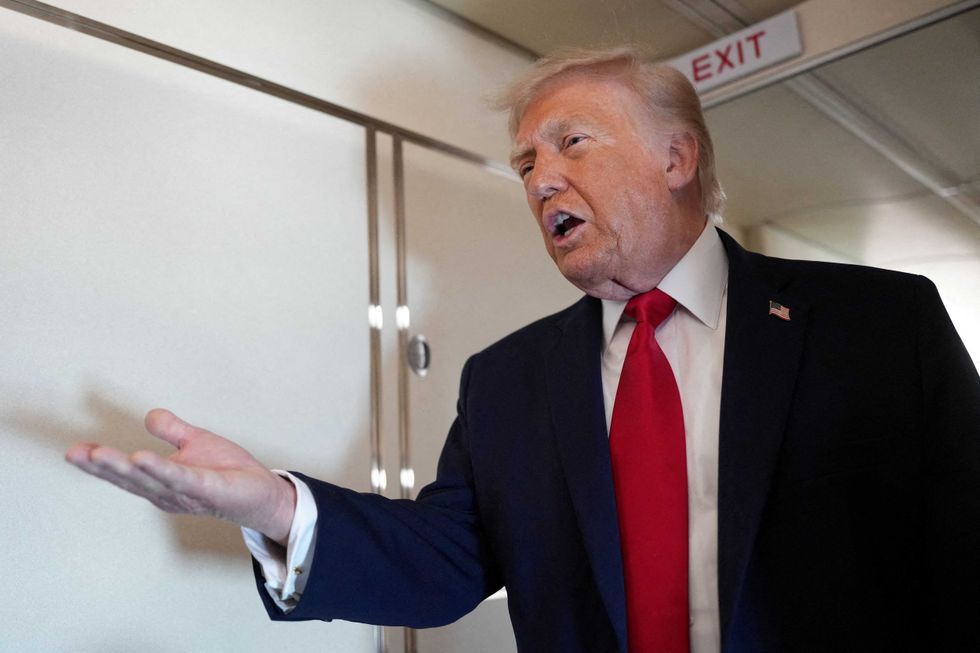
Republican tears into Trump for demanding ‘impossible task’ as midterms loom
President Donald Trump is saddling his own party with an "impossible task" with the all-important midterms looming, according to one GOP lawmaker, insisting upon
Share
Alternet2026/06/29 02:20

EUR/GBP Exchange Rate Surges as Bank of England Rate Hike Expectations Intensify – Market Analysis
BitcoinWorld EUR/GBP Exchange Rate Surges as Bank of England Rate Hike Expectations Intensify – Market Analysis The EUR/GBP currency pair demonstrates significant
Share
bitcoinworld2026/04/02 17:40
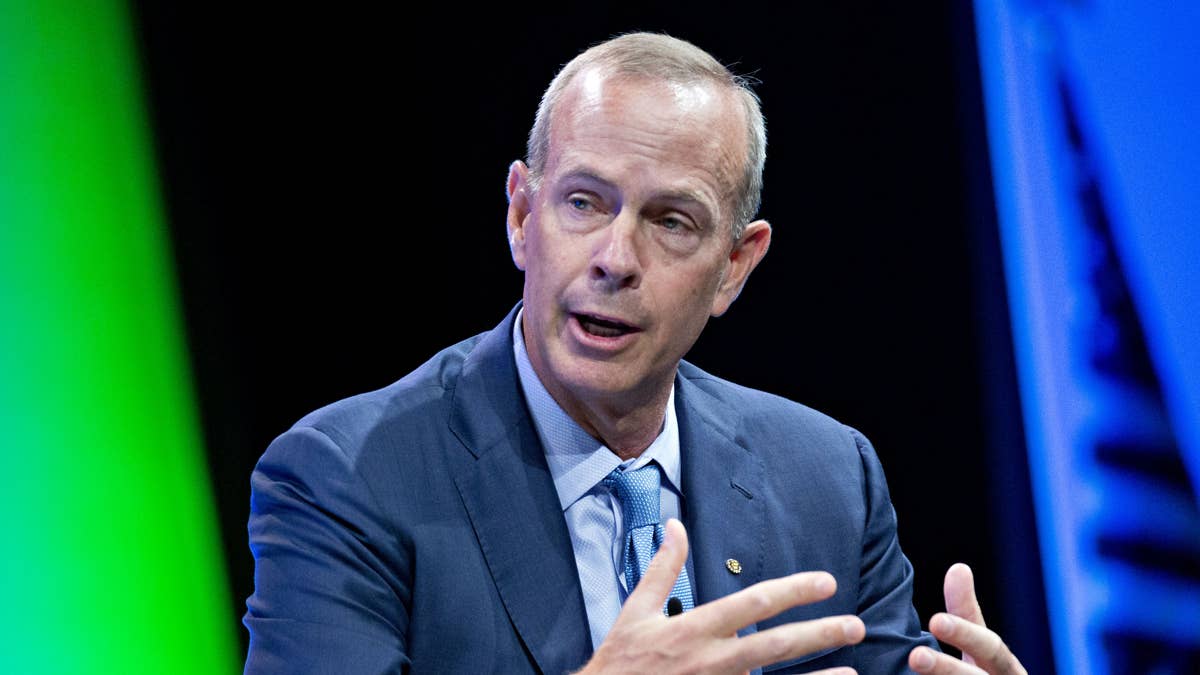
Chevron CFO reveals why gas prices are stuck
Chevron CFO Eimear Bonner says pump-price relief will take more time
Share
Thestreet2026/06/29 02:03