This research museum takes a snapshot of what’s in Philippine waters
MANILA, Philippines – Filipino marine scientists are creating a snapshot of what’s in Philippine waters. Experts at the University of the Philippines (UP) Diliman have started to build their documentation and collection into a research museum.
In a building adjacent to the UP Marine Science Institute (MSI) is the Marine Biodiversity Resources and Information System. On the ground floor is a huge copy of the 1734 Murillo Velarde map.
MBRIS is called a national hub, a research museum, a “library of specimens.” It houses existing collections of corals, cone snails, seaweeds, fishes, and invertebrates.
In a glass box are the “Conidae of the Philippines.” The collection includes the Magician’s Cone (Conus magus), whose venom can be used as a painkiller.
Marine invertebrates are stored inside jars with reagent-grade ethanol. Some samples came from trawl fishing surveys in the Visayan and Samar seas.
Corals are displayed in a glass cabinet. Among them is the Durian coral (Leptoseris kalayaanensis) discovered in the Kalayaan Island Group of the West Philippine Sea.
There is an algal herbarium that contains 60,000 specimens. Samples of seaweeds are preserved on paper with corresponding information that identifies the date and place of collection, the collector, and the scientific name. One dates back to 1975, a red algae collected from the coastal town of Bobon in Burgos, Ilocos Norte.
The collection is “essentially a snapshot of what we have,” said Maria Celia Malay, a marine biologist at MSI and the curator of the marine invertebrates collection. Malay, together with colleagues Eizadora Yu and Rachel Ravago-Gotanco, showed me around the research museum and inside some of the laboratories.
Malay said they hope MBRIS could be recognized as a repository of the Philippines’ marine biodiversity information.
MBRIS is still a work in progress. Some rooms already have designated purposes. Funding is mostly project-based. Laboratories have become the accumulation of different projects over the years.
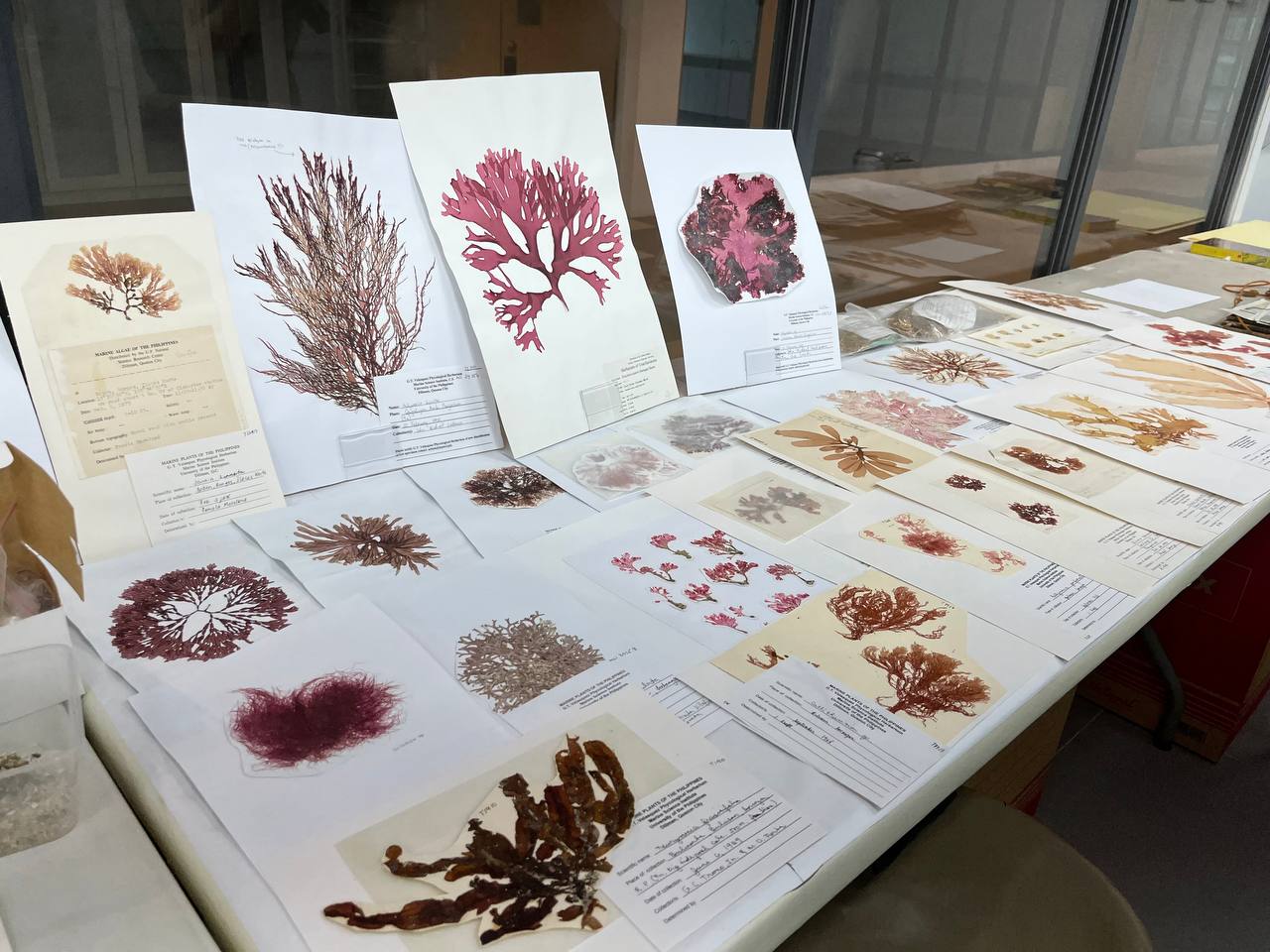 SAMPLES. Display of seaweeds inside the herbarium of the Marine Biodiversity Resources and Information System. The temperature and humidity are regulated inside the herbarium to prevent molds from forming in the samples. Photo by Iya Gozum/Rappler
Enter the BBNJ treaty
Marie Antonette Juinio-Meñez, professor emeritus at MSI, said the Philippines has the strategic advantage in marine scientific research: the resources are here, and the country has the expertise.
The scientists hope that MBRIS would not only house an expanding physical collection of marine resources but also become a space for regional training, a site where scientists could eventually utilize marine scientific research into practical applications, such as medical discoveries.
“Are we able to use the information?” said Meñez — a basic question at the heart of this enterprise.
And this is a challenge not only to scientists but also to the national leadership when it comes to implementing the Biodiversity Beyond National Jurisdiction (BBNJ) or the High Seas Treaty. Meñez has lent her expertise to the preparatory commission of the BBNJ.
Because at the core of the BBNJ are the marine genetic resources (you will encounter this term often abbreviated as MGRs) in areas beyond national jurisdiction. The BBNJ establishes that the high seas are a global common or the common heritage of mankind.
Knowing what’s in these waters and their practical applications — from pharmaceuticals to industrial uses — should be shared equitably among parties.
BBNJ defines marine genetic resources as “any material of marine plant, animal, microbial, or other origin containing functional units of heredity of actual or potential value.”
The conservation of the oceans would mean collecting samples of these resources to be studied for their potential uses to humankind. The text states the “fair and equitable sharing of benefits” that arise from this knowledge.
According to Meñez, they have been exploring possible funding to enhance facilities for marine genetic resources research and training, adding, “We hope this can be institutionalized through the MBRIS.”
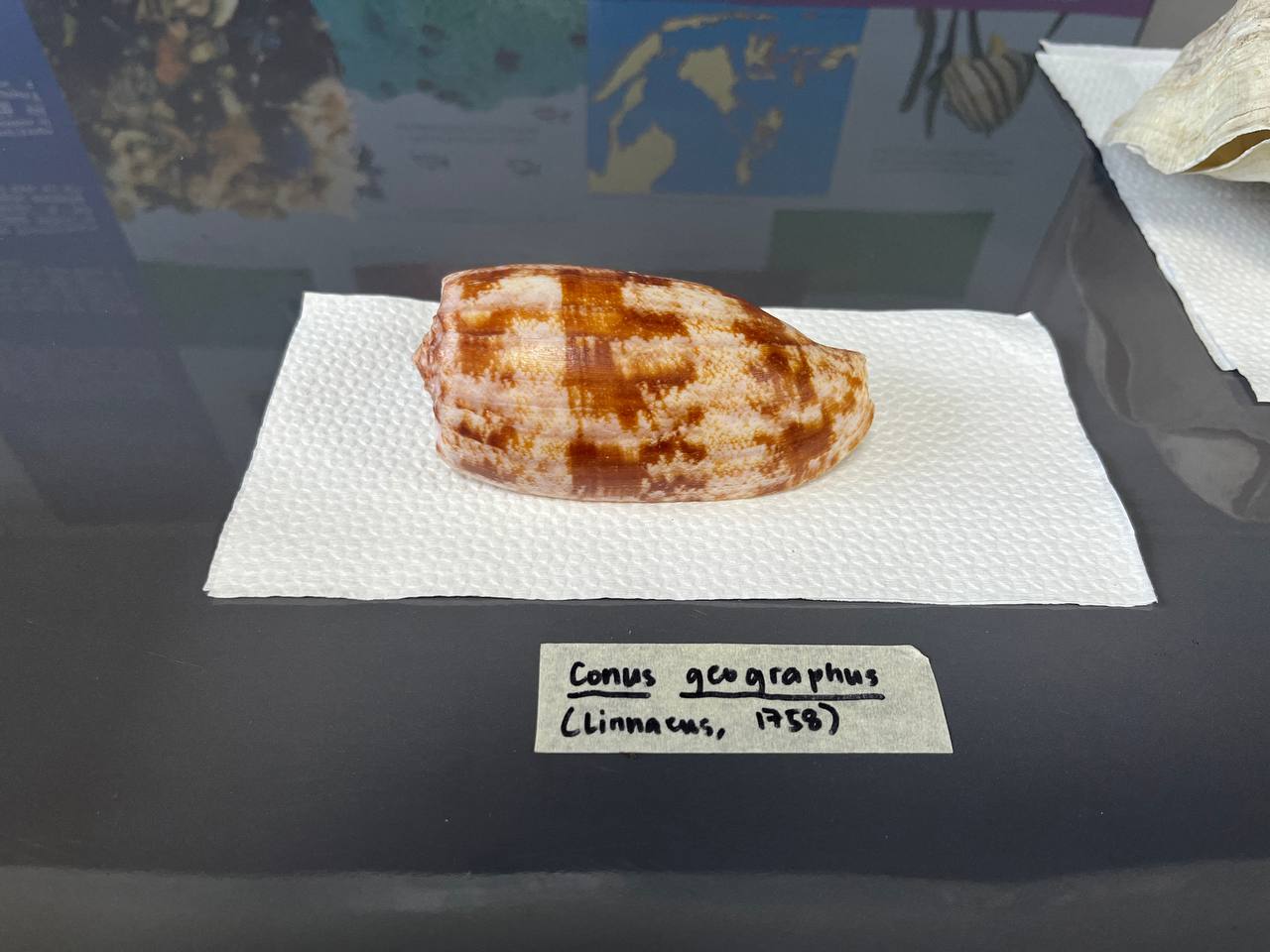 CONE SNAIL. A sample of the geography cone, whose venom can kill humans. Photo by Iya Gozum/Rappler
Before this international treaty, governance in the high seas was considered highly fragmented. There was no united framework, and the high seas were vulnerable to illegal, unreported, and unregulated fishing because of grave oversight.
The Philippines ratified the BBNJ in 2025, and the treaty finally came into effect last January 17. Parties to the agreement are now looking forward to the treaty’s first Conference of the Parties, taking place in January 2027.
Legal experts are urging the Philippine government to sponsor the establishment of a marine protected area in the high seas of the South China Sea.
For Filipino marine scientists, it is crucial that we can truly participate in research into marine genetic resources.
“There’s equity [in the framework], but how do we participate in this?” Eizadora Yu, who is currently working on metabolomics, told Rappler. “Otherwise, we’re just spectators.”
Vast parts of the oceans are still unknown to humankind. An effective implementation of the treaty would primarily rely on the expertise scientists develop and a national strategy that would provide the institutional support and funding.
Science beyond borders
Waters, and the marine wealth living in them, do not operate by the borders that humans have set.
“Our biodiversity in shallow waters is shaped by what’s beyond national jurisdiction,” said Rachel Ravago-Gotanco, a professor at MSI working on molecular biology and population genetics.
Even if BBNJ is premised on equity, gaps in support for Filipino scientists could eventually hinder them from truly participating in research in the high seas. Open access to information does not automatically guarantee equity, said Gotanco.
“If a developing country doesn’t know what to make of that information, then there’s still a barrier of limited capability,” Gotanco said, adding that the problem can be technical, such as scientists not having access to computing power.
She posed rhetorical questions in such scenarios: “Where do we begin analyzing these sequences? What are we going to look for?” In a way, these are renditions of Meñez’s earlier question, “Are we able to use the information?”
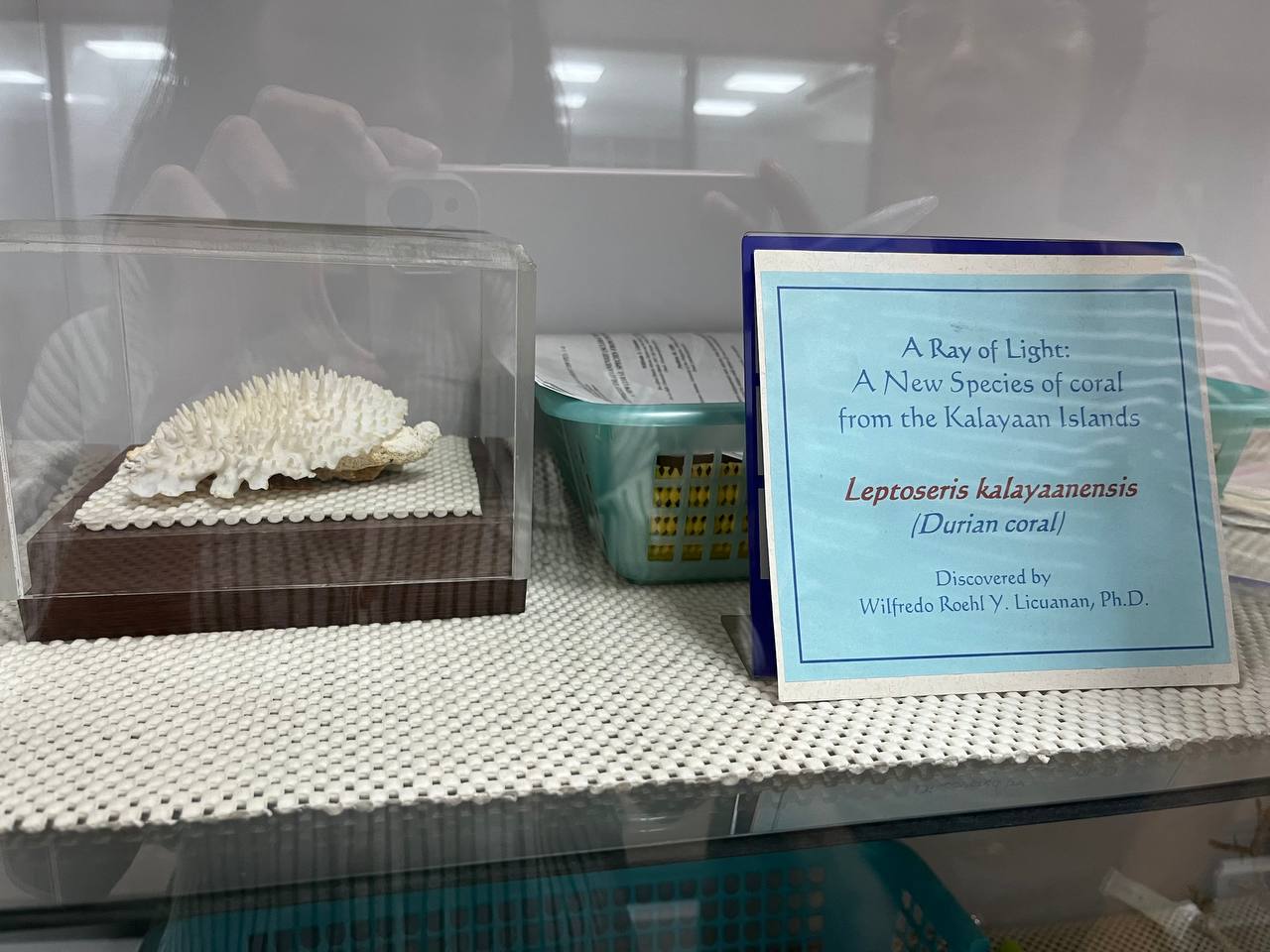 SPIKY. The Durian coral is known for its spiky surface, much like the beloved fruit primarily grown in Davao. Photo by Iya Gozum/Rappler
MBRIS is just a start. The scientists envision the research museum as a “proof of concept” of the pipeline from researching marine biodiversity to using this knowledge for biotechnology and conservation. They also hope for it to be replicated by other institutions across the Philippines in the future.
Inside the herbarium, they let me touch the samples. Touching isn’t forbidden. What they are regulating is the temperature and the humidity.
One of the samples is of sea grapes (popularly known as lato) used for salads, which have that distinct briny flavor. I was told that rarity is not a criterion for collection.
Documentation and study of marine biodiversity does not discriminate against the ordinary or the ubiquitous. Everything that can be collected (as long as the tedious paperwork allows it) will be preserved and studied, toward the grand goal of understanding the vast ocean common. – Rappler.com
You May Also Like

Binance Kurucusu CZ, Bitcoin ve Altcoinlerdeki Düşüşün Sebebini Açıkladı

Iraq arrests politicians and government officials in anti-corruption crackdown
Zahid says Johor must remain BN stronghold, brushes off Puad’s recycled‑candidates criticism