

IBM, Red Hat, and Palo Alto Networks Expand Project Lightwell
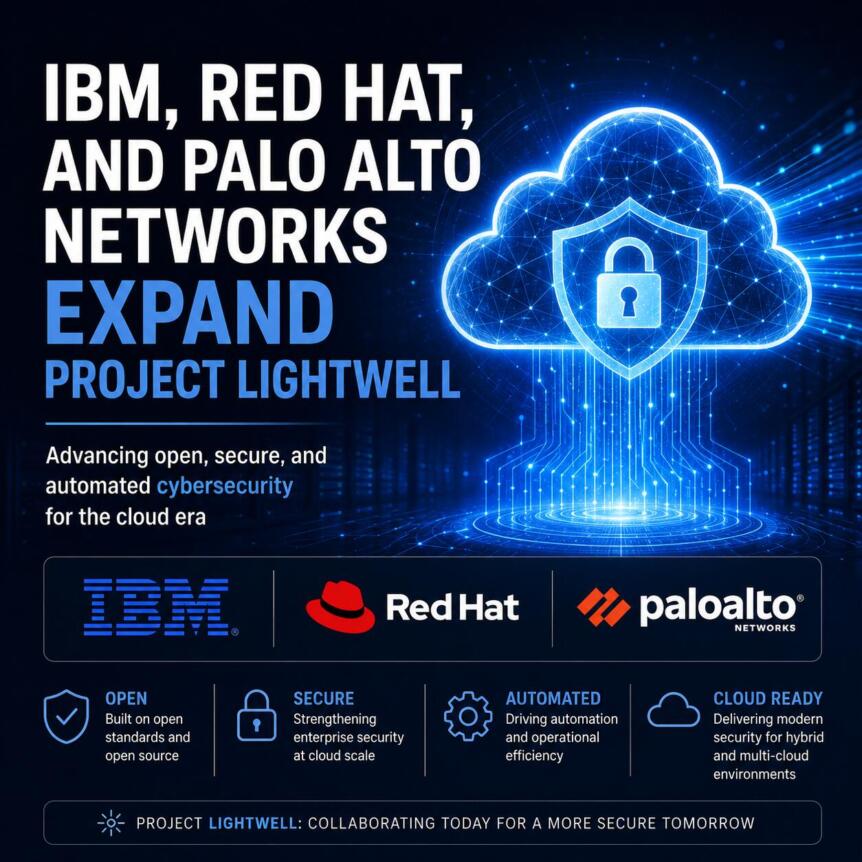
New collaboration targets the gap between vulnerability discovery and protection
IBM, Red Hat, and Palo Alto Networks have expanded their collaboration around Project Lightwell, a program aimed at helping organizations respond to software vulnerabilities more quickly. The announcement centers on integrating IBM and Red Hat’s vulnerability remediation approach with Palo Alto Networks’ Virtual Patching capability, with the goal of reducing the time between when a flaw is identified and when defenses are in place.
In enterprise security programs, this gap is often where risk concentrates. Even when teams have mature vulnerability management processes, patch rollout can be slow due to testing requirements, dependency chains, operational constraints, and the complexity of modern environments that include both proprietary applications and open source components.
How the “shield-and-fix” workflow is intended to work
The companies describe a workflow that pairs network-level protection with software remediation. Palo Alto Networks’ virtual patching would be used to block or mitigate exploitation attempts in the network while remediation efforts proceed. In parallel, Project Lightwell from IBM and Red Hat is positioned as a mechanism to support software-level fixes, particularly for open source software that enterprises rely on.
According to the announcement, the combined approach is designed for a range of software and operating environments, including open source components, commercial applications, operational technology (OT) environments, and healthcare technologies. The scope matters because organizations in regulated sectors often need additional validation steps before applying fixes that could affect clinical, industrial, or production systems.
Virtual patching before official fixes
A key element in the plan is preemptive coverage. The companies say virtual patches can be provided before official software patches are available, potentially lowering exposure during the period between vulnerability disclosure and a fully tested remediation deployment.
They also frame the network protections as capable of being deployed quickly after validated discovery of a new issue, while the longer-term goal is to reduce the elapsed time from “validated discovery” to protection.
Validation and deployment support
The collaboration also includes services support from IBM Security Services, which the companies say can help customers identify which vulnerabilities are most important to address first and determine suitable remediation paths. This implies a pragmatic focus on prioritization and operational feasibility, not just detection.
For enterprise security teams, that distinction can be consequential. Many organizations struggle less with discovering vulnerabilities and more with deciding which ones to remediate first, and how to do so without disrupting business-critical workflows.
Why open source remediation is central to the effort
Project Lightwell is described as an initiative intended to secure the open source software foundation enterprises depend on. Open source risk management is often complicated by factors such as indirect dependencies, the frequency of upstream changes, and the operational reality that not every organization can immediately update all components.
In that context, the combined model presented by IBM, Red Hat, and Palo Alto Networks attempts to address two different aspects of the vulnerability timeline:
- Containment and mitigation: using virtual patching to reduce exploitability at the network layer.
- Longer-term correction: using Project Lightwell to support software remediation that teams can test and deploy.
The announcement also references planned secure processes for sharing vulnerability information across participating software vendors, technology providers, and security teams. It further says the effort is expected to support coordinated vulnerability disclosure and accelerate protection development, alongside anonymized telemetry on exploitation attempts.
Industry implications for enterprise security
The companies’ messaging reflects a broader industry shift. As vulnerability discovery speeds up, largely due to automation and increasingly advanced analysis methods, security teams face pressure to compress the response cycle without sacrificing validation. Virtual patching is often discussed as a bridge technology, but it is not a substitute for patching in the long run. Its value is usually highest when it buys time, enabling teams to remediate with less urgency-driven disruption.
There are also operational considerations. Virtual patching effectiveness depends on accurate detection logic and the ability to map protections to the relevant traffic and systems. Software remediation depends on the quality of the fix, integration testing, and the organization’s deployment practices. The collaboration’s “shield-and-fix” framing suggests the goal is to coordinate these two tracks rather than treat them as separate initiatives.
What is known, and what remains open
While the announcement outlines capabilities and intended benefits, it does not provide additional technical details in the email beyond the high-level workflow. For example, organizations evaluating whether this approach fits their environment would typically look for specifics such as implementation requirements, integration scope with existing security tooling, and the timeline for availability in relevant product ecosystems.
As with most enterprise security initiatives, outcomes will likely depend on customer-specific factors including system architecture, vulnerability severity, change management processes, and the effectiveness of validation steps for both network controls and remediation packages.
Bottom line
IBM, Red Hat, and Palo Alto Networks are positioning an expanded Project Lightwell collaboration as a way to shorten the window between vulnerability discovery and protection. By combining virtual patching with software remediation support, the companies aim to reduce exposure during the critical period before official fixes can be safely tested and deployed.
This article was originally published as IBM, Red Hat, and Palo Alto Networks Expand Project Lightwell on Crypto Breaking News – your trusted source for crypto news, Bitcoin news, and blockchain updates.


You May Also Like

ETH Enters High-Stakes Decision Zone

What is On-Demand Liquidity? How Ripple uses XRP to move money

Goldman Sachs’ 1 Delta Desk Warns AI’s Greatest Threat Is the Reflexive Loop



