

Tokyo CPI inflation rises to 1.7% in June: Implications for the Japanese Yen
BitcoinWorld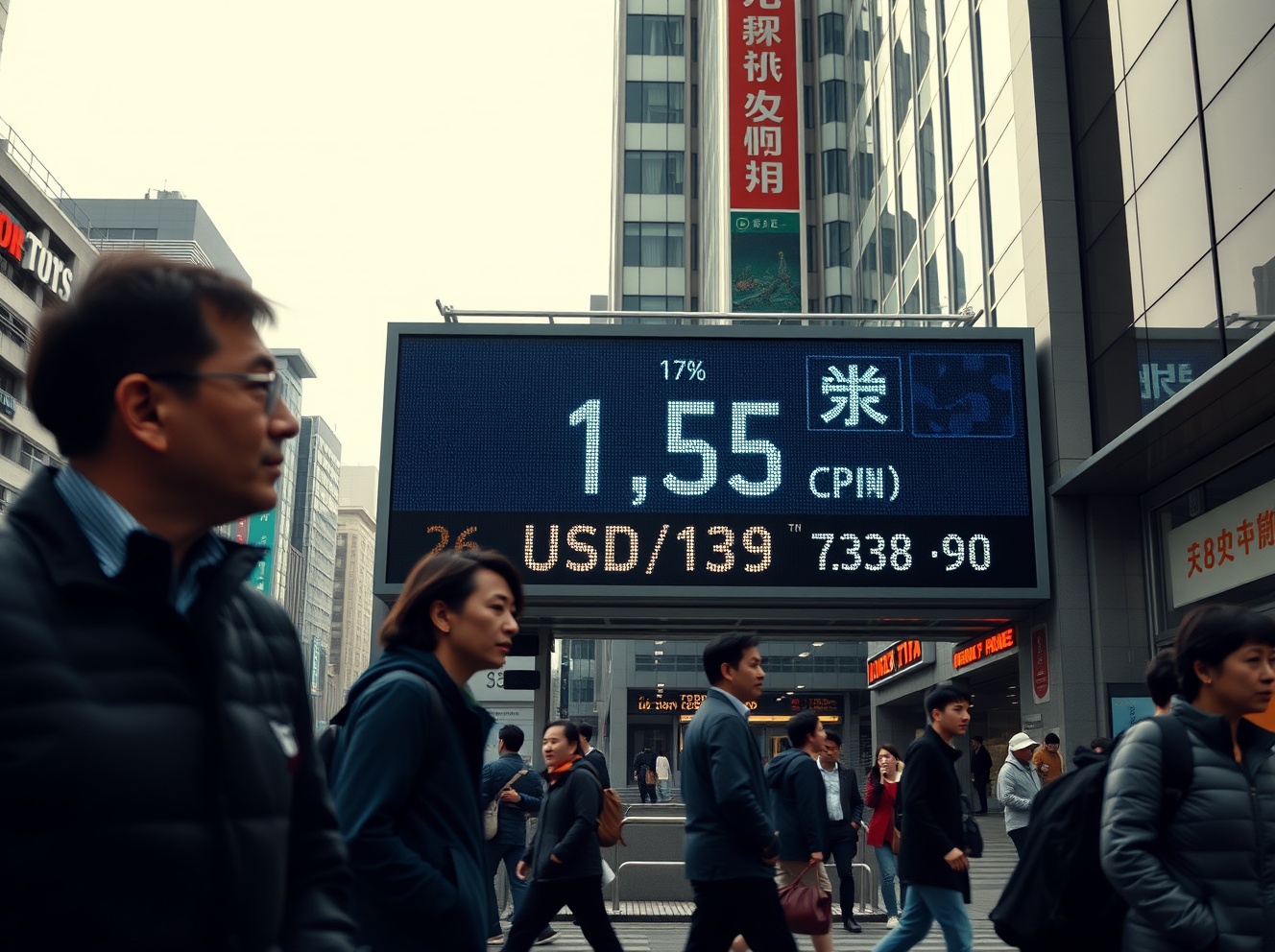
Tokyo CPI inflation rises to 1.7% in June: Implications for the Japanese Yen
Japan’s Tokyo Consumer Price Index (CPI) inflation rose to 1.7% year-on-year in June, according to data released by the Statistics Bureau. The reading, which serves as a leading indicator for national inflation trends, came in slightly above market expectations and marked a modest acceleration from the 1.6% recorded in May.
Core inflation remains steady
The Tokyo CPI excluding fresh food — the Bank of Japan’s preferred measure — also rose 1.7% year-on-year, matching the previous month’s pace. This so-called core-core inflation figure has remained in the 1.6%-1.8% range for several months, suggesting that price pressures are stabilizing rather than accelerating sharply.
The data is closely watched by markets because Tokyo’s inflation figures tend to foreshadow national trends, which are released about two weeks later. For June, the national CPI is expected to show a similar trajectory, reinforcing the narrative of moderate but persistent inflation in Japan’s economy.
What this means for the Japanese Yen
The inflation reading has direct implications for the Japanese Yen, which has been under pressure against the US Dollar for much of 2024 and 2025. The Yen’s weakness stems largely from the interest rate differential between Japan and other major economies, particularly the United States.
The Bank of Japan has maintained an ultra-loose monetary policy stance for years, keeping short-term interest rates at -0.1% and capping 10-year government bond yields around 0%. In contrast, the Federal Reserve has held its benchmark rate at elevated levels to combat inflation, creating a wide yield gap that favors the Dollar over the Yen.
BOJ policy outlook
Tokyo’s steady inflation reading provides the Bank of Japan with some room to consider a gradual policy normalization, though Governor Kazuo Ueda has repeatedly stressed that the central bank will not rush into rate hikes. The BOJ wants to see sustained demand-driven inflation above 2% before committing to tighter policy.
Markets are currently pricing in a potential rate hike in the fourth quarter of 2025 or early 2026, but today’s data does not significantly alter those expectations. The 1.7% reading, while above the global disinflation trend in some economies, remains below the BOJ’s 2% target.
Market reaction and USD/JPY dynamics
The immediate market reaction to the Tokyo CPI data was muted. The USD/JPY pair traded in a narrow range around 158.50, reflecting that the inflation print was broadly in line with expectations. However, currency analysts note that any upside surprise in future inflation data could prompt a reassessment of BOJ policy timing, potentially providing support for the Yen.
For now, the Yen remains heavily influenced by external factors, particularly US interest rate expectations and global risk sentiment. The Federal Reserve’s next policy decision in July will likely have a more pronounced impact on USD/JPY than domestic Japanese data.
Broader economic context
Japan’s economy faces a complex picture. While inflation has moderated from its 2023 peak of over 4%, it remains above the BOJ’s target. Wage growth has shown signs of picking up, with major companies agreeing to the largest pay increases in decades during the spring wage negotiations. This is a critical factor for the BOJ, as sustainable inflation requires rising wages to support consumer spending.
However, real wages remain negative in some sectors, and household spending has been sluggish. The government’s recent energy subsidy phase-out has also contributed to higher utility costs, adding to the cost-of-living pressures on Japanese consumers.
Conclusion
Tokyo’s June CPI inflation reading of 1.7% confirms that Japan’s price pressures are steady but not accelerating. For the Japanese Yen, the data does not materially change the near-term outlook, which remains dominated by US-Japan interest rate differentials. The BOJ is likely to maintain its cautious stance, watching for more conclusive evidence of demand-driven inflation before adjusting policy. Traders and investors should focus on upcoming national CPI data and BOJ communications for clearer signals on the Yen’s direction.
FAQs
Q1: Why is Tokyo CPI important for the Japanese Yen?
Tokyo CPI is considered a leading indicator for national inflation trends in Japan. Since inflation influences the Bank of Japan’s monetary policy decisions, any significant deviation from expectations can alter market expectations for rate changes, which directly impacts the Yen’s value against other currencies.
Q2: What is the BOJ’s inflation target and how close is the current reading?
The Bank of Japan targets 2% inflation, measured by the core CPI excluding fresh food. The current Tokyo reading of 1.7% remains below this target, giving the BOJ room to maintain its accommodative policy stance for now.
Q3: Will the BOJ raise interest rates in 2025?
Most analysts expect the BOJ to raise rates at least once more in 2025 or early 2026, but the timing depends on incoming data. Sustained inflation above 2%, supported by wage growth and consumer spending, would be required for the BOJ to act. The current data does not force an immediate policy shift.
This post Tokyo CPI inflation rises to 1.7% in June: Implications for the Japanese Yen first appeared on BitcoinWorld.


You May Also Like
Binance Coin (BNB) Analysis: What Investors Need to Know Before Buying

manadia Global Launch: A Trusted AI Prediction Ecosystem Enters the Era of Value Internet

Wormhole unveils strategic reserve to accumulate W token



