

Morgan Stanley changes its oil forecast for the rest of 2026
The title of the note says everything about the question Morgan Stanley is trying to answer. "Is Peace Mispriced?", published June 16 by equity analyst and commodities strategist Devin McDermott, lands at the moment oil has already moved dramatically.
Including the session on June 15, WTI has now fallen 29% since the US and Iran first announced a ceasefire in early April, a decline of roughly $30 per barrel. The question the note poses is whether that move has gone too far, too fast.
The answer Morgan Stanley gives is nuanced. The bank revised its Brent forecasts lower: from $100 to $90 per barrel in Q3, and from $95 to $80 in Q4, cuts that are smaller than the market selloff itself, Bloomberg reported. That gap is what makes the note worth reading closely.
Why the oil supply recovery will take longer than oil prices suggest
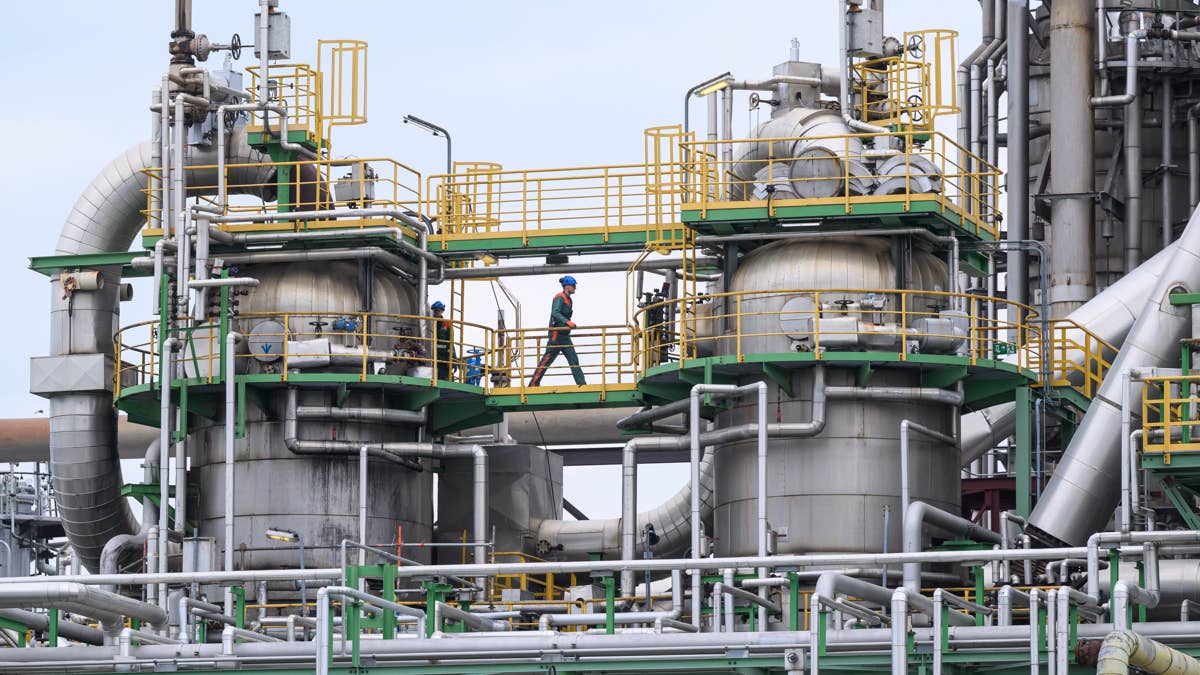
The physical reality Morgan Stanley describes is more complicated than the price action suggests. MS oil strategist Martijn Rats expects it will take several weeks for tanker flows to normalize after the Strait of Hormuz reopens.
His projections call for 50% of disrupted production back by September and 80% by December. On those assumptions, the bank estimates global oil markets still face an average deficit of approximately 3.4 million barrels per day in the third quarter, or 1.1 million barrels per day looking at OECD inventories alone.
More Oil and Gas:
- Goldman Sachs quietly resets oil price forecast for 2027
- JPMorgan sends another message on strait of Hormuz, oil prices
- Exxon CEO delivers blunt message on oil prices and the economy
Even once production begins recovering, the note emphasizes that inventories depleted since the conflict began in late February will need to be rebuilt. Global stockpiles have been drawing at a historic pace throughout the conflict, with OECD stocks falling well below five-year averages.
The market screens closer to balance by the fourth quarter, Morgan Stanley notes, but at that point the world will still need to replenish the substantial inventory draws that have accumulated since the fighting began. Martijn Rats expects Brent to be supported around $90 in Q3 and at or above $80 into next year.
What oil and energy stock valuations are implying about WTI prices
The equity analysis in the note is where Morgan Stanley's argument becomes most specific. At the current strip price of approximately $72 WTI, the bank estimates a median 2027 free cash flowyield of 11% for its oil coverage: 13% for US oil E&Ps, 8% for US Majors, and 9% for Canada.
At $55 WTI, that median yield falls to 5%. At $105, it rises to 19%, implying roughly 3 percentage points of change for every $10 move in WTI.
Related: Goldman Sachs doubles down on oil and economy message for 2026
The more striking number is on the intrinsic side. Morgan Stanley estimates oil producer valuations currently reflect an average WTI price of approximately $66 per barrel, about 13% below the 12-month strip of around $75.
The equity market is pricing in oil significantly below where the forward curve actually sits. The bank uses that gap as the foundation for its argument that the pullback has created an opportunity to add exposure to Majors and high-quality E&Ps.
The two forces keeping a ceiling on the oil price recovery
Morgan Stanley is not arguing that oil prices will snap back to their conflict-era highs. The note identifies two structural factors it expects to cap the upside even as supply tightens: high US exports and low Chinese imports, which the analysts call "twin-solvers."
"However, given that the 'twin-solvers' of high US exports and low Chinese imports seem to continue for now, the spread over $80/b can only be so much," the note stated. "With that in mind, we peg our average 3Q Dated Brent forecast at $90/b, down from $100/b before."
The underlying data supports this framing. US seaborne net exports are running roughly 4 million barrels per day higher than a year ago, while net seaborne imports into China have maintained their downward trend through June.
Global SPR releases running at 2.5 million barrels per day during April through June are set to fall sharply to 0.7 million barrels per day in July and August. That removes a significant supply cushion that has kept prices from moving even higher during the conflict period.
 The physical reality Morgan Stanley describes is more complicated than the price action suggests
Pleul&solGetty Images
Morgan Stanley's WTI price deck and what it means for energy stocks
The comp sheet reveals one more data point worth noting. Morgan Stanley's internal 2026 WTI price deck assumption is $88.24 per barrel, with Brent at $97.26. At the current strip of approximately $80 WTI, the note estimates a median FCF yield of 12% for oil producers and a total shareholder return yield of 8%.
Goldman Sachs, by comparison, cut its Q4 2026 Brent forecast to $80 and moved its 2027 average down to $75, OilPrice.com reported. The gap between Morgan Stanley's internal price deck and Goldman's published forecast captures how much the two banks differ on whether the peace deal fully resolves the supply question.
What oil and energy stock investors should watch from here:
- The note's sensitivity tables show that every $10 move in WTI changes median 2027 FCF yields across Morgan Stanley's oil coverage by approximately 3 percentage points. At $85 WTI, the median yield rises to 14%. At $95, it reaches 17%. Those numbers matter because they quantify how much upside exists if the peace deal holds less cleanly than markets currently assume, Bloomberg noted.
- Net leverage across the oil coverage universe sits at a median of 0.5x net debt-to-EBITDAX at current strip, with oil E&Ps at 0.6x and US Majors at 0.2x. That balance-sheet strength is what gives companies like EOG, PR, and CHRD the capacity to sustain dividends and buybacks even in a scenario where oil moves toward the lower end of Morgan Stanley's forecast range, a detail the note's leverage sensitivity tables make explicit.
- Morgan Stanley's comp table shows Overweight ratings on CVX, XOM, COP, DVN, FANG, CHRD, PR, AR, EQT, and EXE, with Underweight on APA, CNX, MUR, and NOG. Those ratings reflect the view that the pullback has created a differentiated opportunity rather than a uniform one, worth comparing against how Bank of America positioned its own energy coverage during the peak of the Hormuz crisis.
- The gas E&P picture is worth noting separately. At $3.50 Henry Hub near strip, Morgan Stanley estimates a median 2027 FCF yield of 9% for gas producers, rising to 14% at $4.50 and falling to 4% at $2.50. Gas E&Ps have hedged roughly 30% of estimated 2027 production on average, a higher hedge ratio than oil E&Ps, which have only about 5% of 2027 production hedged, according to TradingKey.
What "Is Peace Mispriced?" means for oil and energy investors
The "Is Peace Mispriced?" framing is not an argument that the oil market is wrong to sell off. It is an argument that the speed and magnitude of the selloff have moved ahead of the physical realities on the ground.
Energy equities in particular are now pricing in an oil price significantly below even the current forward curve. That is a specific and testable claim that the next several weeks of tanker data, inventory reports, and production figures will either validate or undermine.
For investors, the note does not tell them to buy oil. It tells them that stocks are pricing in $66 WTI when the strip is at $75, that 50% of disrupted supply will not return until September, and that the SPR cushion is about to drop by two-thirds.
Whether that combination represents an opportunity depends on how quickly the market decides the peace deal has actually resolved the supply question. Morgan Stanley is clearly not convinced it has.
Related: Scott Bessent sends stark message on oil price, economy


You May Also Like

LayerZero Crosses $260 Billion in Volume Across 830+ Tokens on 170+ Chains

Old Economy vs AI Stocks: Is Sector Diversification Protecting the S&P 500 Rally?
Makerfield votes in by‑election seen as key test for UK PM Starmer’s future as Burnham seeks return



