

CLARITY Act Markup Today: What the Senate Banking Vote Actually Decides for Crypto

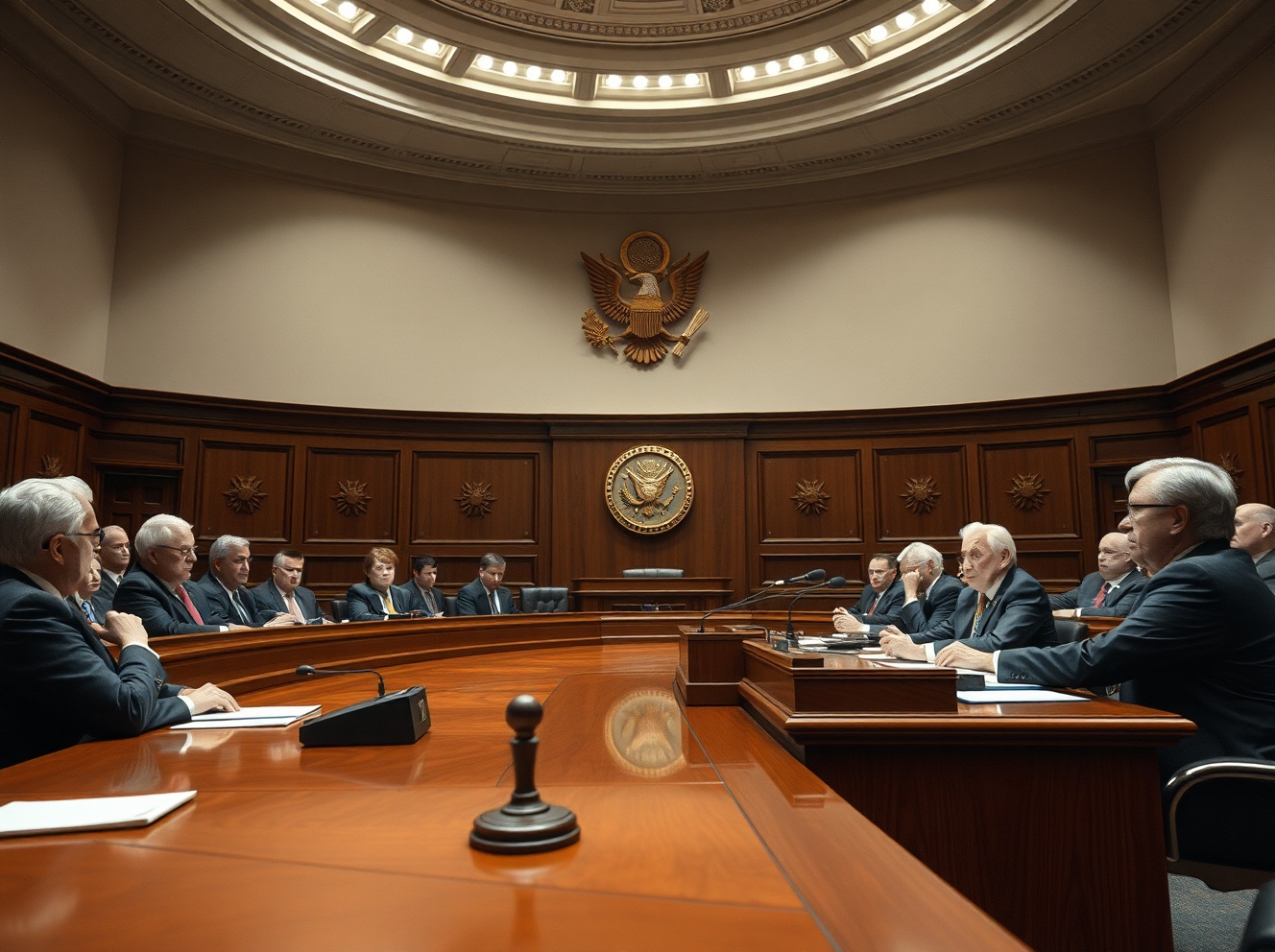
The Senate Banking Committee meets at 10:30 AM ET today, May 14, 2026, in the Dirksen Senate Office Building to mark up H.R. 3633, the Digital Asset Market Clarity Act of 2025. The bill has been sitting in the Senate since the House passed it 294-134 in July 2025. That was the largest bipartisan margin ever recorded on a crypto bill in Congress. Then it stalled for ten months.
Today changes that, one way or the other.
If you only follow prices, this is a piece of legislation. If you trade crypto, this is the single biggest US regulatory event of 2026 so far.
What the CLARITY Act Actually Does
The short version: it splits crypto oversight between two agencies and ends the turf war that has defined the last five years of US enforcement.
Under current law, the SEC and the CFTC both claim jurisdiction over most tokens. The SEC argues almost everything is a security. The CFTC argues most major coins are commodities. Companies get sued from both directions and the courts decide case by case. That is how Ripple ended up in a four-year lawsuit. That is why Coinbase and Binance.US faced parallel enforcement actions. That is why almost no institution would touch anything outside Bitcoin and Ethereum.
The CLARITY Act draws the line. Most large-cap tokens with sufficiently decentralized networks get classified as digital commodities and go to the CFTC. Tokens still controlled by an issuer stay with the SEC as investment contracts. Each agency gets its own registration regime for the exchanges and brokers that handle those assets.
The bill also carries a second title, the Anti-CBDC Surveillance State Act, which prohibits Federal Reserve banks from issuing a central bank digital currency directly to individuals. That part has its own political weight separate from market structure, but it travels with the same legislation.
That is the legal change. The market change is bigger. Once a token is classified as a digital commodity, ETF issuers can file with confidence. Custodians can hold it without legal-team blockers. Banks can offer exposure to wealth clients. The compliance ceiling that has kept most assets out of regulated finance gets lifted in one move.
Why XRP Traders Are Watching the Clock
XRP is the single biggest beneficiary of this bill, and the price action shows it.
XRP is trading near $1.37, down roughly 63% from its July 2025 peak above $3.65. The chart has been stuck between $1.35 and $1.45 for weeks. Every rally since March has run into the same ceiling. The reason is not technical. It is regulatory. Spot XRP ETFs have been live in the US since early 2026 and have pulled in steady inflows. Institutional money is already buying. It just is not buying at scale yet, because the legal classification of the underlying asset is still ambiguous outside the narrow scope of the Ripple court ruling.
If CLARITY clears committee today and gets to a floor vote before Memorial Day recess, that ambiguity ends. XRP gets the same regulatory clarity that BTC and ETH have had since the spot ETF approvals, and the inflows scale accordingly. If the markup gets delayed again, XRP likely tracks Bitcoin sideways for the rest of the year.
Polymarket has been pricing the odds of the bill being signed into law in 2026 in a wide band depending on the week. The number moves within the hour after today’s vote count is reported.
The Committee Math
This is where it gets interesting and where most coverage skips the detail.
Senate Banking has 13 Republicans and 11 Democrats. Chairman Tim Scott needs every Republican vote to clear the bill on a party-line markup. Senator Cynthia Lummis and Senator Thom Tillis have been driving the negotiations on the Republican side and released the updated market structure text that serves as the basis for today’s session. Senator Bernie Moreno set the deadline that put this on the calendar in the first place.
The vote to watch is Senator John Kennedy. He has been publicly uncommitted, and reporting from Capitol Hill suggests his hesitation has nothing to do with crypto policy and everything to do with unrelated leverage on other bills. If Kennedy votes no, the math breaks and the bill stalls. If he votes yes, it advances.
On the Democratic side, the question is whether the bill picks up any crossover votes. The House version got 78 Democrats. The Senate version is harder. The stablecoin yield language and the developer protections were the negotiating points that kept the talks alive into May.
What This Means Beyond XRP
XRP is the loudest case but it is not the only one. The CLARITY framework affects every token that has lived in the gray zone since 2020.
Solana, Cardano, Avalanche, Polygon, and a long list of Layer 1s and Layer 2s have all been name-checked in SEC complaints at some point. None of them have spot ETFs in the US yet. Once the CFTC commodity designation is on the table, that changes fast. The ETF infrastructure is already built. BlackRock, Fidelity, Bitwise, and Grayscale all have shelved S-1 filings for non-BTC, non-ETH products. The bottleneck has never been demand. It has been legal clarity.
Stablecoins are in this bill too. The compromise language on stablecoin rewards is what kept negotiations going for months. Crypto firms wanted issuers to be able to pay yield on holdings. Banking trade groups wanted them banned outright and made that position public in a joint letter from the American Bankers Association, the Bank Policy Institute, and the Independent Community Bankers of America. The bill, in its current form, threads the needle with significant restrictions but allows them. That is not a small thing. Stablecoin yield is the single most important onboarding mechanism for retail capital outside of an ETF.
The Risk: Markup Is Not a Pass
Worth being clear about what today actually is.
Markup is the committee stage. The bill gets amendments, gets voted on by committee members, and either advances to the full Senate or dies in committee. Even if it clears today, it still needs a floor vote, then reconciliation with the Senate Agriculture Committee’s separate Digital Commodity Intermediaries Act, then reconciliation with the House version, then a presidential signature. Congress goes into Memorial Day recess on May 21. Then a month of nothing. Then summer.
There is also no guarantee the markup produces a clean vote. Senate Banking already postponed this bill once in January 2026, on the day of the scheduled session, after more than 100 amendments were filed. If today’s executive session ends with a vote stacked with hostile amendments, the bill effectively dies for 2026. Senator Lummis has been the most direct about the timeline: miss the May window and the bill realistically waits until 2030, after the midterms reshape the chamber.
Watch the amendments. The stablecoin yield language is the fight. The DeFi developer protections are the fight. The jurisdictional definition of “sufficiently decentralized” is the fight. A clean bill out of committee is bullish. A bill with poison pills attached is worse than no bill at all, because it forces the House to renegotiate from scratch.
Bottom Line
The CLARITY Act markup today is the most important US crypto vote since the spot Bitcoin ETF approval in January 2024. A clean pass out of committee opens the door to a floor vote before recess and, realistically, signed law before Q4. A delay or a hostile markup pushes everything to 2027 at best, 2030 at worst. XRP is the asset with the most to gain or lose in the next 24 hours, but the second-order effects, ETF expansion, bank custody, stablecoin clarity, touch every token in the top 50. Watch the committee tally before you watch the chart.
This article is for informational purposes only and does not constitute financial advice.


You May Also Like
Senate Banking Committee Rejects Crypto Conflict of Interest Rule for President and Congress

Australian Dollar Dips as US Retail Sales Data Meets Forecasts, Dampening Rate Cut Hopes




