Kevin Warsh and the June Rate Cut: Why the Shadow FOMC Is Predicting a Pivot Before the New Chair Takes the Oath
Kevin Warsh's near-certain confirmation as Federal Reserve Chair, priced at 98% on Polymarket, has triggered a hawkish market repricing that contradicts the "Warsh Pivot" narrative, leaving traders split on whether a June rate cut is a policy signal or wishful thinking.
- Polymarket prices Warsh's confirmation at 98% by July 2026, following a Senate Banking Committee approval on a 13-11 vote in late April.
- Markets have repriced to less than 20 basis points of cuts through end-2026, down from 80bps before Warsh's Senate testimony.
- Warsh's first FOMC meeting as chair falls on June 17, 2026, making it the primary event window for any pre-summer pivot.
- The Shadow FOMC and Twitter macro influencers are split: the dovish camp cites AI productivity disinflation, while the hawkish camp points to a potential Hormuz-driven stagflation shock.
- MEXC Prediction Markets allow eligible users to trade outcome-based contracts on major macro events including Federal Reserve decisions.
Why the June FOMC Is the Most Watched Meeting in Years
Kevin Warsh's confirmation as Federal Reserve Chair sets up June 17 as the most consequential FOMC meeting since the 2022 rate hike cycle began. Warsh takes the oath around May 15-16, following Jerome Powell's final meeting on April 29-30, and his first rate decision arrives just weeks after he inherits the chair.
The Shadow FOMC, a term used broadly to describe former Fed officials, institutional economists, and high-volume prediction market participants who track policy signals outside official channels, is split on whether Warsh uses that debut meeting to cut.
The dovish case centers on AI-driven productivity gains acting as a structural disinflationary force, enabling a June cut without triggering a price spiral. The hawkish case points to resilient Q1 consumption data, a potential Hormuz blockade with Brent crude at $108, and Warsh's own Senate testimony emphasizing inflation accountability above all else.
The result is a market priced for a hawkish hold but watching every data release for a reason to reprice.
The Warsh Confirmation Timeline: From "Sock Puppet" to 98% Odds
Warsh's path to the chair moved faster than most expected, and each milestone repriced markets in a specific direction.
Date: Apr 21, 2026
Event: Senate hearing: Warsh pitches "regime change" at the Fed.
Market Reaction: Hawkish repricing begins; cut expectations compress.
Date: Apr 22, 2026
Event: Kevin Warsh "Sock Puppet" Senate hearing: Sen. Kennedy labels him Trump's proxy.
Market Reaction: Warsh rebuts with "analytic rigor" and inflation without excuse.
Date: Apr 24, 2026
Event: DOJ probe ends; confirmation path clears.
Market Reaction: Dovish Twitter buzz; brief June cut speculation.
Date: Apr 27, 2026
Event: Market brief: cuts priced at less than 20bps end-2026.
Market Reaction: Fed funds hike probability rises 10%.
Date: Apr 29-30, 2026
Event: Powell's final FOMC: no cut, hawkish hold.
Market Reaction: Warsh transition confirmed for mid-May.
Date: Apr 30, 2026
Event: Banking Committee vote: 13-11 approval.
Market Reaction: Warsh signals AI productivity enables eventual cuts.
Date: May 6, 2026
Event: Rate cut bets resurface ahead of May 15 takeover.
Market Reaction: Full Senate floor vote pending.
The Kevin Warsh "Sock Puppet" Senate hearing on April 22 became the defining moment of his confirmation process. Senator Kennedy's framing of Warsh as a White House proxy forced him to go on record prioritizing Federal Reserve independence over political pressure, a statement that paradoxically pushed markets in a hawkish direction by confirming he would not simply deliver the cuts the administration had publicly demanded.
The "Regime Change" Doctrine and What It Actually Means for Rates
Warsh's Kevin Warsh "Regime Change" Doctrine is not a rate cut framework, and markets are finally pricing that distinction correctly. His core argument is structural: the Fed needs new inflation measurement tools, a narrower mandate stripped of climate and social policy functions, and greater accountability to price stability as its sole objective.
This is a medium-term framework, not a June signal. The immediate implication is that Warsh will not cut rates to please a political timeline. The longer-term implication is that if AI-driven productivity gains continue to show disinflation without demand destruction, a Warsh-led Fed could ease later in 2026 with stronger credibility than a Powell pivot would have carried.
Key metrics as of early May 2026:
- Headline CPI: 3.48% and rising, up 2.3% month-over-month.
- Core CPI: 3.1% and steady.
- Q1 PCE Consumption: 1.4% growth.
- End-2026 cuts priced: Less than 20 basis points.
- June cut probability: Low, with CME FedWatch implying a hold.
The CPI Formula May 2026 Update from the Bureau of Labor Statistics increased the weighting of technology services and AI subscription costs in the consumer basket, reflecting shifts in household spending. The revision modestly lowers reported headline inflation but does not change the directional trend that Warsh cited in testimony as requiring continued vigilance.
The Monetary vs. Fiscal Policy Paradox of 2026
The core macro tension heading into the June FOMC is the Monetary vs. Fiscal Policy Paradox 2026: the United States is running expansionary fiscal policy at the same moment markets are pricing a potential shift to expansionary monetary policy via rate cuts.
Historically, combining expansionary monetary policy with expansionary fiscal policy raises the probability of a sustained inflation resurgence, even when starting from a position of relative price stability.
The Warsh camp's counter-argument hinges on AI-driven productivity gains as a structural deflationary offset that breaks the traditional arithmetic of the "double expansion." If total factor productivity accelerates faster than the money supply expands, sustained inflation becomes less likely even with both fiscal and monetary levers in stimulus mode.
The geopolitical variable complicates both sides. A sustained Hormuz blockade at $108 Brent is a negative supply shock that pushes inflation up and growth down simultaneously, the definition of stagflation. This is the scenario under which the Ample Reserves vs. Liquidity Scarcity Regime debate becomes most acute.
Cutting rates into a supply-shock-driven inflation spike would damage the credibility Warsh explicitly built his confirmation hearings around.
Ample Reserves vs. Liquidity Scarcity: The Technical Debate Markets Are Missing
Beneath the headline rate cut debate sits a more technical question: what happens to the Fed's balance sheet framework if Warsh cuts in June?
The current regime operates on ample reserves, meaning the Fed steers the effective federal funds rate via the Interest on Reserve Balances rate rather than through open market operations targeting reserve scarcity.
The FOMC signaled in late 2025 a potential transition toward a liquidity scarcity regime to further reduce the balance sheet. A June rate cut would likely require pausing or reversing quantitative tightening to prevent a repo market spike, adding a second layer of accommodation that markets have not fully priced.
This is the Ample Reserves vs. Liquidity Scarcity Regime tension that technical analysts are flagging: a rate cut is not just a 25-basis-point signal. It is potentially a full balance sheet pivot whose accommodative impulse is amplified by the fiscal expansion already running in parallel.
Three Scenarios for the June 17 FOMC
Scenario: Base Case
What Happens: Warsh holds rates and signals data-dependent cuts in Q3 or Q4.
Potential Market Impact: Dollar steady; risk assets range-bound; Bitcoin consolidates near key levels.
Scenario: Bear Case
What Happens: Hormuz shock worsens; Warsh signals a hike to defend inflation credibility.
Potential Market Impact: Dollar surges; equities sell off; crypto correlates down; stagflation trade activates.
Scenario: Bull Case
What Happens: AI productivity data prints strongly; Warsh cuts 25bps in a June surprise.
Potential Market Impact: Dollar weakens; risk assets rally; crypto bull case unlocks; Shadow FOMC "pivot" narrative confirmed.
The base case is the most heavily priced outcome. The bear case carries the most tail risk given geopolitical uncertainty. The bull case requires a data setup that, as of early May 2026, has not fully materialized.
What to Watch Before June 17: The Data That Could Flip the Probability
Three releases between now and June 17 carry the most weight for repricing the pivot probability.
- May CPI: A print below 3.2% opens the dovish path; above 3.5% and a hawkish hold becomes near-certain.
- Jobs data: Payrolls below 100,000 give Warsh growth cover to cut without appearing to capitulate to political pressure, while anything above 180,000 eliminates that framing entirely.
- Brent crude: Brent at $108 as of early May is already pressing the stagflation threshold, and a sustained move above $110 through June would make any cut analytically indefensible under Warsh's own stated framework.
Powell vs. Warsh: What the Handover Actually Changes
The chair transition from Jerome Powell to Kevin Warsh is not simply a personnel change; it is a shift in the Fed's operating philosophy that markets are still fully absorbing.
Powell built his tenure around data dependence, communicating policy in calibrated increments and avoiding ideological commitments to any single framework. Warsh's confirmation hearings revealed a more structural view: the Fed's tools, mandate, and accountability mechanisms all need redesigning, not just recalibrating.
The practical difference for June is about communication as much as the decision itself. A Powell hold came with carefully hedged forward guidance that kept both cut and hike options visible. A Warsh hold is likely to come with a harder commitment to the inflation framework, less forward guidance on timing, and a deliberate signal that the new chair will not be pressured by equity market drawdowns or political commentary.
Dimension: Policy style
Jerome Powell: Data-dependent, incremental.
Kevin Warsh: Framework-driven, structural.
Dimension: Forward guidance
Jerome Powell: Calibrated, optionality preserved.
Kevin Warsh: Narrower, credibility-first.
Dimension: Mandate scope
Jerome Powell: Broad, covering inflation, employment, and financial stability.
Kevin Warsh: Narrower, with price stability as the primary focus.
Dimension: Political pressure response
Jerome Powell: Acknowledge, then ignore.
Kevin Warsh: Publicly reject and use as a credibility signal.
Dimension: First June 17 signal
Jerome Powell: N/A, as Powell's era ends.
Kevin Warsh: Hawkish hold with regime change framing expected.
The handover also resets the Fed's communication calendar. Markets spent two years learning Powell's cadence; Warsh's press conference style, reaction function, and tolerance for market volatility are largely untested at chair level. That uncertainty alone adds a volatility premium to June 17 that would not exist under a Powell continuation.
How to Follow This on MEXC
Rate decisions are among the highest-volatility macro events for crypto and prediction markets. MEXC Prediction Markets allow eligible users to take positions on Federal Reserve rate decision outcomes and related macro events.
MEXC Prediction Markets availability and specific product features vary by region. This content is for informational purposes only and does not constitute financial or investment advice. Check MEXC for current availability in your jurisdiction.
FAQ
What is the Shadow FOMC June rate cut probability?
As of early May 2026, CME FedWatch implies a low probability of a June cut, with less than 20 basis points of total easing priced through end-2026. Shadow FOMC participants are split, with the dovish camp citing AI productivity disinflation and the hawkish camp pointing to resilient consumption data and geopolitical energy risks.
What is Kevin Warsh's "Regime Change" doctrine?
Warsh's doctrine calls for a structural overhaul of the Federal Reserve's inflation framework, mandate scope, and accountability mechanisms, not an immediate rate cut cycle. He argues the Fed needs new tools and a narrower price-stability focus before easing policy credibly.
What happened at the Kevin Warsh "Sock Puppet" Senate hearing?
During his April 22, 2026 confirmation hearing, Senator Kennedy labeled Warsh a "sock puppet" for the Trump administration, questioning whether he would deliver politically motivated rate cuts. Warsh rebutted by pledging analytic rigor and inflation priority without political preconditions, a statement markets interpreted as hawkish.
What does expansionary monetary and fiscal policy together mean for inflation?
Combining rate cuts, which are expansionary monetary policy, with elevated government spending, which is expansionary fiscal policy, historically increases inflation risk by injecting demand-side stimulus from two directions simultaneously. The Warsh camp argues AI-driven productivity gains act as a structural deflationary offset that breaks this historical relationship in 2026.
The Bottom Line: High Confirmation Odds Are Not High Cut Odds
The market's central error in the Warsh narrative has been conflating confirmation probability with policy probability. At 98% on Polymarket, Warsh's confirmation is a near-certainty. His June rate cut is not.
The same testimony that cleared his path to the chair explicitly committed him to inflation accountability without excuses, in a language designed to distance himself from the political pressure that framed his entire confirmation process.
June 17 will be the first test of whether that commitment holds under real-world data pressure. If Brent stays above $100 and CPI stays above 3%, the base case holds and the pivot crowd reprices further hawkish. If AI productivity data surprises to the upside and energy pressures ease, the bull case becomes live faster than markets currently expect.
The Shadow FOMC debate will not resolve until the decision prints. What is already clear is that Warsh has built a credibility floor that makes a June cut far more costly than markets priced before his testimony, and far more meaningful if he chooses to deliver it anyway.
You May Also Like

Robinhood Chain Meme Coins Rebound as CASHCAT Sets a New High

POSCO Trade Receivables Go Onchain: Why It Matters
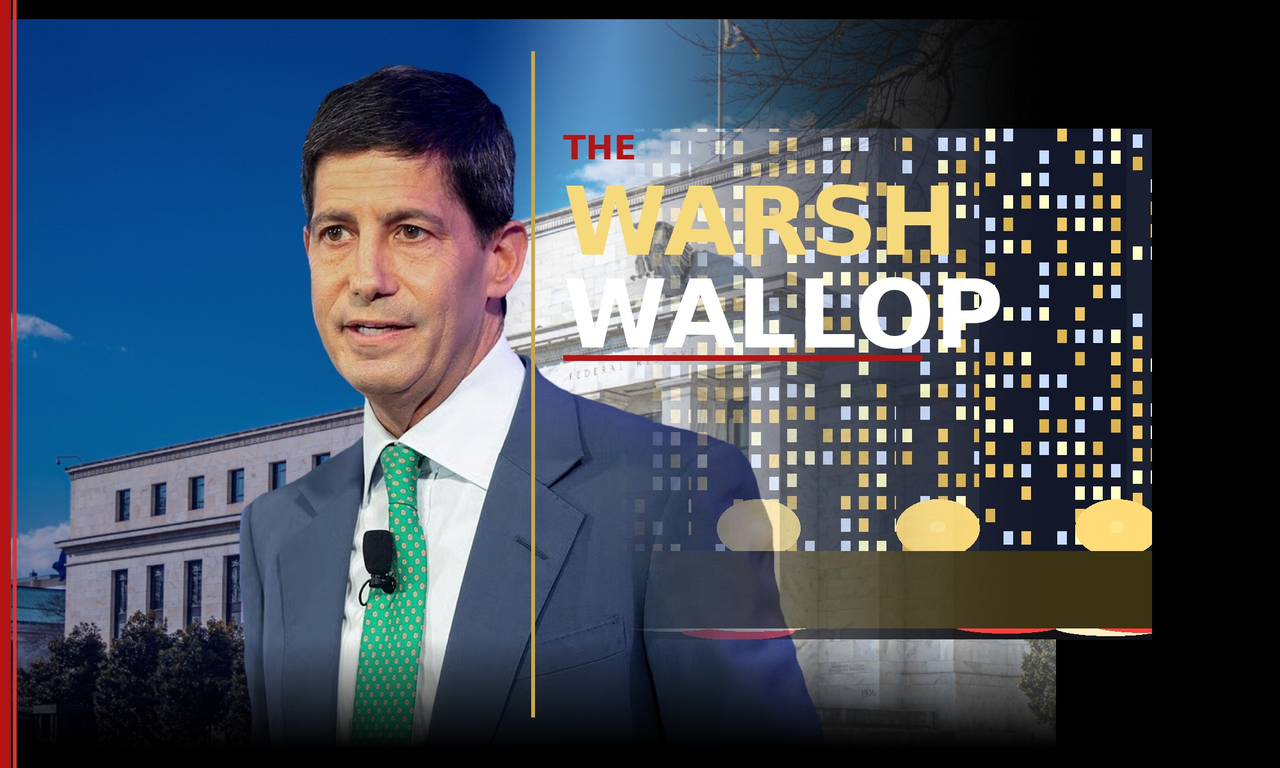
The Warsh Wallop: Why Prediction Markets Are Betting on a Volatility Spike After Powell's Exit