The Parabolic SAR (Stop and Reverse) is a widely used technical analysis tool designed to determine the direction of price trends and identify potential reversal points. This indicator plots a seriesThe Parabolic SAR (Stop and Reverse) is a widely used technical analysis tool designed to determine the direction of price trends and identify potential reversal points. This indicator plots a series
Learn/Trading Guide/Technical Indicators/What is Parabolic SAR?

What is Parabolic SAR?

Jul 16, 2025MEXC
0m
4
4$0.01242-3.09%
LETSTOP
STOP$0.0044-12.00%

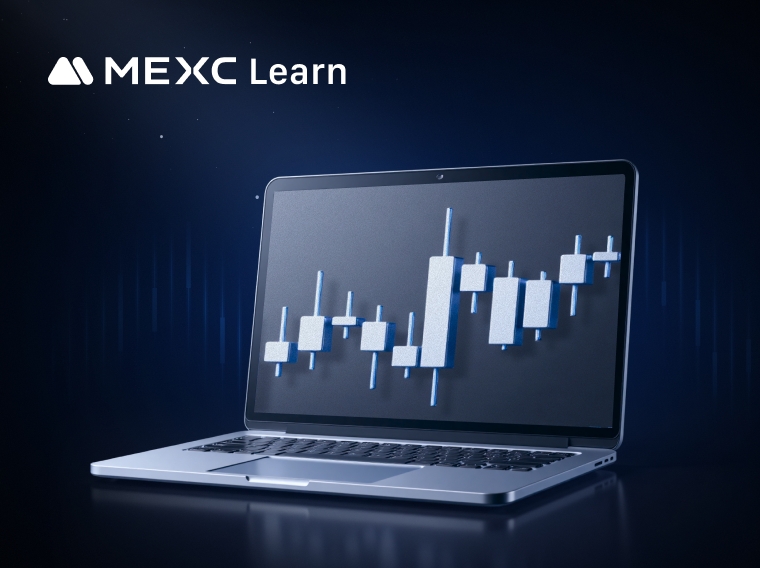
The Parabolic SAR (Stop and Reverse) is a widely used technical analysis tool designed to determine the direction of price trends and identify potential reversal points. This indicator plots a series of small dots on a price chart—positioned either above or below candlesticks—to help traders assess trend direction and establish stop-loss levels or target prices. Commonly applied in trend-following strategies, the Parabolic SAR enables traders to maintain positions during trends while providing timely signals for potential exits upon trend reversals.

Developed by renowned technical analyst J. Welles Wilder, the Parabolic SAR was introduced in his 1978 publication, New Concepts in Technical Trading Systems. This seminal work also introduced several other foundational indicators, including the Relative Strength Index (RSI), Average True Range (ATR), and Directional Movement Index (DMI), all of which remain widely utilized in modern trading strategies.


1. Core Principles of the Parabolic SAR Indicator


Trend Identification:

  • SAR dots below the price indicate an uptrend, suggesting a favorable environment for long positions.
  • SAR dots above the price signal a downtrend, indicating a potential opportunity for short positions.

Stop-Loss and Reversal Signals:

  • When SAR dots move closer to the price or are breached, it may suggest an impending trend reversal, prompting traders to reassess and adjust their positions accordingly.

Renowned for its clarity and ease of interpretation, the Parabolic SAR serves as a valuable tool for both novice and seasoned traders. Beyond offering a clear visualization of market trends, it also provides early reversal signals, enabling traders to optimize their strategies and adapt effectively to changing market conditions.

2. Advantages of the Parabolic SAR Indicator


The Parabolic SAR serves as a valuable tool for identifying market trend direction, duration, and potential reversals, enabling traders to optimize entry and exit points. Additionally, the indicator is widely used for dynamic stop-loss placement, allowing traders to adjust stop-loss levels in response to market trends. This approach, commonly known as a trailing stop, helps secure profits while effectively managing risk.

A key advantage of the Parabolic SAR is its ability to preserve gains by signaling trend reversals. By providing timely exit alerts, it prevents traders from exiting positions prematurely or entering the market too early, thereby enhancing overall trade efficiency.

3. Limitations of the Parabolic SAR Indicator


While highly effective in strongly trending markets, the Parabolic SAR loses accuracy in ranging or choppy conditions. During periods of market consolidation or low volatility, it can produce false reversal signals, potentially leading to unnecessary trade adjustments or losses.

The indicator’s sensitivity settings require careful adjustment. Higher sensitivity increases the likelihood of false signals, potentially resulting in premature position closures or profit-taking. Additionally, false bullish signals may foster overconfidence, prompting traders to enter positions at unfavorable price points.

Another limitation of the Parabolic SAR is that it does not factor in trading volume, which means it cannot assess trend strength directly. Although greater distance between SAR dots may suggest strong price movements, this does not always confirm trend sustainability. As a best practice, traders should combine the Parabolic SAR with other technical indicators to achieve a more comprehensive market analysis.

4. How to Use the Parabolic SAR Indicator on MEXC


To apply the Parabolic SAR on MEXC, follow these steps:
1) Open the MEXC SpotorFutures trading page.
2) Click the Indicators (Fx) button above the candlestick chart.
3) Navigate to the Main Index, and select SAR. Note: Click the SAR section on the left side if the menu doesn't immediately update.
4) Customize the Start, Increment, andMaximum parameters as needed.
5) Click Confirm to apply the Parabolic SAR to your trading chart.

Once enabled, Parabolic SAR dots will appear above or below price movements, assisting traders in identifying trend shifts, refining trading strategies, and managing risk more effectively.


Disclaimer: This information does not provide advice on investment, taxation, legal, financial, accounting, or any other related services, nor does it constitute advice to purchase, sell, or hold any assets. MEXC Learn provides information for reference purposes only and does not constitute investment advice. Please ensure you fully understand the risks involved and exercise caution when investing. The platform is not responsible for users' investment decisions.

Market Opportunity
4 Logo
4 Price(4)
$0.01242
$0.01242$0.01242
+4.26%
USD
4 (4) Live Price Chart

Popular Articles

View More
Is Ethereum a Good Investment? Complete Analysis & Expert Guide

Is Ethereum a Good Investment? Complete Analysis & Expert Guide

Ethereum hit an all-time high near $4,954 in August 2025, then pulled back sharply entering 2026 alongside broader market headwinds. As of May 2026, ETH trades around $2,330 — roughly 53% below its

Is XRP Dead? What the Latest Market Data Really Shows

Is XRP Dead? What the Latest Market Data Really Shows

The question "Is XRP dead" has dominated crypto forums as the token surged to $3.65 in July 2025, then spent months giving back those gains — falling below $1.50 by early 2026. This article examines

SUI Jumps 50% as Staking, Zero-Fee Stablecoins and Privacy Plans Fuel New Rally

SUI Jumps 50% as Staking, Zero-Fee Stablecoins and Privacy Plans Fuel New Rally

Key Takeaways SUI rose about 50% in seven days, moving from around $0.94 to $1.41. Trading volume reportedly jumped from about $213 million to more than $2.5 billion. Nasdaq-listed SUI Group Holdings

Why Is XRP Dropping? 4 Key Reasons Behind the Price Down

Why Is XRP Dropping? 4 Key Reasons Behind the Price Down

XRP has puzzled investors as its price continues falling despite major positive developments. While Ripple secured regulatory wins and launched spot ETFs, XRP trades near $1.46, down roughly 60% from

Hot Crypto Updates

View More
Stop Holding Idle BTC: Comparing Real Yield Opportunities on Bitcoin L2s

Stop Holding Idle BTC: Comparing Real Yield Opportunities on Bitcoin L2s

Your BTC sitting idle in a cold wallet? This deep-dive compares real yield opportunities across leading Bitcoin L2s — Stacks, Rootstock, Merlin Chain and more — so you can put your Bitcoin to work

Crypto Withdrawal Fees in 2026: Which Exchange Actually Charges the Least?

Crypto Withdrawal Fees in 2026: Which Exchange Actually Charges the Least?

Which crypto exchange has the lowest withdrawal fees in 2026? We compare MEXC, Binance, OKX, Bybit, and Bitget on real withdrawal costs — so you stop losing money on every transfer. Key Takeaways

DOGE Bulls Eye a Key Breakout — Is $0.126 the Next Stop?

DOGE Bulls Eye a Key Breakout — Is $0.126 the Next Stop?

Dogecoin (DOGE) is coiling below critical $0.1028 resistance with Bollinger Bands at a two-year squeeze and whale wallets absorbing 500M+ tokens. Full technical and on-chain breakdown inside. Key

Complete Guide to Trading BEEG in 2026: Breakout Strategies, Risk Management & Position Sizing Mastery

Complete Guide to Trading BEEG in 2026: Breakout Strategies, Risk Management & Position Sizing Mastery

Master BEEG trading in 2026 with proven breakout strategies, risk control systems, and scientific position sizing. Discover why professional traders choose MEXC for BEEG trading and build a complete

Trending News

View More
Gold Holds Above $4,700 as Markets Digest Hotter US Inflation and Await Trump–Xi Summit

Gold Holds Above $4,700 as Markets Digest Hotter US Inflation and Await Trump–Xi Summit

BitcoinWorld Gold Holds Above $4,700 as Markets Digest Hotter US Inflation and Await Trump–Xi Summit Gold prices edged higher on Tuesday, maintaining a position

Gold edges higher despite hotter US inflation, Trump–Xi summit in focus

Gold edges higher despite hotter US inflation, Trump–Xi summit in focus

The post Gold edges higher despite hotter US inflation, Trump–Xi summit in focus appeared on BitcoinEthereumNews.com. Gold price (XAU/USD) trades with mild gains

Mistral AI and TanStack hit in supply chain attack with SLSA-attested malware

Mistral AI and TanStack hit in supply chain attack with SLSA-attested malware

Attackers compromised the official Mistral AI Python package on PyPI along with hundreds of other widely-used developer packages, exposing GitHub tokens, cloud

US Inflation Rises To 3.8% Driven By Soaring Energy Prices

US Inflation Rises To 3.8% Driven By Soaring Energy Prices

Americans continue to bear the brunt of the tension in the Middle East. On Tuesday, the US Bureau of Labor Statistics (BLS) reported that the country is experiencing

Related Articles

View More
How to Use TradingView on MEXC

How to Use TradingView on MEXC

TradingView is a powerful trading analysis tool that caters to users of all experience levels. MEXC has integrated TradingView's charting tools, allowing you to use them directly on the MEXC platform.

Analysis of Common Technical Indicators in the Cryptocurrency Market

Analysis of Common Technical Indicators in the Cryptocurrency Market

In crypto trading, technical indicator analysis refers to a quantitative method that uses mathematical and statistical formulas to assess market trends. By processing price and volume data through spe

What Is the Stochastic Indicator (KDJ)?

What Is the Stochastic Indicator (KDJ)?

The Stochastic Indicator (KDJ) is a technical analysis tool that analyzes price trends to assess market strength and identify overbought and oversold conditions, helping traders make buy and sell deci

What is an Ichimoku Cloud Chart?

What is an Ichimoku Cloud Chart?

The Ichimoku Cloud Chart is a technical analysis method that combines multiple technical indicators into one chart. It can display potential support and resistance areas, trend direction, and provides

Sign Up on MEXC
Sign Up & Receive Up to 10,000 USDT Bonus