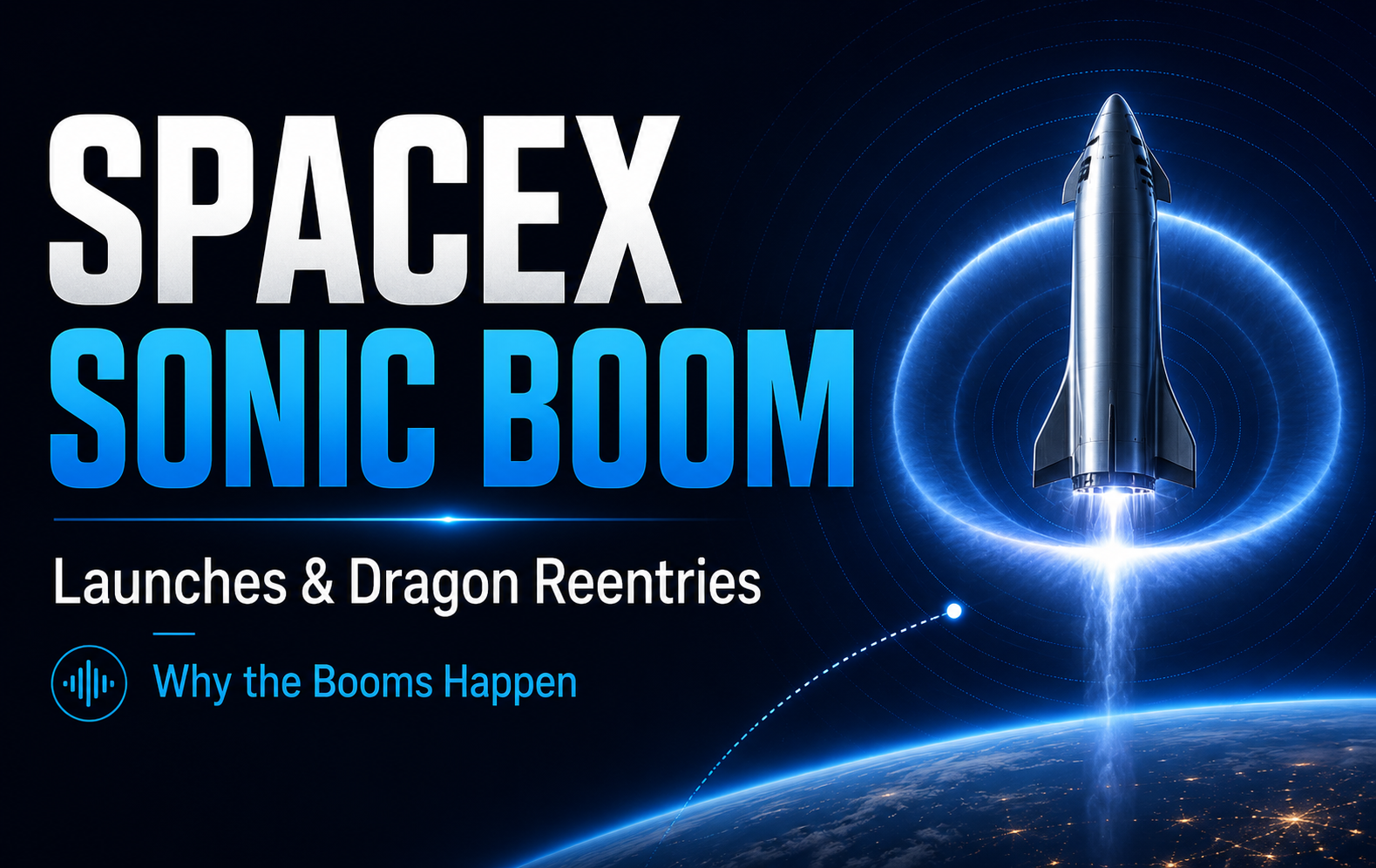
This article comprehensively explains how spacex starlink -- SpaceX's low-Earth orbit satellite constellation -- delivers high-speed, low-latency broadband to the world's most remote regions. ItThis article comprehensively explains how spacex starlink -- SpaceX's low-Earth orbit satellite constellation -- delivers high-speed, low-latency broadband to the world's most remote regions. It
Learn/Market Insights/Hot Topic Analysis/SpaceX Star...rnet Works?

SpaceX Starlink: How the Satellite Internet Works?

Jun 12, 2026Marcus O'Brien
0m
Spacecoin
SPACE$0.006106+2.07%
Sky Protocol
SKY$0.05725-0.15%
Quack AI
Q$0.022405+6.86%

This article comprehensively explains how spacex starlink -- SpaceX's low-Earth orbit satellite constellation -- delivers high-speed, low-latency broadband to the world's most remote regions. It contrasts LEO with traditional geostationary (GEO) satellites, detailed core technologies (phased-array antennas, optical inter-satellite links, OFDM waveforms), and presents the latest service plans and pricing as of June 2026. It also maps global coverage, and covers recent developments including SpaceX Starlink mobile internet (Direct-to-Cell, now branded Starlink Mobile) and the new hardware rental model. All key figures -- subscribers, satellites, coverage countries -- are sourced from SpaceX's IPO filing and authoritative industry reports.

Key Takeaways

  • Low orbit is key: spacex starlink satellites operate at ~550 km altitude, delivering ~25 ms latency -- 25x faster than traditional GEO satellites (600+ ms).
  • Global scale: As of March 31, 2026 (SpaceX IPO filing), starlink spacex had ~10.3 million subscribers across 164 countries, supported by over 12,400 spacex satellites in LEO.
  • Plans & pricing: Residential plans from $55/month (100 Mbps) to $130/month (Max); new users pay an extra $10/month hardware rental fee (effective June 2026).
  • Coverage: As of May 2026, spacex internet is available in 166 countries and territories, with 42 more planned to launch in 2026.
  • Mobile & roam: Roam plans from $55/month (100 GB) to $175/month (unlimited), supporting in-motion use up to 100 mph.
  • Direct-to-Cell: SpaceX has rebranded its service as spacex starlink mobile internet (Starlink Mobile), already in final technical validation across North America and New Zealand, targeting global commercial rollout in 2026.

1. Introduction: From Remote Villages to Global Coverage


If you live in a city, high-speed internet feels like a given. But for millions of people -- herders in the Mongolian steppe, researchers in Antarctica, sailors crossing the Pacific -- reliable broadband has long been a luxury. Traditional satellite services relied on bulky dishes and high-orbit satellites, adding frustrating latency.

Spacex starlink has fundamentally changed that. By deploying thousands of low-cost spacex satellites into low-Earth orbit, SpaceX has built a global broadband network that delivers fiber-like performance to the most remote corners of the planet. As of Q1 2026, Starlink served ~10.3 million subscribers across 164 countries, supported by more than 12,400 spacex starlink satellites in orbit -- roughly two-thirds of all active maneuverable satellites worldwide.

2. LEO vs GEO: Why Altitude Changes Everything


The Traditional Approach: Geostationary (GEO) Satellites


Traditional satellite internet relies on a handful of massive satellites parked 35,786 km above the equator. These GEO satellites "hover" over a fixed point, ideal for broadcast TV but terrible for interactive applications. The round-trip signal travels over 70,000 km, resulting in 600+ ms latency -- emails might work, but video calls or online gaming are painful.


Spacex starlink satellites fly at only ~550 km altitude, circling Earth every 90 minutes. By drastically shortening the signal path, spacex internet achieves typical latency of just 25 ms -- comparable to terrestrial fiber. As of mid-June 2026, the constellation had grown to over 12,400 operational spacex satellites, ensuring seamless handoffs as one satellite dips below the horizon and another takes over.


Phased-Array Antennas: The "Smart Dish"


The familiar white Starlink terminal is not a simple parabolic "dish." It contains a phased-array antenna with hundreds of small radiating elements. By electronically adjusting the phase of each element, the antenna can instantly "steer" a narrow beam toward the satellite overhead -- no moving parts. Standard terminals typically deliver 50-200 Mbps download; high-performance versions support even higher speeds.


Starlink's most important innovation is its space lasers (optical inter-satellite links). Each V2 Mini satellite uses lasers to communicate with neighboring satellites at high speed, connecting the entire constellation into a global optical mesh. Data can travel entirely in space, bypassing ground gateways -- reducing latency and enabling connectivity over oceans, polar regions, and areas with few ground stations. According to the SpaceX IPO filing, the company plans to begin launching next-generation V3 satellites in the second half of 2026, each designed with a download capacity of up to 1 terabit per second.

OFDM Waveform and Bandwidth


University research has reverse-engineered Starlink's downlink waveform: each channel uses 240 MHz of spectrum with orthogonal frequency-division multiplexing (OFDM), 1,024 subcarriers, and a highly optimized subcarrier spacing.

Direct-to-Cell: "When You See the Sky, You're Connected"


SpaceX has officially rebranded its satellite-to-cellular service as spacex starlink mobile internet (Starlink Mobile). As of February 2026, the service entered final technical validation in North America and New Zealand, with a target of global commercial rollout in 2026. At MWC 2026 in Barcelona, Starlink SVP Mike Nichols announced that the first-generation Direct-to-Cell constellation -- 650 satellites -- is fully deployed and already providing service on five continents. Standard 4G/5G smartphones require no hardware or software modifications to connect. Initial tests have proven that emergency texts can be sent even from the wilderness. Voice and data services are expected in the second half of 2026, and SpaceX aims to officially launch consumer data services under Starlink Mobile V2 by mid-2027.


Pricing sources: SpaceX official announcements and major tech media, May-June 2026.

Residential Plans (U.S. market)


Plan Name
Monthly Price
Hardware Rental (new users)
Typical Download Speed
Residential 100 Mbps
$55
+$10
~100 Mbps
Residential 200 Mbps
$85
+$10
~200 Mbps
Residential Max
$130
+$10
Up to 400+ Mbps

In May 2026, Starlink raised residential prices: 100 Mbps from $50 to $55, 200 Mbps from $80 to $85, Max from $120 to $130. In early June 2026, SpaceX introduced a $10/month hardware rental fee for new residential subscribers. The standard dish (Gen 3) can still be purchased outright at retailers like Best Buy or Walmart for approximately $349.

Roam (Mobile) Plans


Plan Name
Monthly Price
Data Allowance
In-Motion Speed Limit
Roam 100 GB
$55
100 GB
100 mph
Roam 300 GB
$80
300 GB
100 mph
Roam Unlimited
$175
Unlimited
100 mph

Roam prices were also adjusted in May 2026: 100 GB from $50 to $55, Unlimited from $165 to $175, while the 300 GB plan remained at $80.

Hardware Options


  • Standard Dish (Gen 3): New subscribers default to rental at $10/month; outright purchase available at retailers for ~$349. Users may also request to buy instead of rent.
  • Starlink Mini: Starting at $199 (with a Roam plan), plus monthly Roam fees ($55 for 100 GB, $80 for 300 GB).
  • High Performance (Enterprise/Maritime): Higher pricing for business use, designed for various motion-speed scenarios.

ARPU and Subscriber Growth


According to SpaceX's IPO filing, Starlink's average revenue per user (ARPU) has been declining: $99 in 2023, $91 in 2024, $81 for full-year 2025, and $66 in Q1 2026. This reflects expansion into international markets and the introduction of lower-priced plans. While subscriber numbers have more than doubled, the lower ARPU means incremental revenue from new customers has been limited.

For readers interested in specific regional pricing, note that SpaceX New York Starlink plan pricing is in line with the national U.S. rates shown above (plus applicable sales tax). Other regions vary significantly--for example, residential 100 Mbps costs ~$59/month in South Korea and ~57 USD/month in some African countries.


As of May 10, 2026, Starlink's official availability data listed 166 countries and territories with active consumer service--the largest satellite-internet footprint in history.

Coverage by region:

  • Americas: Every country in North, Central, and South America offers active consumer service except Cuba (under sanctions) and Nicaragua (pending approval).
  • Europe: All countries except Belarus and Russia have active coverage. Ukraine's service uses special geofencing to block use in Russian-occupied areas.
  • Africa: Rapid expansion -- 27 African markets live as of May 2026; Senegal became the 26th African market in February 2026.
  • Asia: Active service in Japan, the Philippines, India, Vietnam, and most of Southeast Asia. India received final regulatory approval in Q1 2026; Vietnam granted a license in February 2026.
  • Middle East: Service available in Israel, the UAE, Saudi Arabia, and Kuwait. In the UAE, residents can subscribe for 230 dirhams/month plus a one-time hardware fee.
  • Oceania: Full coverage in Australia and New Zealand.
  • Polar regions: Active service in Antarctica and the Arctic via inter-satellite laser links.

Explicitly banned countries: Eight countries prohibit Starlink use: Afghanistan, Belarus, China, Hong Kong, Macao, North Korea, Russia, Syria. An additional 42 countries have publicly announced plans to launch service in 2026, and 34 countries remain pending regulatory approval.


Launched in mid-2024, the Starlink Mini integrates the whole terminal -- dish, router, and WiFi transmitter -- into a waterproof panel. Designed for backpackers, van-lifers, and remote workers, the Mini draws only 40-50 watts on average and is USB-C powered, compatible with portable batteries and vehicle outlets.

Typical Mini speeds range from 50-100 Mbps down. As of June 2026, new users can get the Mini for a promotional $199 when purchased with a Roam plan (starting at $55/month). The Mini's price has dropped multiple times since its initial $599 launch.


7. Recent Developments and Future Updates


Hardware rental model: In early June 2026, SpaceX introduced a $10/month equipment rental fee for new residential users, eliminating the need for an upfront dish purchase. Over three years, rental totals $360 -- slightly more than the $349 retail price -- but lowers the initial barrier to entry.

Subscriber growth: Starlink's subscriber count grew from ~2.3 million at end-2023 to ~4.4 million at end-2024, ~8.9 million at end-2025, and reached ~10.3 million by the end of Q1 2026. Service now covers 164 countries and territories, with over 12,400 spacex starlink satellites in orbit.

V3 satellites: According to the SpaceX IPO filing, the company plans to begin launching next-generation V3 satellites in the second half of 2026, each with a designed download capacity of 1 terabit per second, significantly boosting constellation capacity.

Orbit lowering: SpaceX is moving forward with a plan to lower roughly 4,400 satellites from ~550 km to ~480 km, reducing orbital debris collision risk and shortening passive deorbit time from over four years to just months.

Starlink Mobile progress: At MWC 2026, SpaceX formally rebranded the service as SpaceX starlink mobile internet (Starlink Mobile). The first-generation Direct-to-Cell constellation of 650 satellites is fully deployed and already providing service on five continents. SpaceX aims to launch a consumer data service under Starlink Mobile V2 by mid-2027, with Deutsche Telekom already signed on as a partner.

8. Conclusion


From ranchers in remote pastures to scientists in polar stations, spacex starlink is pushing the boundaries of high-speed internet to every corner of the Earth. With a massive constellation of low-orbit satellites, Starlink delivers ~25 ms latency -- breaking the performance bottleneck of traditional satellite internet.

As of June 2026, residential users can subscribe for $55-$130 per month plus a $10 hardware rental fee; roam users stay connected while moving. The upcoming V3 satellites in late 2026 and the steady progress of spacex starlink mobile internet point to even greater capacity and new usage scenarios.

Challenges remain: subscriber growth has been driven by lower-priced plans and international expansion, causing ARPU to fall. The new hardware rental model also reflects pressure on terminal costs. Nevertheless, SpaceX has achieved a remarkable transition from a satellite-internet experiment to a mass-market consumer network with over 10 million subscribers, and is now evolving into a space-based cellular network. When Starlink Mobile reaches full commercial scale, LEO satellite internet will become an indispensable layer of global communications infrastructure -- just like cell towers in cities today, we will naturally look up to the sky, because up there, too, a satellite is always ready to connect us.


Market Opportunity
Spacecoin Logo
Spacecoin Price(SPACE)
$0.006104
$0.006104$0.006104
+2.88%
USD
Spacecoin (SPACE) Live Price Chart
This article is provided by Marcus O'Brien for informational purposes only and does not constitute financial or investment advice. Cryptocurrency markets involve significant risk. Please conduct independent research or consult a qualified professional before making any investment decisions. The views expressed do not necessarily represent those of MEXC or its affiliates.

Popular Articles

View More
What is a Stablecoin? A Complete Beginner’s Guide to Stable Cryptocurrencies

What is a Stablecoin? A Complete Beginner’s Guide to Stable Cryptocurrencies

Are you interested in stablecoins but find the world of cryptocurrency daunting? You’re not alone. Digital currencies can be complex, especially for those new to the space. This comprehensive guide

How Does SpaceX Make Money? Is It Profitable? Only One of Its Three Businesses Actually Earns a Profit

How Does SpaceX Make Money? Is It Profitable? Only One of Its Three Businesses Actually Earns a Profit

SpaceX makes money from three business segments, and in 2025 only one of them turned a profit. Starlink earned $4.4 billion from operations that year, while the rocket business lost $657 million and

SpaceX Drops to $153 on Nasdaq-100 Entry: The Mechanics Behind the 30% Correction

SpaceX Drops to $153 on Nasdaq-100 Entry: The Mechanics Behind the 30% Correction

A classic market paradox played out on Wall Street today. On July 7, 2026, Space Exploration Technologies Corp. (NASDAQ: SPCX) officially became a constituent of the prestigious Nasdaq-100 Index,

SpaceX Store & Official Merchandise: Complete Authorized Buying Guide

SpaceX Store & Official Merchandise: Complete Authorized Buying Guide

As global interest in aerospace exploration intensifies, a growing number of enthusiasts and industry professionals seek tangible ways to connect with milestone space missions. This rising demand

Hot Crypto Updates

View More
Spain vs Argentina Key Players: 10 Stars Who Could Decide the 2026 World Cup Final

Spain vs Argentina Key Players: 10 Stars Who Could Decide the 2026 World Cup Final

Spain and Argentina have reached the 2026 FIFA World Cup final through contrasting strengths, but the title may ultimately be decided by a small number of individual actions. Spain rely on Rodri’s

Mbappé vs Kane: Who Has the Edge in France vs England at World Cup 2026?

Mbappé vs Kane: Who Has the Edge in France vs England at World Cup 2026?

Kylian Mbappé and Harry Kane enter the 2026 World Cup third-place playoff as the two most recognizable attackers in France vs England. Both are national-team captains, experienced goalscorers and

Sony Bank Wins US OCC Conditional Approval to Launch a Trust Bank and Issue a Dollar Stablecoin

Sony Bank Wins US OCC Conditional Approval to Launch a Trust Bank and Issue a Dollar Stablecoin

Overview A Japanese giant known for gaming and entertainment has secured conditional approval from the U.S. Office of the Comptroller of the Currency (OCC) to establish a trust bank in the United

OpenAI & Anthropic Secret IPOs: A Historic 2026 for Markets?

OpenAI & Anthropic Secret IPOs: A Historic 2026 for Markets?

Overview Something unprecedented is happening in global capital markets. SpaceX, OpenAI, and Anthropic — three companies that have reshaped humanity's understanding of space, language, and

Trending News

View More
What Is SPCX Stock? A Deep Dive Into SpaceX's Ticker Symbol, IPO Pricing, and How to Trade It on MEXC

What Is SPCX Stock? A Deep Dive Into SpaceX's Ticker Symbol, IPO Pricing, and How to Trade It on MEXC

On June 12, 2026, global capital markets will witness a defining moment. SpaceX, the space exploration company founded by Elon Musk, will officially debut on the Nasdaq Stock Market under the ticker s

SpaceX Sonic Boom: Why SpaceX Launches and Dragon Reentries Cause Loud Booms

SpaceX Sonic Boom: Why SpaceX Launches and Dragon Reentries Cause Loud Booms

SpaceX sonic booms often surprise residents in California and other launch or reentry regions, especially around Vandenberg Space Force Base and Southern California splashdown paths. The loud sound is

SpaceX Joins Nasdaq-100 in Fast-Track Move: What It Means for Mega IPOs, QQQ Flows and Index Risk

SpaceX Joins Nasdaq-100 in Fast-Track Move: What It Means for Mega IPOs, QQQ Flows and Index Risk

SpaceX is set to join the Nasdaq-100 Index before the U.S. market opens on July 7, 2026, less than a month after its June 12 IPO. Nasdaq confirmed on June 26 that Space Exploration Technologies Corpor

SPCX Nasdaq-100 Inclusion: Why Price, Volume and Momentum Matter on Index Day

SPCX Nasdaq-100 Inclusion: Why Price, Volume and Momentum Matter on Index Day

SPCX is set to enter the Nasdaq-100 Index effective at the U.S. market open on July 7, 2026. The inclusion marks a major visibility event for Space Exploration Technologies Corp., but the short-term m

Related Articles

View More

Unlocking the Long Tail: MEXC's Full-Spectrum Trading Universe

Unlocking the Long Tail: MEXC's Full-Spectrum Trading Universe

In the cryptocurrency market, trading in major players like BTC and ETH have become fiercely competitive, while the real opportunities for outsized returns often lie in underexplored long-tail assets.

MEXC Alpha Trader Research Weekly | ETFs See Net Inflows for Two Consecutive Weeks as BTC Reclaims $65K: Bottoming Signal or False Breakout?

MEXC Alpha Trader Research Weekly | ETFs See Net Inflows for Two Consecutive Weeks as BTC Reclaims $65K: Bottoming Signal or False Breakout?

Week 3, July 2026Reporting Period: July 15 – July 21, 2026Data Cutoff: July 21, 2026Market OverviewThe crypto market demonstrated resilience this week amidst complex multi-directional pressures. Bitco

U.S. Stocks Weekly Report | Jul 11–Jul 17: CPI Plunges 3.5%, Top Three Banks Post Strongest Q2 Ever: Inflation Turning Point Combined with AI Profit Surge Opens Valuation Reset Window for Growth Stocks

U.S. Stocks Weekly Report | Jul 11–Jul 17: CPI Plunges 3.5%, Top Three Banks Post Strongest Q2 Ever: Inflation Turning Point Combined with AI Profit Surge Opens Valuation Reset Window for Growth Stocks

On July 17, 2026, a rare macroeconomic combination unfolded intensively within the same week: The US June Consumer price index(CPI) annual rate stood at 3.5%, significantly lower than the expected 3.8

MEXC Alpha Trader Research Weekly | ETF Outflows End After 8 Weeks, but a $425M Sell-Off Raises the Question: Who Is Driving BTC?

MEXC Alpha Trader Research Weekly | ETF Outflows End After 8 Weeks, but a $425M Sell-Off Raises the Question: Who Is Driving BTC?

Week 2 of July 2026Statistical Period: July 8, 2026 – July 14, 2026Data Cutoff: July 14, 2026Core NarrativeOver the past week, the crypto market experienced a dramatic reversal, shifting from a post-N

Sign Up on MEXC
Sign Up & Receive Up to 10,000 USDT Bonus
Is Your Stablecoin Truly Safe?
Is Your Stablecoin Truly Safe?Is Your Stablecoin Truly Safe?
Know the risks of USDT, USDC, OpenUSD & USD1