

Key takeawaysArthur Hayes announced that he is taking the CEO role at Flop Labs, which is building Flop Network and its native FLOP token, pitched as "food for your AI agent" and intended as the curreKey takeawaysArthur Hayes announced that he is taking the CEO role at Flop Labs, which is building Flop Network and its native FLOP token, pitched as "food for your AI agent" and intended as the curre
The Currency of Agentic Commerce: Arthur Hayes' Fair-Launch Play to Fuel Autonomous AI

Key takeaways
Arthur Hayes announced that he is taking the CEO role at Flop Labs, which is building Flop Network and its native FLOP token, pitched as "food for your AI agent" and intended as the currency agents use to buy inference, compute and persistent memory. The launch carries no presale and no venture capital allocation, with a large-scale airdrop planned for Q4 2026 and the genesis block targeted for Q1 2027, meaning the token is scheduled to be distributed a full quarter before the chain it powers exists. Flop Network is described as a proof-of-useful-inference protocol, with agents spending FLOP, miners supplying compute, and validators verifying delivery and storing agent memories. There is no whitepaper, no named chain, no supply schedule and no testnet, and airdrop eligibility currently amounts to following the project's X account.
Overview
Arthur Hayes is stepping back into an operating role to try, the BitMEX co-founder, more recently chief investment officer at Maelstrom and one of crypto's most-read essayists, announced he is taking over as CEO of Flop Labs, which is building Flop Network and the FLOP token. The pitch is a purpose-built currency for the agentic economy, in which autonomous software handles payments, negotiations and economic decisions without a human approving each step. Agents would spend FLOP on inference, computing capacity and persistent memory; miners would earn it for supplying those resources. No presale, no VCs, and what the project calls a 100% fair launch. The premise is sound and the timing is defensible: agents are already transacting on-chain in volume, and that volume is currently settled almost entirely in someone else's money. What Flop has published so far is a promise, a distribution schedule and a name.
1. Three Promises and a Sequence
Hayes made three commitments: no presale, no venture capital allocation, and a 100% fair launch. Flop Labs plans a large-scale airdrop in Q4 2026, with Flop Network's genesis block targeted for Q1 2027. The token is scheduled to reach holders roughly a quarter before the network it is meant to fuel goes live. For that period FLOP would be an asset whose entire value rests on the expectation of a chain, traded by people who cannot yet use it for the thing it is for. Bittensor is the comparison most often reached for as an AI network that launched without investors, but TAO arrived alongside a functioning chain, which is a materially different proposition.
Eligibility, as currently described means following @flop_labs on X. The project's site opens application routes for GPU providers acting as miners, for validators, and for creators and key opinion leaders. Hayes said he would lead Flop Labs but did not describe his responsibilities, ownership position or compensation, and the project has not disclosed whether he or other contributors receive a token allocation. A fair launch is defined by who does not get an allocation, so leaving that unanswered leaves the central claim unverified rather than disproved. Asked why he is building an AI-crypto project while calling AI a bubble, Hayes drew the distinction himself: the bubble sits in the debt issued to construct data centres and in the equity of unprofitable hyperscalers and frontier labs, not in the technology.
2. Proof-of-Useful-Inference
Flop describes the network as a proof-of-useful-inference protocol, distinguishing it from proof-of-work and proof-of-stake. Rather than spending computation on cryptographic puzzles, the design directs it at inference tasks agents have requested and paid for. Three actors carry the system. Agents consume, spending FLOP to run inference, transact, and store or retrieve memory. Miners supply compute, executing inference requests and earning block rewards plus direct inference payments. Validators confirm miners delivered what was paid for, secure network state, and store agent memories. The project says FLOP will be backed by verified computational processing power. The name borrows from the floating-point operation, the standard unit of computational throughput, but the token is not a unit of compute and no fixed exchange rate exists between the two.
3. The Gap Between the Pitch and the Documentation
There is no whitepaper, no named chain, no disclosed tokenomics or supply schedule, no testnet, and no stated audit status. The only public repository is technocore-chat, a non-core component handling agent communication and state coordination rather than settlement. Core protocol code has not been released. The missing supply schedule is the one that matters most for anyone weighing the airdrop, because without it there is no way to assess dilution, circulating supply at launch, or what an airdropped unit represents as a share of the network. "Fair launch" describes how tokens are not allocated. It says nothing about how many exist. None of this is disqualifying at this stage of a project's life, and announcing before documentation is ordinary practice. It does mean the thing currently trading on attention is a distribution promise attached to a well-known name, and that the next three milestones are unambiguous: publish the whitepaper, name the chain, and specify what recipients actually receive.
4. The Market Flop Is Building For
The demand side is real, and it is worth being precise about how real. AI agents initiated approximately 14 million transfers through the x402 protocol over a recent 30-day window, according to Token Terminal. Base handled about 7.3 million and Polygon about 5.6 million, together 12.9 million of the total, with Solana and other supported chains taking the remainder.
x402 was released by Coinbase in May 2025 and activates the HTTP 402 "Payment Required" status code, reserved in the original specification in 1991 and never standardised for any payment system. A server returns 402 with payment requirements, the client signs a stablecoin transaction, the server verifies and releases the resource. No account, no subscription, no card. In July 2026 the Linux Foundation launched the x402 Foundation with roughly 40 founding organisations including Coinbase, Cloudflare, Stripe, Visa, Mastercard, American Express, Adyen, Fiserv, Shopify, Google, AWS, Ripple, Circle, MoonPay and the Solana Foundation.
The economics are specific and they favour crypto rails genuinely. Card networks carry a floor of roughly 20 to 30 cents per transaction. At an average x402 payment of about $0.32, interchange alone would consume most of the payment. This is a category traditional rails cannot serve at all. Now the caveats; A transfer count is not an agent count; one agent generates many transfers buying compute, data and API calls repeatedly. Value is small against volume, with roughly $24 million moving across about 75 million transactions in a 30-day window measured in July. Chainalysis found a large share of the late-2025 surge came from PING, a meme coin requiring a small USDC payment via x402 to mint, a pattern critics described as closer to spam than agent commerce. One sector analysis put roughly half of measured volume down to testing rather than genuine commerce, across about 69,000 active agents as of April 2026. Agentic payments are past proof-of-concept and short of proven demand, and the gap between those two states is where every projection in this sector lives.
5. Why Stablecoins Are the Hard Part
USDC settled nearly all of those 14 million transfers, and Circle now describes it as the settlement asset of the agentic economy. The reason is unglamorous: agents and compute providers price their costs in dollars, and a volatile settlement asset makes budgeting impossible. That position is being cemented while Flop is still pre-whitepaper. On August 18, the same day as the Flop announcement, stablecoin infrastructure firm Rain launched the Agentic Payments Alliance, a coalition of more than 25 organisations whose founding members include Visa, Mastercard, Fiserv, Circle, Solana and Remitly, formed to standardise authorisation and risk management for agentic commerce. Rain CEO Farooq Malik framed it as ensuring no single company decides how agents transact on someone's behalf. The launch cited McKinsey projections of $3 trillion to $5 trillion in global agentic commerce by 2030.
Which brings the problem into focus, and it is a token design problem rather than a technology one. If FLOP is purely a medium of exchange for compute, miners convert earnings to stablecoins on receipt to fix their margins, and demand for the token evaporates the moment each transaction clears. High velocity and no reason to hold is how utility tokens die without ever failing technically. Sustained demand generally requires designed sinks: staking requirements, collateral lockups, mandatory fee burns, something that removes supply from circulation and makes holding rational rather than sentimental.
6. What Would Make This Real
The launch is a bet on one claim: that machine-to-machine commerce gets big enough, and native enough, to need its own money instead of settling in dollars. Agents are a new kind of economic actor, and nothing says they have to spend the incumbent's currency just because they do now.
Right now there is nothing to test that against, because the team has not published anything that could turn out to be wrong. What would change that is known, and it sits on Flop's own schedule: a whitepaper with a supply schedule and disclosed allocations, so the fair-launch claim can be checked instead of taken on trust, a named chain with the core code released, and sink mechanics that deal with the velocity problem head-on. Then the practical test, which is whether GPU providers actually sign up to mine a token they cannot yet price. For now there is a date, a big audience, and one of crypto's best-known operators saying he will build it.
Frequently Asked Questions
What is Flop Labs?
Flop Labs is a project led by BitMEX co-founder Arthur Hayes.He is building Flop Network and the FLOP token, intended to let AI agents pay for computing power, inference and persistent memory, and to transact with other agents without a human approving each step.
What is proof-of-useful-inference?
It is the consensus model Flop Network describes. Instead of directing computation at cryptographic puzzles, miners run AI inference tasks requested by agents and earn FLOP through block rewards and inference payments, while validators verify the compute was delivered and store agent memories.
When is the FLOP token launching?
A large-scale airdrop is planned for Q4 2026, with the genesis block targeted for Q1 2027. Neither date is final. The sequencing means the token would be distributed roughly a quarter before the network goes live.
What has Flop Labs actually published?
As of the announcement there was no whitepaper, tokenomics, supply schedule, named chain, testnet or audit status. The only public repository is technocore-chat, a non-core component for agent communication and state coordination rather than settlement.
How large is the agentic payments market really?
AI agents initiated about 14 million transfers through x402 over a recent 30-day period, with Base at 7.3 million and Polygon at 5.6 million. But transfer counts are not agent counts, average payments run roughly $0.20 to $0.32, and analysts attribute a meaningful share of historical volume to meme coin minting and testing rather than commerce.
Disclaimer: This article is for informational purposes only and does not constitute financial, investment, or trading advice. Digital assets are volatile and you may lose capital. Conduct your own research before making any decision.
市場の機会
Gensyn価格(AI)
--
----
USD
Gensyn (AI) ライブ価格チャート
説明:暗号資産パルスは、AIと公開情報源を活用し、最新のトークントレンドを瞬時にお届けします。専門家の洞察と詳細な分析については、MEXC 学ぶ をご覧ください。
このページで共有されている記事は公開プラットフォームから収集したものであり、参考情報としてのみ提供されています。MEXCの立場や見解を代表するものではありません。すべての権利は Emmanuel Olamiye に帰属します。第三者の権利を侵害するコンテンツがあると思われる場合は、service@support.mexc.com までご連絡いただければ速やかに削除いたします。MEXCはいかなるコンテンツの正確性、完全性、適時性も保証せず、提供された情報に基づいて取られたいかなる行動についても責任を負いません。本コンテンツは、金融、法律、またはその他の専門的なアドバイスを構成するものではなく、MEXCによる推奨または支持として解釈されるべきものでもありません。専門家の洞察と詳細な分析については、MEXC 学ぶ をご覧ください。
Gensyn についてもっと知る
もっと見る
OKLO 株価予測 2026–2030:Aurora、Meta、AI電力需要とOKLOONの見通し
要約 Oklo (NYSE: OKLO) について2030年までを予測することは、成熟したユーティリティ企業を予測することとは根本的に異なります。 現在の収益は、投資家がOkloに期待するビジネス規模をまだ反映していません。 より適切なフレームワークは次のとおりです: 展開成功確率 × 稼働する原子力容量 × 1MWあたりの経済性 燃料価値 同位体価値 − 将来の資本要件 ↓ 将来の株式価値 ÷
2026/08/18
OkloとMetaの核融合取引を解説:1.2 GWのAIデータセンター電力プロジェクト
要約 2026/1/9、OkloとMetaは、オハイオ州パイク郡 に 1.2 GW まで拡張可能な核エネルギーキャンパスの建設に関する合意を発表しました。 このプロジェクトは、AIインフラを含む、Metaのオハイオ州におけるデータセンター事業の拡大を支援することを目的としています。 現在の計画スケジュールは以下の通りです: マイルストーン 目標時期 施工前準備/現場整備 2026–2027 本工事
2026/08/18
Oklo(NYSE:OKLO)株式とは?オーロラ原子力発電、AIデータセンター、燃料戦略と成長の機会
要約 Oklo Inc.(NYSE:OKLO)は、高速核分裂発電所、核燃料技術、放射性同位体事業を開発している先進的な原子力技術企業です。 同社の主力エネルギー製品は Aurora パワーハウス で、Okloは現在、最大 75メガワットの電力 (MWe) を発電できると述べている次世代の高速核分裂システムです。主に電力会社に原子力設備を販売する従来の原子炉ベンダーとは異なり、Okloの主な商業モデ
2026/08/18
Gensyn の最新情報
もっと見る
MEXC オンチェーン日報:Robinhood Chainの日次DEX取引量が5億6,000万ドルを突破
Robinhood Chainのエコシステムは、1日の分散型取引所の取引量が5億6,000万ドルを超えたことで急拡大し、DeFiおよびクロスチェーンインフラの機関投資家の導入が加速しました。一方で、規制当局は暗号資産関連の法整備を進め、取引所のBTC/ETH準備高は数年ぶりの低水準に落ち込み、AIインフラへの投資は引き続き市場の主要なテーマとなっています。
2026/07/10
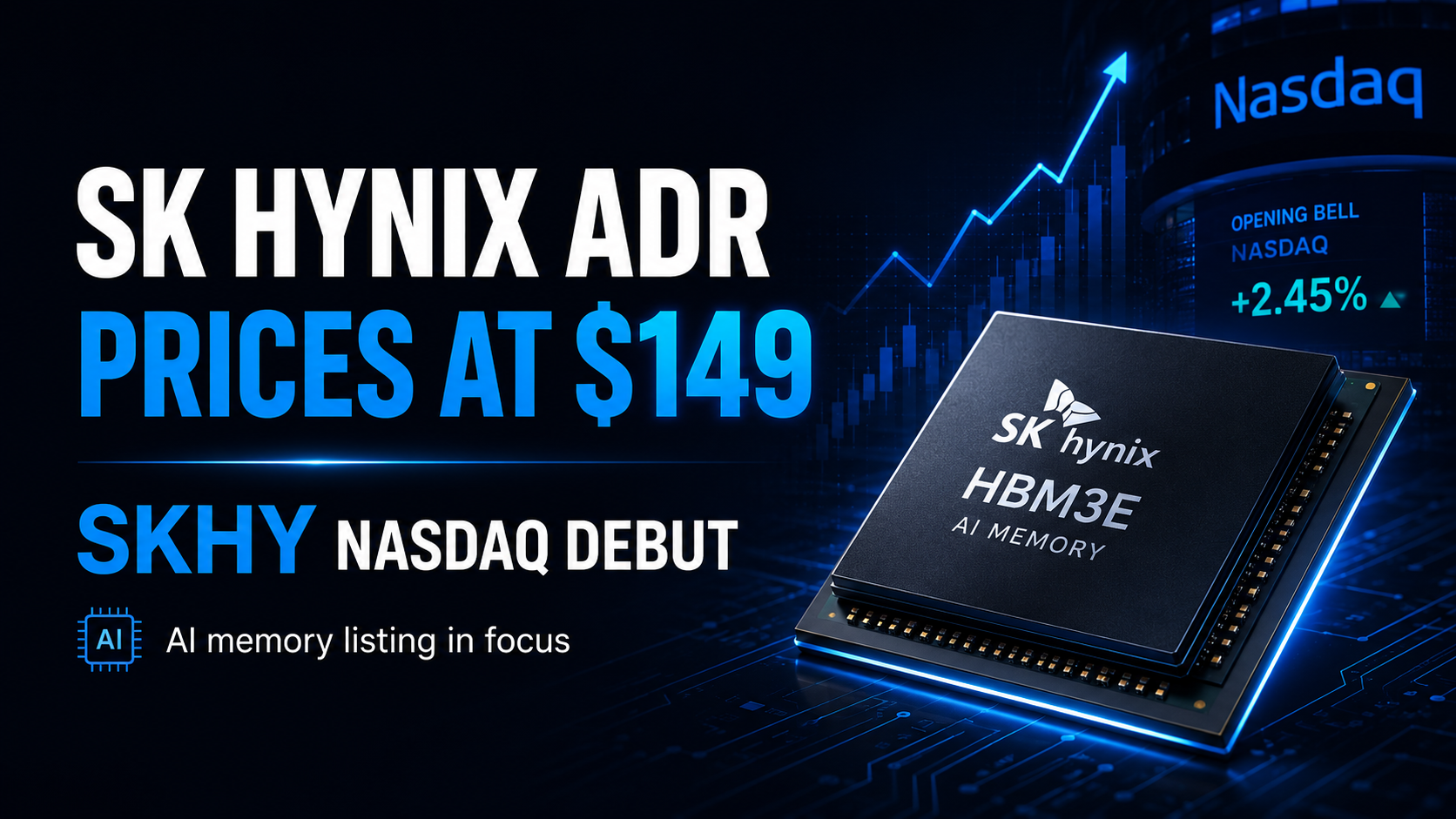
SKハイニックス、ADRを149ドルに設定、SKHYのナスダックデビュー迫る
SKハイニックス(SK Hynix)は、米国預託証券(ADR)の価格を1株あたり149ドルに正式に設定し、米国での大規模な募集で約265億ドルを調達しました。この動きは、AI関連の半導体エクスポージャーに対する投資家の巨大な需要を浮き彫りにしています。このADR価格は、直近3営業日のソウル上場株式の平均価格と比較して2.7%という顕著なプレミアム(割増価格)を付けており、機関投資家の強い関心を示しています。
この上場は、単なる定期的な市場デビューにとどまりません。SKハイニックスはすでに、グローバルなAIメモリサプライチェーンにおいて最も重要なサプライヤーの1つです。市場にとっての核心的な問題は、AIインフラ需要が依然として支配的なマクロテーマであるこの時期に、この新しい米国の流動性チャネルが、SKハイニックスの広帯域幅メモリ(HBM)における優位性を投資家が正確に再評価するのに役立つかどうかです。
2026/07/10

AI jailbreak新手法、攻撃文を推論として扱う脆弱性
研究者が、攻撃者の文章をAI自身の推論として扱わせる新たなjailbreak手法と安全対策の弱点を指摘しました。
2026/07/31
ホット
現在、市場で大きな注目を集めているトレンドの暗号資産
暗号資産価格
取引高が最も多い暗号資産