

StarkWare has unveiled a Private KYC demonstration on Starknet, introducing a fundamentally new approach to identity verification in digital finance. Instead of requiring users to submit full passportStarkWare has unveiled a Private KYC demonstration on Starknet, introducing a fundamentally new approach to identity verification in digital finance. Instead of requiring users to submit full passport
StarkWare Launches Private KYC: The Era of Identity Verification Without Exposing Personal Data Is Getting Closer

StarkWare has unveiled a Private KYC demonstration on Starknet, introducing a fundamentally new approach to identity verification in digital finance. Instead of requiring users to submit full passports, residential addresses, or sensitive personal information, the system only verifies whether they meet specific conditions, such as being of legal age, possessing valid identification documents, or residing in an approved jurisdiction.
The solution is built on zero-knowledge proof (ZK proof) technology, which enables users to prove that a statement is true without revealing the underlying data itself. As data breaches continue to increase worldwide, Private KYC could become one of the most practical and impactful blockchain applications in the field of digital identity.
Key Takeaways
StarkWare has demonstrated a Private KYC solution on Starknet.
Users can complete KYC without disclosing their full personal information.
The core technology behind the system is zero-knowledge proof (ZK proof).
Digital identity remains under the direct control of users rather than intermediaries.
The model differs significantly from traditional KYC, which relies on storing large amounts of sensitive information.
Private KYC could pave the way for a new generation of digital identity solutions for DeFi, banking, and Web3.
How Does Private KYC Work?
Under traditional KYC models, users are typically required to provide extensive personal information, including:
Passport
National identity card
Residential address
Date of birth
Facial photograph
Income verification documents
These data are then stored within centralized corporate databases.
This approach creates significant risks.
If a database is compromised, millions of personal records can be exposed simultaneously.
StarkWare's Private KYC takes a completely different approach.
Instead of sharing all personal information, users only need to prove a specific attribute.
For example:
I am over 18 years old.
I am not listed on sanctions databases.
I reside in a supported jurisdiction.
I have completed KYC requirements.
I possess valid identity credentials.
The verifier only receives the result:
True or False.
They do not gain access to:
Passport details
Home address
Document numbers
Exact birth date
Original identification records
This significantly reduces the amount of personal information shared during the verification process.
Zero-Knowledge Proof Is Changing Identity Verification
Private KYC is built upon zero-knowledge proof technology, widely regarded as one of blockchain's most promising innovations.
At its core, ZK proof allows one party to prove that a statement is true without revealing the underlying information.
Age Verification
The system can confirm:
The user is over 18 years old.
Without revealing:
Day of birth
Month of birth
Year of birth
Residency Verification
Users can prove they belong to an approved jurisdiction without disclosing their exact address.
KYC Completion Verification
An exchange can confirm that a user has passed identity verification without storing their entire personal profile.
This represents a major shift, as most existing KYC systems are designed around collecting as much information as possible.
Private KYC moves toward the opposite model:
Share only the information that is strictly necessary.
Why Is Personal Data Protection Becoming More Urgent?
The emergence of Private KYC reflects an increasingly concerning reality.
Large-scale data breaches are becoming more common.
Frequently compromised information includes:
Passports
National identification numbers
Residential addresses
Financial records
Biometric information
Banking details
The average cost of a major data breach now reaches millions of dollars.
Companies face financial losses, while users face risks such as:
Identity theft
Financial fraud
Credit impersonation
Account takeovers
Meanwhile, most current KYC procedures still require users to repeatedly upload sensitive documents to numerous platforms.
As a result, personal information becomes fragmented across dozens or even hundreds of databases.
Private KYC seeks to address this issue by returning control of identity information directly to users.
How Does Private KYC Differ From World ID?
StarkWare's approach has drawn comparisons with World ID.
However, the two models are built upon different philosophies.
World ID
Its primary objective is to prove:
A person is a real human being.
The system relies on:
Biometric information
Iris scanning through Orb devices
Centralized verification infrastructure
Users receive a digital identity credential that can be reused across multiple applications.
Private KYC
Private KYC focuses on:
Regulatory compliance
Legal attribute verification
Self-sovereign identity
Personal data ownership
Users retain control over their credentials and generate proofs only when needed.
This makes Private KYC more aligned with the concept of self-sovereign identity.
In other words, users do not surrender all of their personal information to a single organization but maintain ownership and control of their digital identity.
Why Could Private KYC Become a New Web3 Trend?
One of DeFi's largest challenges remains regulatory compliance.
Financial institutions seeking blockchain exposure must still satisfy requirements related to:
AML
KYC
Counter-terrorism financing
Jurisdictional regulations
Data privacy rules
Private KYC may offer a solution.
Potential applications include:
Regulated Stablecoins
Allowing access only to users who meet legal eligibility requirements.
Institutional DeFi
Enabling investment funds to participate while preserving privacy.
Digital Banking
Streamlining customer onboarding processes.
Tokenized Assets
Allowing investors to demonstrate eligibility without exposing complete personal records.
Cross-Border Payments
Reducing the amount of sensitive information exchanged among intermediaries.
This could bring blockchain infrastructure closer to mainstream financial adoption.
Starknet Is Expanding the Use Cases of ZK Technology
For years, StarkWare has primarily been recognized as a pioneer in zk-rollup development.
Its original focus centered on:
Scaling Ethereum
Reducing transaction costs
Increasing processing efficiency
However, Private KYC demonstrates that StarkWare is expanding into digital identity solutions.
This may become one of the most important applications of zero-knowledge proof technology over the coming decade.
If successful, the technology could transform how billions of people interact with:
Banks
Exchanges
Digital governments
Financial services
Digital identity systems
Conclusion
StarkWare's Private KYC initiative demonstrates that blockchain is not merely a technology for digital asset transactions but could also become the foundation of the next generation of digital identity systems. By combining zero-knowledge proofs with self-sovereign identity models, StarkWare is addressing one of the most pressing challenges of the digital era: how to verify identity without sacrificing privacy.
As data breaches become increasingly common and regulatory requirements continue to tighten, Private KYC may emerge as a crucial bridge connecting Web3, DeFi, and traditional financial systems in the years ahead.
FAQ
What is Private KYC?
Private KYC is an identity verification solution that allows users to prove specific attributes without disclosing their complete personal information.
How does zero-knowledge proof work?
It enables someone to prove that a statement is true without revealing the original data behind it.
How is Private KYC different from traditional KYC?
Traditional KYC requires users to submit full identity documentation, while Private KYC only shares verification outcomes.
How is Private KYC different from World ID?
World ID focuses on proving human uniqueness through biometrics, whereas Private KYC emphasizes self-sovereign identity and regulatory compliance.
Where can this technology be applied?
Potential applications include regulated stablecoins, digital banking, institutional DeFi, tokenized assets, and cross-border payments.
Disclaimer: The information provided here is for informational purposes only and should not be considered financial, investment, legal, or professional advice. Always conduct your own research, consider your financial situation, and, if necessary, consult with a licensed professional before making any decisions.
市場の機会
c0mpute価格(ZERO)
--
----
USD
c0mpute (ZERO) ライブ価格チャート
説明:暗号資産パルスは、AIと公開情報源を活用し、最新のトークントレンドを瞬時にお届けします。専門家の洞察と詳細な分析については、MEXC 学ぶ をご覧ください。
このページで共有されている記事は公開プラットフォームから収集したものであり、参考情報としてのみ提供されています。MEXCの立場や見解を代表するものではありません。すべての権利は Nguyen Rin Hoang に帰属します。第三者の権利を侵害するコンテンツがあると思われる場合は、service@support.mexc.com までご連絡いただければ速やかに削除いたします。MEXCはいかなるコンテンツの正確性、完全性、適時性も保証せず、提供された情報に基づいて取られたいかなる行動についても責任を負いません。本コンテンツは、金融、法律、またはその他の専門的なアドバイスを構成するものではなく、MEXCによる推奨または支持として解釈されるべきものでもありません。専門家の洞察と詳細な分析については、MEXC 学ぶ をご覧ください。
c0mpute の最新情報
もっと見る
LoopringがDEXを閉鎖、イーサリアムZk-rollupの先駆者が市場から撤退
Loopring(ループリング)は、イーサリアムブロックチェーン最初期のゼロ知識(zk)ロールアッププロジェクトの一つであり、その分散型取引所(DEX)と自動マーケットメイカー(AMM)を閉鎖し、
2026/06/29
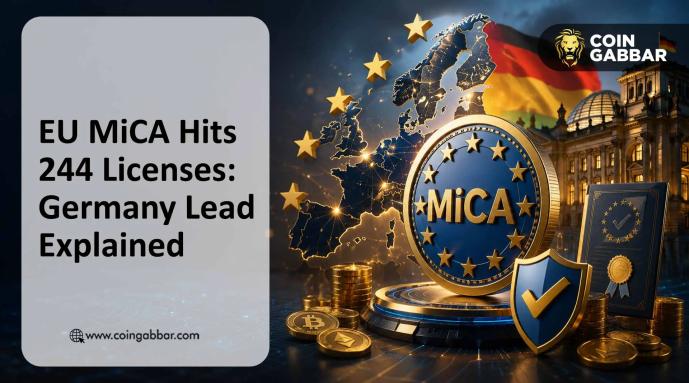
244件のEU MiCA暗号資産ライセンスが発行:ドイツがトップ、5カ国はゼロ
EUのMiCA暗号資産ライセンス、ドイツとフランスがリードし7月1日が期限―ドイツがEU MiCA暗号資産ライセンスでトップ、もう1カ国が僅差で続き、両国合わせて3分の1超を占める
2026/06/30
Backpackの手数料ゼロ取引戦略 — 市場への影響
Backpackは7月まで株式取引の手数料ゼロを発表し、米株へのアクセスを強化。The post Backpack's Fee-Free Trading Strategy — What It Means for the
2026/07/01
ホット
現在、市場で大きな注目を集めているトレンドの暗号資産
暗号資産価格
取引高が最も多い暗号資産