The bustling world of African over-the-counter (OTC) and peer-to-peer (P2P) cryptocurrency trading moves at a dizzying pace. It…The bustling world of African over-the-counter (OTC) and peer-to-peer (P2P) cryptocurrency trading moves at a dizzying pace. It…

How TradePAL’s Deborah Ojengbede is building African Web3’s ultimate compliance bridge on WhatsApp

2026/06/25 01:00
6 min read
For feedback or concerns regarding this content, please contact us at crypto.news@mexc.com

The bustling world of African over-the-counter (OTC) and peer-to-peer (P2P) cryptocurrency trading moves at a dizzying pace. It is a world fuelled by relentless momentum, where billions of dollars in hidden capital change hands daily through fragmented WhatsApp groups, chaotic screenshots, and a frantic mix of pidgin, local slang, and shifting currencies.

For years, this informal market thrived in the shadows, far removed from the sterile, rigid accounting software built for traditional enterprise.

But as global regulatory tightening collides with local tax reforms, a critical friction point has emerged. The ecosystem faces a stark ultimatum: evolve or risk extinction.

Enters TradePAL AI, an AI-powered accounting and payroll SaaS platform built for fintechs, OTC traders, and businesses in Africa. Founded by two veterans of the Web3 industry, Femi Adegolu and Ambassador Adebiyi Ayoyinka, through their interactions with the ecosystem and hearing operators’ operational pain points – scattered receipts, endless manual reconciliation, and constant vulnerability to regulatory crackdowns – the solution aims to address these pain points.

With the appointment of Deborah Ojengbede as the chief executive officer (CEO), the startup kicked off operations in January 2026 after raising a lean $50,000 family-and-friends round from fellow OTC market stakeholders.

TradePAL did not immediately rush to market. Instead, the team spent months validating their assumptions, travelling to Abuja to demonstrate the product to the regulators and ensuring alignment with how digital asset oversight is evolving in the country.
How TradePAL’s Deborah Ojengbede is building African Web3’s ultimate compliance bridge on WhatsAppTradePAL AI

“It’s one thing to build from the comfort of your office thinking you’ve built the next best thing. It’s another thing entirely to actually build what works,” Ojengbede tells me during the interview. “We wanted to make sure we weren’t just building for ourselves or solving imaginary problems. We wanted to understand what operators needed, what regulators were thinking, and whether this could actually become infrastructure people would rely on.”

Operating with a small, elite team of brilliant minds, the company has intentionally pursued a lean growth model. Since launching in May 2026, the platform has rapidly onboarded over 140 merchants, with roughly 20% already converted into paid subscribers. Backed by strong inbound interest, high-level stakeholder conversations are already underway to expand into Kenya.

The ideological maturity curve: from cypherpunk to compliance

For some observers, Ojengbede’s leadership at TradePAL AI looks like an ideological pivot. She previously championed the trustless, decentralised ethos of absolute Web3 privacy with AFEN. Now, she sits at the helm of a platform designed to provide an immutable audit trail. Yet, Ojengbede rejects the notion that her move is a philosophical betrayal.

“I wouldn’t describe this as a pivot. I would describe it as a maturity curve of the industry,” she explains calmly.

“Yes, there was the cypherpunk philosophy and the focus on ownership, privacy, and trustless systems, and those things remain important. But the blockchain economy has evolved beyond that. There are enormous opportunities in this space, and there are real businesses operating within it. Those businesses deserve structure and protection too. As the ecosystem evolves, the infrastructure powering it should evolve as well.”

How TradePAL AI Works

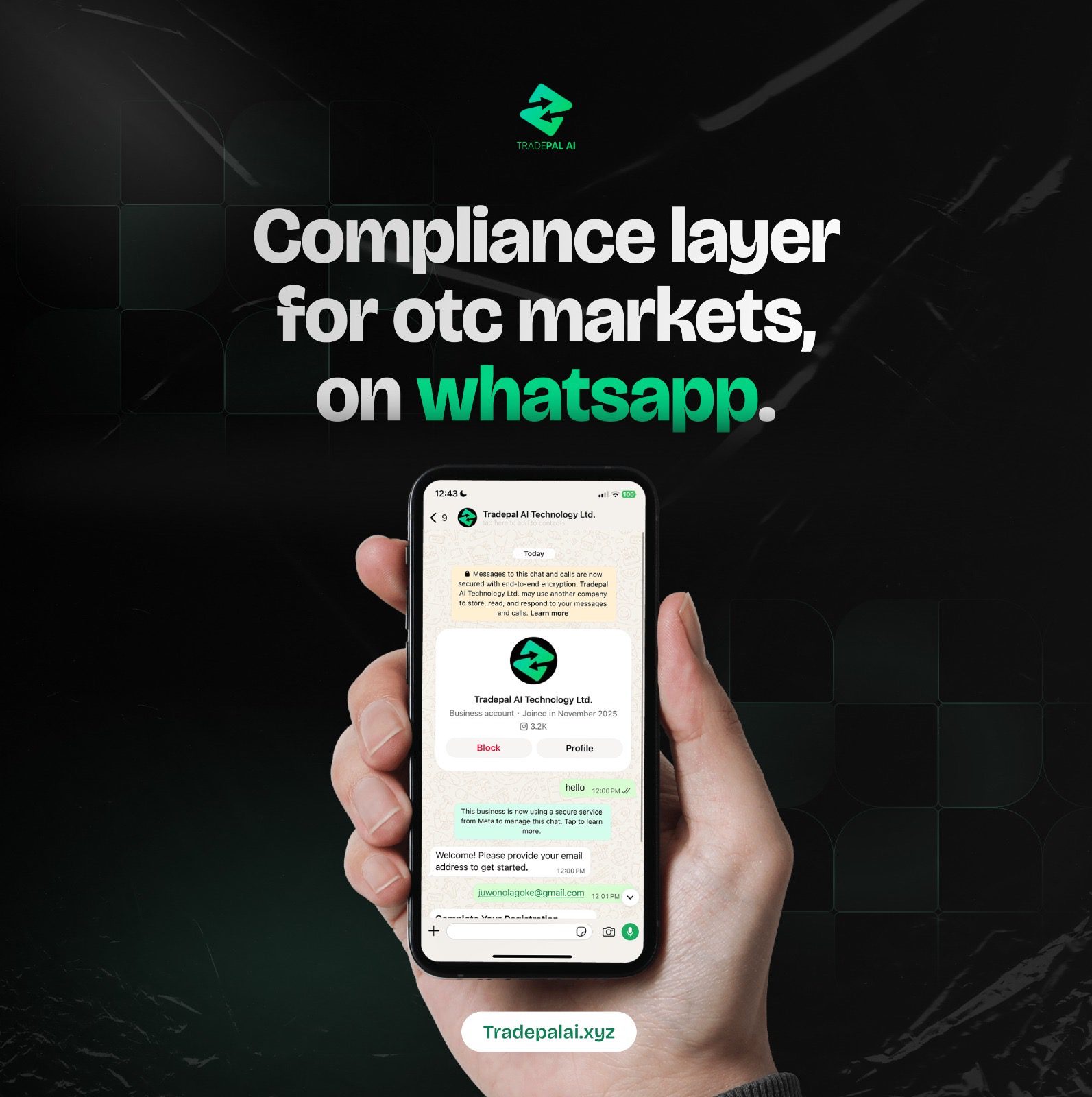
At the heart of TradePAL’s brilliance is a keen understanding of behavioural economics: it meets informal traders exactly where they already do business, on WhatsApp.

Rather than force merchants to abandon their preferred workflows for a complex dashboard, TradePAL integrates an advanced artificial intelligence assistant directly into the messaging app.

A merchant can simply upload a transaction screenshot or send a chaotic voice note saying they bought Bitcoin at a specific price from a certain counterparty. Distilling this unstructured data without massive hallucination is exceptionally difficult.

TradePAL beats this by training its models with a deeply specific local industry context, allowing the platform to currently support and interpret English, Igbo, Hausa, and Yoruba.

How TradePAL’s Deborah Ojengbede is building African Web3’s ultimate compliance bridge on WhatsAppDeborah Ojengbede, CEO of TradePAL AI

To prevent the system from being fooled by doctored or generative AI-crafted screenshots, TradePAL enforces a rigorous, multi-level verification process that executes in milliseconds:

The AI processes the unstructured media log and reflects a highly detailed summary back to the merchant. The merchant must actively click “accept” or manually tweak errors before any data moves to the dashboard. Once approved, the back-end auto-reconciliation engine cross-references the transaction data with public blockchain ledgers.

This ensures that the transaction matches an actual imported wallet address, making data falsification nearly impossible.

“The screenshots are really just the starting point of the conversation,” Ojengbede clarifies. “TradePAL doesn’t simply take whatever data you upload and immediately convert that into records. The system summarises what it understands from the transaction, and then the merchant validates that understanding before anything becomes audit-ready.”

Working as a shield, not a spy

In a community fundamentally designed to circumvent centralised control, building a tool that provides state visibility inevitably triggers surveillance anxieties. Ojengbede is highly sensitive to these fears, drawing a sharp, unyielding line between a supportive infrastructure provider and a state surveillance mechanism.

“TradePAL AI is first the merchant’s partner,” she asserts. “This is not a product that was built for the regulators. The space has been largely informal, not because operators want to evade taxes, but because the tools to bring structure haven’t existed. A crypto trader cannot use QuickBooks; it doesn’t understand the cumbersome, specific nature of cryptocurrency.”
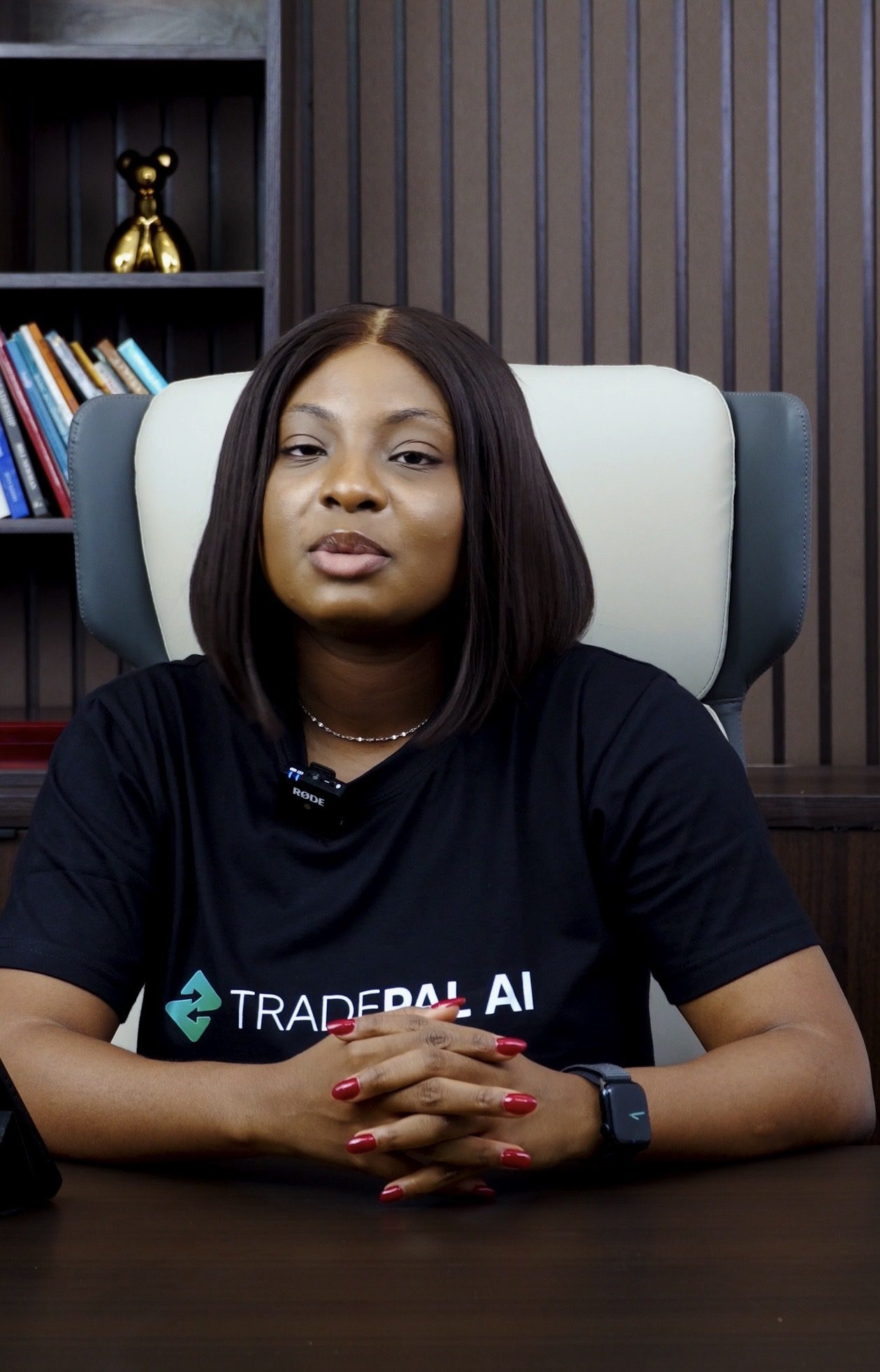
How TradePAL’s Deborah Ojengbede is building African Web3’s ultimate compliance bridge on WhatsAppDeborah Ojengbede, CEO of TradePAL AI

To solidify this trust, TradePAL AI secured official certification under the Nigeria Data Protection Act (NDPA) late last year, ensuring absolute end-to-end encryption. The merchant strictly owns their ledger. If a regulatory agency demands audit proof, the government has no back-door access. Instead, the merchant utilises a secure “one-time link” feature, selecting precisely what data, such as profit-and-loss statements, tax liabilities, or automated KYC records, is visible.

Crucially, the ambition extends beyond merely surviving an audit; it is about establishing true financial legitimacy and ensuring data is universally accepted by legacy institutions.

“It’s one thing to have data. It’s another thing for that data to be admissible where it should be,” Ojengbede argues. “That’s why we’ve spent time engaging stakeholders early. We didn’t want merchants maintaining records all year only to discover those records mean nothing when they actually need them.”

This admissibility protects merchants from arbitrary, inflated tax bills, calculating company income tax (CIT) and personal income tax (PIT) in real time so the authorities do not mistakenly view high-volume crypto inventory as pure revenue. 

“When the taxman sees two billion naira in an account, they assume it’s profit or revenue,” Ojengbede points out. “But for an OTC trader, money is inventory, not always revenue. TradePAL helps structure that data so it is genuinely audit-ready.”

Beyond accounting, the platform serves an essential protective function via Anti-Money Laundering (AML) scanning. TradePAL allows merchants to run lightning-fast wallet scans before transacting, instantly identifying illicit or high-risk addresses to insulate their broader portfolio from contagion and illicit funds.

Also read: Utility beyond off-ramping: Inside Busha’s blueprint for a circular crypto economy

Market Opportunity
P2P Logo
P2P Price(P2P)
$0,00004493
$0,00004493$0,00004493
-9,97%
USD
P2P (P2P) Live Price Chart

World Cup Combo: Aim for 200x

World Cup Combo: Aim for 200xWorld Cup Combo: Aim for 200x

Combine up to 20 World Cup matches in one order

Disclaimer: The articles reposted on this site are sourced from public platforms and are provided for informational purposes only. They do not necessarily reflect the views of MEXC. All rights remain with the original authors. If you believe any content infringes on third-party rights, please contact crypto.news@mexc.com for removal. MEXC makes no guarantees regarding the accuracy, completeness, or timeliness of the content and is not responsible for any actions taken based on the information provided. The content does not constitute financial, legal, or other professional advice, nor should it be considered a recommendation or endorsement by MEXC.

You May Also Like

Bitcoin, Ethereum, XRP and Solana show monthly buy signals on TD Sequential

Bitcoin, Ethereum, XRP and Solana show monthly buy signals on TD Sequential

🚨 TD Sequential shows monthly buy signals in $BTC, ETH, XRP, and SOL. 📊 Recent turbulence gives way to cautious optimism as indicators align. 🪙 ETF flows and futures
Share
COINTURK EN2026/07/02 06:51
Amanah says political rivals stoking racial hatred ahead of Johor polls

Amanah says political rivals stoking racial hatred ahead of Johor polls

Amanah deputy president Mujahid Yusof Rawa says such narratives, especially involving DAP, are being used to create divisions between the Malays and Chinese.
Share
Free Malaysia Today2026/07/02 07:18
Revolutionary: CME SOL XRP Futures Options Set to Transform Crypto Trading

Revolutionary: CME SOL XRP Futures Options Set to Transform Crypto Trading

BitcoinWorld Revolutionary: CME SOL XRP Futures Options Set to Transform Crypto Trading Exciting news is rippling through the cryptocurrency world! The U.S. Chicago Mercantile Exchange (CME), a titan in traditional finance, is reportedly planning to launch CME SOL XRP futures options. This significant development, initially reported by Walter Bloomberg, marks a pivotal moment for institutional involvement in the altcoin market. It signals a new era for how Solana (SOL) and Ripple (XRP) might be traded, potentially opening doors to broader adoption and increased market maturity. What Does the Launch of CME SOL XRP Futures Mean for Crypto? When an institution like CME, known for its rigorous standards and vast trading volume, enters a new market, it brings a wave of legitimacy. The introduction of CME SOL XRP futures options indicates a growing acceptance of these digital assets within mainstream finance. This move could fundamentally change how investors perceive and interact with SOL and XRP. Futures options are financial derivatives that give traders the right, but not the obligation, to buy or sell an underlying asset at a specific price on or before a certain date. For SOL and XRP, this means: Enhanced Price Discovery: More participants and trading volume can lead to more efficient and accurate pricing. Institutional Access: It provides regulated avenues for large institutional investors to gain exposure to SOL and XRP without directly owning the underlying assets. Risk Management: Traders can use these options to hedge against potential price fluctuations in their existing SOL and XRP holdings. Why Are SOL and XRP Chosen for CME SOL XRP Futures? The selection of Solana (SOL) and Ripple (XRP) for these new futures options is not arbitrary. Both cryptocurrencies hold significant positions in the market and offer distinct value propositions: Solana (SOL): Known for its high-performance blockchain, offering fast transaction speeds and low costs. Its robust ecosystem supports numerous decentralized applications (dApps), NFTs, and DeFi projects, attracting considerable developer and user interest. Ripple (XRP): Primarily focused on facilitating fast, low-cost international payments for financial institutions. Despite ongoing regulatory discussions, XRP maintains a strong market presence and a dedicated community, highlighting its potential for cross-border transactions. Their substantial market capitalization and existing liquidity make them attractive candidates for institutional-grade derivative products. This choice reflects a strategic assessment by CME of assets that can sustain significant trading interest and volume. Navigating the Landscape: Opportunities and Considerations for CME SOL XRP Futures The introduction of CME SOL XRP futures options presents a wealth of opportunities, yet it also comes with important considerations. On the opportunity front, we can expect increased liquidity, which benefits all market participants by making it easier to buy and sell without significant price impact. Moreover, it could attract new capital from traditional financial players who prefer regulated products. However, traders and investors should also consider the implications: Market Volatility: While derivatives can offer hedging, they can also amplify market movements. Regulatory Clarity: The regulatory landscape for cryptocurrencies, particularly for XRP, continues to evolve. CME’s move might encourage further clarity but also means ongoing scrutiny. Learning Curve: Understanding futures options requires a certain level of financial literacy, which new entrants to the crypto market may need to develop. These products offer sophisticated tools for managing exposure and speculating on price movements, but they demand a careful approach. What’s Next for the Crypto Market with CME SOL XRP Futures? The reported launch of CME SOL XRP futures options is more than just a new product offering; it represents a significant milestone in the ongoing convergence of traditional finance and the digital asset space. It underscores the growing maturity of the cryptocurrency market and its increasing integration into global financial systems. As institutional interest continues to surge, we can anticipate further innovation and a broader range of regulated products for other altcoins. This development is poised to offer sophisticated tools for investors and traders, potentially stabilizing market dynamics while simultaneously introducing new avenues for growth and investment. The crypto market is evolving rapidly, and CME’s latest initiative is a clear indicator of this exciting trajectory. To learn more about the latest crypto market trends, explore our article on key developments shaping the cryptocurrency market institutional adoption. Frequently Asked Questions (FAQs) What is the Chicago Mercantile Exchange (CME)? The CME is one of the world’s largest and most diverse derivatives marketplaces, offering a wide range of futures and options products across various asset classes, including equities, commodities, and now, expanding into specific cryptocurrencies. What are futures options in the context of SOL and XRP? Futures options for SOL and XRP are financial contracts that give the holder the right, but not the obligation, to buy or sell SOL or XRP futures contracts at a predetermined price on or before a specific date. They allow for hedging and speculation on price movements. Why are Solana (SOL) and Ripple (XRP) chosen for these new options? SOL and XRP were likely chosen due to their significant market capitalization, established liquidity, and distinct use cases within the crypto ecosystem, making them attractive for institutional-grade derivative products. How might CME SOL XRP futures options affect the prices of SOL and XRP? The introduction of these options could lead to increased liquidity and institutional participation, potentially influencing price discovery and stability. However, like all derivatives, they can also contribute to market volatility. When are these CME SOL XRP futures options expected to launch? While Walter Bloomberg reported CME’s plans, an official launch date has not yet been publicly announced by CME. Market participants should monitor official CME channels for updates. If you found this article insightful, please consider sharing it with your network! Help us spread the word about the exciting developments in the crypto space by sharing this article on your social media platforms. This post Revolutionary: CME SOL XRP Futures Options Set to Transform Crypto Trading first appeared on BitcoinWorld.
Share
Coinstats2025/09/18 00:45