FIFA World Cup Triggers 75% Volume Surge on Polymarket and Kalshi
Key highlights:
- The FIFA World Cup has triggered a trading volume boom on Polymarket and Kalshi
- Volumes surged by 75% in June, with Kalshi emerging as the biggest winner
- Prediction marketplaces are embroiled in a legal battle with US states over the status of sports contracts
Trading volumes on Polymarket and Kalshi have reached new highs, driven by the FIFA World Cup frenzy, drawing millions of bettors to the prediction marketplaces. The surge comes against the backdrop of a row with state regulators in the US over the status of sports and election contracts.
Polymarket and Kalshi record sky-high trading volumes
Data from The Block indicates that Polymarket, Polymarket US, and Kalshi have recorded a combined trading volume of nearly $45 billion in June. The figure is a 75% leap from May’s $25.66 billion garnered by the three prediction marketplaces.
Per the data, Polymarket’s US-based platform recorded $3 billion in trading volume in June, a 71% increase from $1.77 billion in May. Meanwhile, Polymarket's global platform saw a 45% surge in June, pulling over $10 billion in trading volume.
Kalshi emerged as the biggest winner in June as trading volumes climbed by 87% in meteoric fashion. Total bets placed on Kalshi reached $31.5 billion to dwarf the previous month’s volume of $16 billion.
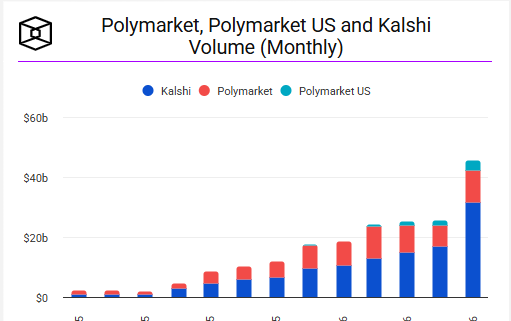
Source: The Block
The surge in trading volumes ties in with the start of the FIFA World Cup, attracting bettors in sports markets. Polymarket’s World Cup markets pull in up to $2 million in volume per match, with Kalshi netting slightly higher figures.
On Kalshi, traders have flocked in droves to the FIFA World Cup Winner event with over $800 million staked. Leaning on the popularity of the markets, Polymarket rolled out a World Cup knockout prediction campaign, ranking in positive results.
Pundits are predicting a surge in trading volumes for prediction marketplaces as the World Cup enters the knockout stages. The World Cup will come to a close on July 19, with viewership tipped to reach previously unseen levels.
A legal battle looms in the distance
Despite the surge in FIFA-backed World Cup trading volumes, Kalshi and Polymarket are facing regulatory pushback over the status of sports prediction contracts. Over a dozen US states argue that sports event contracts are sportsbooks disguised as financial markets, with others branding them as illegal betting operations.
At the tail end of July, a Michigan judge blocked Kalshi from allowing residents to place sports bets. Similar restrictions have followed with Arizona, Nevada, Kentucky, and New Jersey issuing cease-and-desist orders.
In their defense, prediction markets argue that their sports contracts are swaps, regulated by the Commodity Futures Trading Commission (CFTC). The CFTC has filed actions against states, arguing that the states are interfering with federally regulated markets.
Amid lawsuits, Kalshi has moved to prevent insider trading, requiring users in certain markets to disclose employer information.


You May Also Like

Crypto Hack: Drift Protocol Drained Over $200M in Private Key Breach

From Telegram to Terminal: Banana Gun’s Pro Platform Hits Ethereum as User Base Surpasses One Million