

Kraken Taps Into Solana's Booming DEX Market With New Trading Integration
Key highlights:
- Kraken has integrated Solana DEX trading, giving users direct access to on-chain liquidity without leaving the platform.
- The move expands Kraken's presence in decentralized finance as Solana's DEX ecosystem continues gaining market share.
- Solana remains the leading blockchain for decentralized trading volumes, processing billions of dollars in monthly activity.
Kraken brings Solana DeFi directly to exchange users
Kraken is deepening its push into decentralized finance by integrating Solana-based decentralized exchange trading into its platform.
The feature allows users to access liquidity from Solana's on-chain trading ecosystem directly through Kraken's interface, eliminating many of the friction points typically associated with decentralized trading.
Rather than manually connecting wallets, bridging assets, or interacting with external protocols, Kraken users can now tap into Solana's growing DEX liquidity through a familiar trading experience.
The launch reflects a broader trend across the crypto industry as centralized exchanges increasingly seek ways to connect users with on-chain markets.
Solana's DEX ecosystem continues to attract volume
The integration arrives as Solana strengthens its position as one of the most active blockchains for decentralized trading.
Over the past year, Solana-based protocols such as Jupiter, Raydium, Orca, and Meteora have captured a growing share of DEX activity, benefiting from low transaction costs and fast settlement speeds.
Recent market data shows Solana regularly competing with or surpassing Ethereum in decentralized exchange volume, particularly during periods of heightened memecoin and retail trading activity. In 2025, Solana DEX volume crossed the $1 trillion mark courtesy of recent solana-based protocols.
For Kraken, integrating access to these liquidity pools allows the exchange to participate in one of crypto's fastest-growing segments without forcing users to leave its ecosystem.
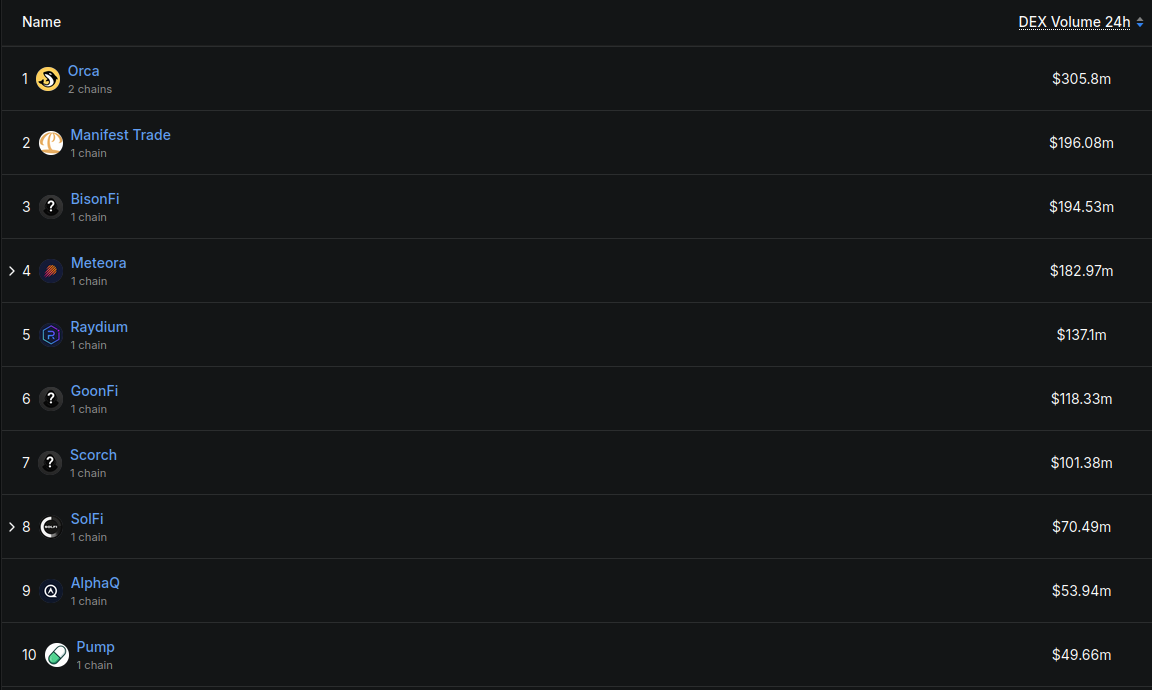
The 10 most active DEXes on Solana ranked by 24-hour trading volume. Source: DeFi Llama
The move strengthens Kraken's competitive position
The launch also highlights the growing convergence between centralized and decentralized finance.
Historically, traders had to choose between the convenience of centralized exchanges and the liquidity opportunities available on decentralized protocols. That distinction is becoming increasingly blurred.
By integrating Solana DEX trading directly into its platform, Kraken joins a growing list of firms attempting to bridge that gap.
The strategy could prove particularly attractive to retail traders seeking access to newly launched tokens, deeper liquidity pools, and emerging opportunities across the Solana ecosystem without navigating the complexities of self-custody.
The move follows Kraken's broader expansion into derivatives, staking, and institutional services as the exchange seeks to diversify beyond traditional spot trading.
Why the launch matters for Solana
The integration could also benefit Solana itself.
Centralized exchanges remain one of the primary onboarding channels for crypto users. By exposing millions of exchange customers to Solana's on-chain liquidity, Kraken may help drive additional activity across the network's DeFi ecosystem.
That comes at a time when institutional interest in Solana continues growing.
Public treasury companies now collectively control more than $1 billion worth of SOL, while asset managers continue exploring Solana-based exchange-traded products and tokenization initiatives.
As a result, the network is increasingly attracting both institutional and retail participants.
The latest integration reinforces Solana's status as one of the most important blockchain ecosystems outside of Bitcoin and Ethereum.


You May Also Like

Dow Jones futures plunge as risk aversion increases after Trump’s comments
Our Highest Conviction Call on Realty Income Points to 30% Upside

Richard Harris Law Firm Partners with CCSD to Honor School Bus Drivers at Appreciation Event



