Overview
Apple has completed the most consequential leadership transition in its modern corporate history, with
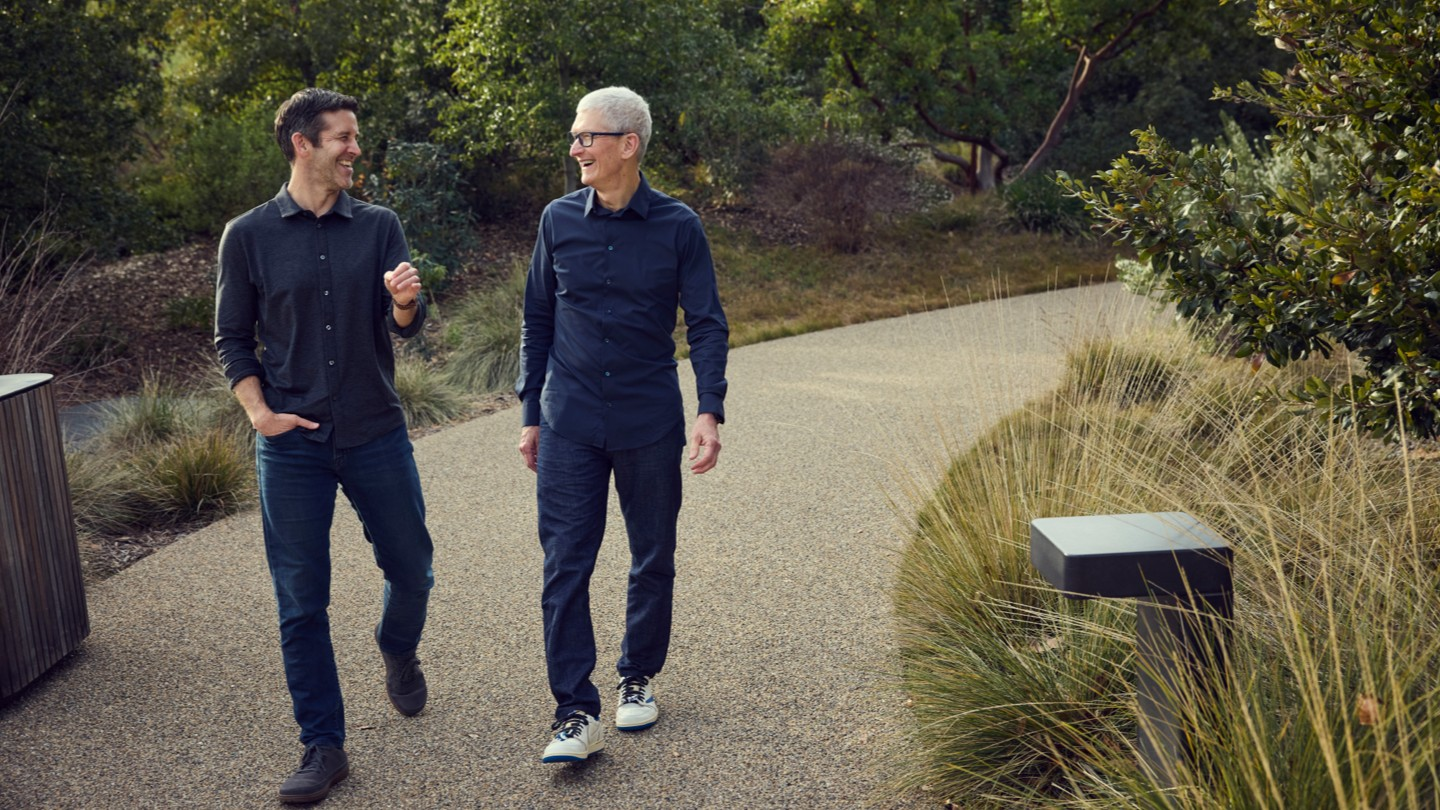
John Ternus, formerly Senior Vice President of Hardware Engineering, officially assuming the role of Chief Executive Officer on September 1, 2026. After fifteen years leading the multi-trillion-dollar technology enterprise through unprecedented operational scaling and capital expansion,
Tim Cook has transitioned to the role of Executive Chairman of the Board of Directors, shifting his executive focus toward geopolitical diplomacy, trade policy navigation, and high-level regulatory oversight. According to reporting from
Reuters and
Bloomberg, the appointment of Ternus marks a profound realignment of Apple's leadership culture, shifting the executive priority from supply chain optimization toward aggressive engineering innovation and product redesign. As global smartphone growth matures and spatial computing alongside edge artificial intelligence enters a critical adoption phase, this 25-year Apple veteran with a mechanical engineering background takes charge to define the company's next structural growth cycle.
Key Takeaways
Fifteen years of operational leadership concludes as Tim Cook transitions to Executive Chairman, retaining primary oversight of global government relations and diplomatic channels across Washington and Beijing to ensure stability.
A 25-year hardware engineering veteran takes the helm, with 51-year-old John Ternus having overseen the engineering execution across iPad, AirPods, the Apple Silicon Mac transition, and recent ultra-thin iPhone architectures.
Management philosophy pivots toward product-first engineering, signaling an era where Apple prioritizes structural hardware overhauls, advanced materials integration, and tight vertical coupling with edge artificial intelligence.
Executive succession across the broader leadership council approaches, as several long-serving senior executives across worldwide marketing, retail, human resources, and hardware silicon prepare for planned retirements over the coming years.
Secondary markets reprice the long-term innovation curve, with institutional allocators evaluating whether Ternus can accelerate consumer upgrade supercycles and expand enterprise hardware revenue.
The Engineering Pedigree: The 25-Year Ascent of John Ternus
Within a company defined by the intersection of liberal arts and advanced technology, the rise of John Ternus represents the classic trajectory of an engineer rising through product execution to executive governance.
University of Pennsylvania Roots and Early Display Engineering
Ternus earned a Bachelor of Science in Mechanical Engineering from the University of Pennsylvania in 1997. During his academic career, he competed on the varsity men's swimming team and engineered an assistive feeding apparatus operable via head kinematics for individuals with severe mobility impairments. Before joining Apple in 2001 as part of the core product design team, Ternus worked in early virtual reality engineering at Virtual Research Systems. His initial contributions at Apple centered on external display engineering, including the Apple Cinema Display, before expanding into mobile computing form factors.
Hardware Leadership and Architectural Milestones
Appointed Vice President of Hardware Engineering in 2013, Ternus assumed operational responsibility for the iPad and Mac divisions, alongside the incubation and launch of the AirPods product category. In 2020, his responsibilities expanded to include iPhone hardware, followed by his promotion to Senior Vice President of Hardware Engineering in 2021. Reporting from the
Financial Times highlights that Ternus built a reputation inside the company as a collaborative, highly respected engineering leader. His division executed the multi-year migration from legacy processors to custom Apple Silicon on Mac architectures, while pioneering recent device releases including the ultra-thin iPhone Air and the accessible MacBook Neo, cementing his standing as the natural successor to the chief executive office.
Strategic Realignment: From Operational Efficiency to Product-Centric Engineering
The transition from Tim Cook to John Ternus represents a conscious recalibration of Apple's executive leadership model to match the demands of the current computing cycle.
The Operational Legacy of the Tim Cook Era
Under Tim Cook's 15-year tenure, Apple established the most efficient global manufacturing and logistics network in industrial history, propelling the company to record market valuations and sustained capital returns. However, as the smartphone replacement cycle lengthened, market critics increasingly noted incremental rather than revolutionary hardware updates. Cook's operational rigor and cost discipline maximized equity cash flows, but the emergence of artificial intelligence models and new computing form factors demands a return to fundamental product experimentation.
Engineering Revival and Re-Anchoring the Steve Jobs Legacy
Ternus brings a builder's mindset to the executive suite. Industry analysis from
Bloomberg indicates that Ternus has consistently advocated for comprehensive design renewals across core hardware categories, emphasizing a desire to restore the product magic of the Steve Jobs era. His ascension indicates that research capital will increasingly target novel physical form factors, including foldable consumer displays, lightweight augmented reality optics, and accelerated neural processing hardware engineered for continuous ambient intelligence.
The Triad of Executive Challenges: Artificial Intelligence, Hardware Redesigns, and Leadership Turnover
Taking control of the world's most valuable consumer brand places Ternus before an intricate set of operational, technological, and corporate governance hurdles.
Accelerating Apple Intelligence and Edge Neural Execution
While Apple introduced its Apple Intelligence framework to consumer markets, closing the capability gap with frontier foundation models remains an ongoing technological challenge. Under Ternus, hardware and software engineering teams must optimize local neural processing units to handle complex multi-modal inference within tight thermal and battery constraints. This objective requires seamless vertical integration between custom silicon architects and machine learning researchers to deliver low-latency on-device processing.
Navigating a Multigenerational Leadership Transition
Beyond product execution, Ternus must manage a comprehensive turnover across Apple's executive leadership team over the next several years. Core leaders who served alongside Cook for decades, including Senior Vice President of Worldwide Marketing Greg Joswiak, Senior Vice President of Retail and People Deirdre O'Brien, and Chief Hardware Officer Johny Srouji, are approaching planned retirements. Ternus must promote a new generation of technical executives while potentially restructuring the reporting lines between silicon design and hardware manufacturing to maintain operational momentum.
Investors tracking tech equity volatility and managing capital allocation during major leadership transitions can utilize specialized market products on institutional venues.
Furthermore, trading metrics on
MEXC demonstrate sustained depth and cross-market turnover across equities-linked digital assets during high-profile corporate transitions and product launch sessions.
Dual-Track Governance: Tim Cook Strategic Role as Executive Chairman
The structural division of executive responsibilities between John Ternus and Tim Cook provides Apple with institutional balance during a complex global macro cycle.
Preserving Geopolitical and Trade Diplomacy Channels
While stepping away from day-to-day corporate operations, Cook remains full-time Executive Chairman of the Board. In this capacity, Cook retains direct management of Apple's high-stakes relationships with government officials in Washington, Beijing, and European regulatory capitals. Navigating evolving trade policies, cross-border tariffs, and antitrust inquiries requires Cook's diplomatic relationships, shielding the core engineering organization from external political friction.
Delineating Board Governance and Operational Authority
This dual-track corporate structure enables Ternus to dedicate his attention entirely to product roadmap execution, factory-floor engineering breakthroughs, and internal talent alignment. Commentary from
The Wall Street Journal underscores that as long as Cook and Ternus maintain strategic alignment on capital allocation and major acquisitions, this governance balance pairs seasoned geopolitical risk management with technical operational drive.
Capital Market Implications and Cross-Asset Transmission
Institutional allocators are expanding their focus beyond recurring services revenue margins to evaluate the potential of an AI-driven consumer hardware upgrade cycle. Regulatory filings submitted to the
U.S. Securities and Exchange Commission show institutional asset managers conducting detailed channel checks across the semiconductor supply chain. Concurrently, increasing consumer demand for low-power edge compute silicon provides valuable architectural models for decentralized physical infrastructure networks (DePIN) and distributed edge coordination protocols, linking consumer electronics cycles with next-generation digital infrastructure.
Exclusive View from James Mitchell
From a quantitative market structure and corporate lifecycle perspective, the appointment of John Ternus as Chief Executive Officer represents Apple's calculated move to break free from the perception of innovation stagnation.
Market participants have frequently valued Apple as a mature cash-generation utility, prioritizing its multi-billion-dollar annual share repurchase programs while discounting its potential for transformative hardware cycles. However, the foundational driver of Apple's operating cash flow has always been consumer demand for compelling physical hardware. With the marginal return on pure supply chain optimization flattening out, Ternus's mechanical engineering background and command of custom silicon integration position him to lead Apple's transition into on-device artificial intelligence and spatial computing. Analysis of derivatives open interest and options volatility skew indicates that institutional capital is positioning for renewed product volatility over upcoming earnings cycles. For active traders, the critical forward indicators are the neural compute efficiency metrics unveiled in upcoming hardware launches and the commercialization timeline for next-generation form factors. A successful product cycle that triggers a broad hardware upgrade supercycle will re-anchor Apple's equity multiples firmly within high-growth technology territory.
FAQ
Who is John Ternus and why was he chosen as Apple CEO?
John Ternus is a 25-year Apple veteran with a degree in mechanical engineering from the University of Pennsylvania. Prior to his appointment as CEO, he served as Senior Vice President of Hardware Engineering, overseeing the development of iPad, AirPods, Apple Silicon Mac architectures, and flagship iPhone releases. He was selected for his deep technical expertise, proven product execution, and respected collaborative leadership style.
What is Tim Cook new role at Apple following the transition?
Tim Cook has transitioned to the role of full-time Executive Chairman of Apple's Board of Directors. In this position, Cook continues to participate in long-term strategic decisions while managing global government diplomacy, geopolitical trade relations, and international regulatory compliance.
How is Apple product strategy expected to change under John Ternus?
The appointment of Ternus signals a cultural shift toward product-centric engineering and design overhaul. Apple is expected to pursue more ambitious hardware roadmaps, including advanced form factors, foldable displays, high-density edge neural computing, and specialized materials science integration.
Ternus faces the immediate tasks of accelerating on-device artificial intelligence capabilities through Apple Intelligence, driving hardware innovation in a mature smartphone market, managing cross-border trade and tariff risks, and orchestrating a smooth generational turnover among the company's executive leadership.
How will Apple executive leadership council evolve under the new CEO?
Several long-serving executive leaders across marketing, retail, human resources, and hardware technologies are expected to transition toward retirement over the coming years. Ternus will be responsible for promoting next-generation internal talent and potentially restructuring reporting divisions across hardware engineering and silicon design.
How does this CEO transition impact Apple stock valuation over the long term?
While leadership transitions often induce short-term institutional caution, a product-focused engineer at the helm can eliminate the multiple discount associated with perceived innovation plateaus. Verifiable breakthroughs in edge AI hardware and new form factors could accelerate consumer device upgrades, expanding long-term earnings multiples.
Disclaimer
The information, analysis, and views contained in this article are provided for general educational and informational purposes only and do not constitute financial advice, investment advice, legal advice, tax advice, or a recommendation to buy or sell any security, digital asset, or financial derivative. Equity securities and financial instruments are subject to high market volatility and capital risk. Past operational performance, financial results, and quantitative indicators do not guarantee future market returns. Investors must conduct independent due diligence and evaluate their personal financial situation, risk tolerance, and investment goals before executing any trade. The MEXC Crypto Pulse team assumes no liability for any direct or indirect financial losses resulting from the use of or reliance upon the information published herein.
About the Author
James Mitchell specializes in technical analysis, market trends, and trading strategies for both Bitcoin and altcoins. Based in London, he has over 10 years of experience in financial markets. Before joining MEXC Learn, James worked as a senior analyst at a leading European investment firm, where he developed expertise in risk management and quantitative trading. His transition to cryptocurrency markets began in 2017, and he has since become recognized for his data-driven approach. He holds a Master's degree in Financial Economics from the London School of Economics. His analytical approach combines traditional technical analysis with on-chain metrics to provide readers with actionable insights.
Areas of Expertise:
Research References