After spending several months moving sideways, the crypto market is entering a period that has attracted significant attention from investors: Q4 2026. Historically, this quarter has often been associated with strong price movements across Bitcoin and the broader crypto market.
However, a closer look at technical indicators, capital flows, and the broader macro environment suggests that Q4 this year could deliver a more meaningful recovery than what the market currently expects in the short term.
Key Takeaways
Bitcoin and several large-cap altcoins are showing bullish weekly RSI divergences.
Robinhood Chain could introduce a new ecosystem that attracts fresh retail capital.
The CLARITY Act is making the US regulatory environment more transparent.
The market is becoming increasingly resilient to negative geopolitical headlines.
However, inflation, interest rate policy, and several large-scale IPOs remain key risks to monitor.
1. Positive Signals for Q4 2026 Bitcoin and Major Altcoins Are Showing Weekly RSI Bullish Divergences
One of the most notable technical signals in the market today is the emergence of bullish RSI and MACD divergences on
Bitcoin and several major altcoins that traditionally lead market trends.
Recent price action shows that Bitcoin has formed these bullish divergence patterns following its decline from previous highs, with the RSI refusing to confirm new lower lows. Similar setups have also been identified across leading altcoins such as $SOL and $ETH, creating a rare level of technical confluence. When multiple market-leading assets generate the same bullish signal simultaneously, the probability of a broader market recovery generally becomes more convincing.
Although bullish divergences do not guarantee an immediate trend reversal, they often require time to fully develop. Confirmation typically comes through increasing trading volume and successful breakouts above key resistance levels. Nevertheless, when these signals appear across multiple timeframes and among the market's strongest assets, the probability of establishing a medium-term bottom increases significantly.
Many analysts expect the current sideways consolidation to continue until around the middle of August, allowing the market to absorb the remaining selling pressure before a stronger upward trend begins to emerge.
2. Memecoins Are Making a Comeback, Signaling Improving Risk Appetite
One of the strongest catalysts that could bring fresh capital back into the crypto market over the coming months is the renewed activity surrounding memecoins and the emergence of new blockchain ecosystems capable of attracting retail investors. The memecoin
$ANSEM (The Black Bull) previously reached a market capitalization of more than US$400 million, highlighting the continued strength of the memecoin narrative.
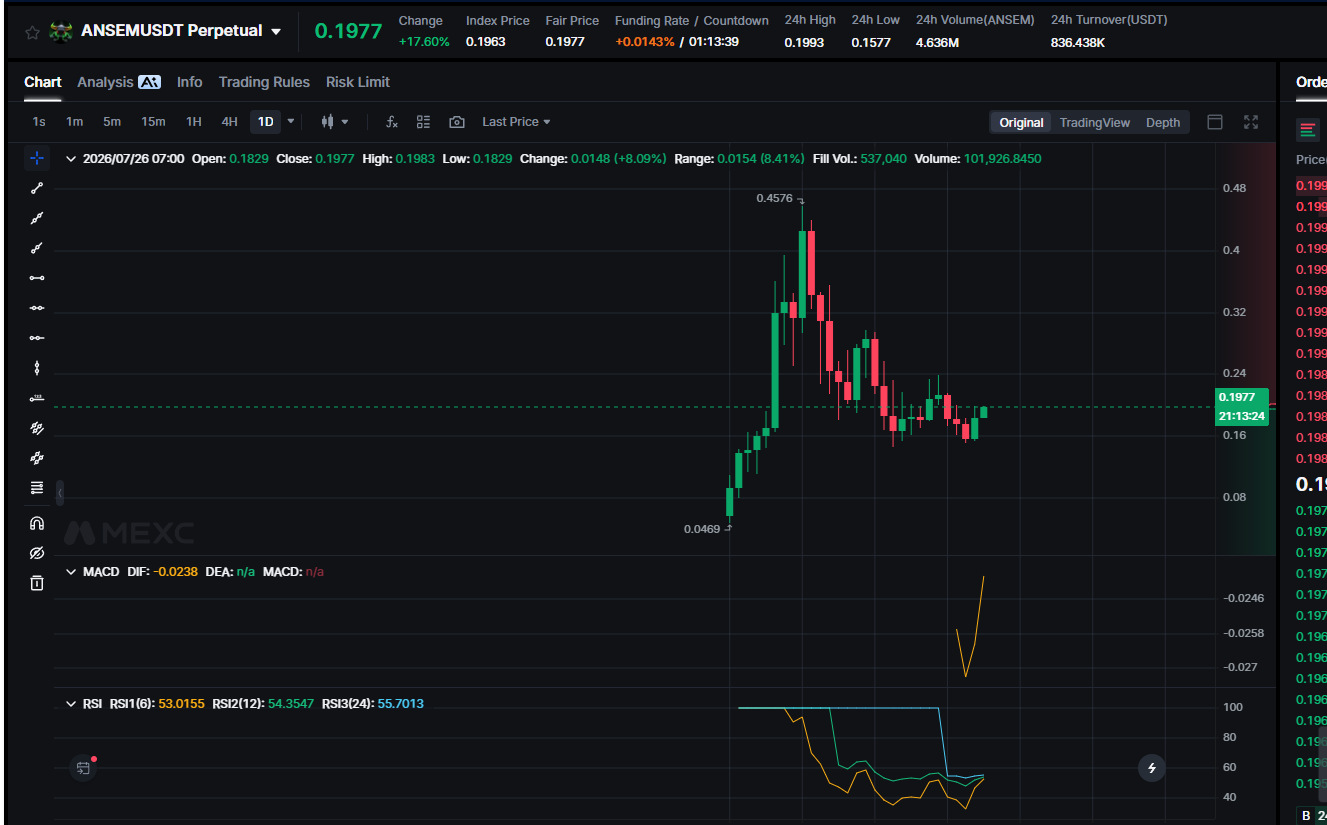
Even more noteworthy is Robinhood Chain, the Layer 2 network developed by Robinhood that officially launched in early July 2026. While the network was primarily designed to support tokenized real-world assets (RWAs) and tokenized equities, it unexpectedly became the center of a memecoin boom after Robinhood CEO Vlad Tenev publicly embraced the trend. Tokens such as
$CASHCAT, along with numerous other meme assets, generated substantial trading volume, attracted hundreds of thousands of new wallet addresses, and pushed the network's total value locked (TVL) to impressive levels within a very short period.
The ability of these memecoins to deliver explosive gains even before the broader market has officially entered a new bull cycle suggests that speculative capital is gradually returning.
This is an important development because, throughout previous market cycles, memecoin rallies have often preceded broader capital rotation into the rest of the altcoin market. From a capital flow perspective, strong activity within the memecoin sector typically reflects improving investor confidence and a growing willingness to take on risk.
If this trend continues throughout Q4, it could become a meaningful catalyst for improving liquidity across the entire crypto market.
3. The Market Is Becoming Less Sensitive to Geopolitical Uncertainty
One of the classic signs that often appears during the later stages of a bear market is that prices begin reacting less aggressively to negative news.
Throughout 2026, the world has experienced a series of escalating geopolitical tensions. Wars and regional conflicts have continued to intensify across multiple parts of the globe.
Events like these would normally trigger heavy selling pressure across risk assets as investors rotate into cash or traditional safe havens. Even a single statement or social media post from US President Donald Trump has been enough to shake the crypto market on several occasions.
However, the current market environment looks noticeably different. Whenever negative headlines emerge, crypto prices still decline, but the magnitude of those declines is no longer as severe as it was during earlier phases of the cycle. This is an important signal.
In market analysis, price reaction often matters more than the news itself. If extremely negative news only produces a limited decline or is followed by a quick recovery, it suggests that most of the selling pressure has already been absorbed.
On the other hand, if even minor negative headlines trigger sharp selloffs, it usually indicates that market sentiment remains extremely fragile.
At the moment, Bitcoin appears to be following the first scenario.
This does not necessarily mean the market has already established its absolute bottom, but it does suggest that long-term investor confidence is gradually improving.
4. The CLARITY Act Could Create a More Transparent Regulatory Environment in the United States
One of the most important long-term catalysts for the crypto market is the progress of the Digital Asset Market Clarity Act, commonly referred to as the CLARITY Act. The legislation aims to clearly define regulatory responsibilities between the SEC and the CFTC while establishing a more comprehensive legal framework for digital assets, crypto exchanges, and blockchain companies operating in the United States.
As of mid-2026, the bill has already passed the House of Representatives and cleared the Senate Banking Committee. It is now awaiting a full Senate vote. If ultimately approved and signed into law, the CLARITY Act would significantly reduce legal uncertainty for traditional financial institutions seeking deeper exposure to crypto. As a result, institutional capital from ETFs, pension funds, banks, and insurance companies could accelerate its entry into the digital asset market.
History provides several examples of how regulatory milestones have supported crypto prices. The GENIUS Act, passed in July 2025, was followed by Bitcoin reaching a new cycle high roughly three months later. Earlier still, the approval of Spot Bitcoin ETFs became one of the major catalysts that helped launch the 2024-2025 bull market.
Once the CLARITY Act becomes law, market participants will finally have a much clearer set of rules to operate under. Risk assessment, compliance, and long-term investment planning will all become significantly easier.
That is why many analysts believe a transparent regulatory framework could serve as the foundation for continued institutional capital inflows over the coming years.
5. The 2026 FIFA World Cup Has Concluded
The 2026 FIFA World Cup took place from mid-June until July 19, 2026. Throughout the tournament, a significant amount of retail capital and investor attention shifted toward crypto prediction markets and sports-related blockchain products.
Once the tournament concluded, that capital typically began rotating back toward higher-risk assets, including cryptocurrencies.
As illustrated by recent market data, trading volume across major prediction market platforms surged dramatically throughout the World Cup period.
Historical observations also suggest that after major global sporting events conclude, the crypto market often experiences a moderate recovery as investors rebalance their portfolios. Combined with the technical and regulatory catalysts discussed above, the post-World Cup period could become a favorable starting point for a stronger market recovery heading into Q4.
6. Historical Seasonality: Q4 Has Traditionally Been a Strong Quarter
Beyond technical indicators and macroeconomic developments, historical seasonality is another data point worth considering. Across multiple previous market cycles, the fourth quarter has generally delivered stronger performance than most other periods of the year.
Several factors may help explain this recurring pattern.
The first is year-end portfolio rebalancing by institutional investors before the close of the financial year. Another is improving investor sentiment as markets enter the final months of the year.
Market liquidity also tends to recover after the summer months, while many financial institutions become more active in trading during the final quarter.
Of course, history does not always repeat itself. Some years have seen exceptionally strong Q4 rallies, while others have produced only sideways price action or even further corrections.
Although there is no guarantee that seasonal patterns will play out exactly the same way this year, they remain an important factor closely monitored by many market cycle analysts.
Factors That Could Keep Q4 Weak
Although several encouraging signals are beginning to emerge, that does not necessarily guarantee the start of a new bull cycle. Crypto remains one of the financial markets most sensitive to macroeconomic conditions, monetary policy, and global liquidity.
Before becoming overly optimistic about a strong recovery, investors should also consider the risks that could delay or even invalidate the bullish scenario.
Inflation Remains the Biggest Variable
Inflation continues to be one of the most influential drivers of financial markets.
If inflation remains above the Federal Reserve's target, policymakers will likely maintain a restrictive monetary stance, preventing liquidity conditions from improving.
When interest rates and bond yields remain elevated, capital generally favors lower-risk assets instead of Bitcoin or altcoins. Historically, the strongest crypto bull markets have typically occurred during periods of abundant liquidity.
The Federal Reserve Could Keep Interest Rates Higher for Longer
Even if inflation continues to cool, the Federal Reserve may still choose to maintain elevated interest rates to ensure inflation remains under control.
If that happens, capital flowing into higher-risk assets such as cryptocurrencies could remain constrained.
Traders should closely monitor major macroeconomic releases including CPI, PCE, Non-Farm Payrolls, and every Federal Reserve meeting, as these events frequently trigger significant market volatility.
Large IPOs Could Temporarily Divert Capital
Crypto constantly competes for investor capital against equities and other financial assets.
If Q4 2026 features major
IPOs such as SpaceX, a portion of investment capital could temporarily rotate into the stock market, similar to what has been observed during previous high-profile public offerings.
However, this effect is generally short-lived. If crypto's underlying fundamentals remain constructive, capital is likely to return once enthusiasm surrounding those IPOs begins to fade.
Conclusion: The Probability of Recovery Is Improving, but Patience Remains Essential
Considering all of the factors discussed above, the probability of the crypto market recovering during Q4 2026 appears higher than the probability of another prolonged period of weakness.
Bitcoin may continue trading within a frustrating sideways range until around the middle of August before a more convincing recovery begins to develop.
That said, investors should avoid expecting an immediate breakout or a rapid return to a full bull market.
Closely monitoring the key drivers influencing the market will help investors better evaluate the strength of any emerging trend and respond quickly if market conditions change unexpectedly.
With numerous uncertainties still ahead, patience and disciplined risk management remain the two most important qualities for investors seeking to capitalize on the next major crypto cycle.
Disclaimer: This content does not constitute investment, tax, legal, financial, or accounting advice. MEXC Blog provides this information for educational purposes only. Always do your own research, understand the risks, and invest responsibly.